Temperature24 – 30 °C
Natural range
- Sri Lanka area
CyprinidsConservation status: Least concern LC
Other scientific names: Esmous thermoicus, Esomus danrica, Esomus thermoicus, Nuria thermoicos
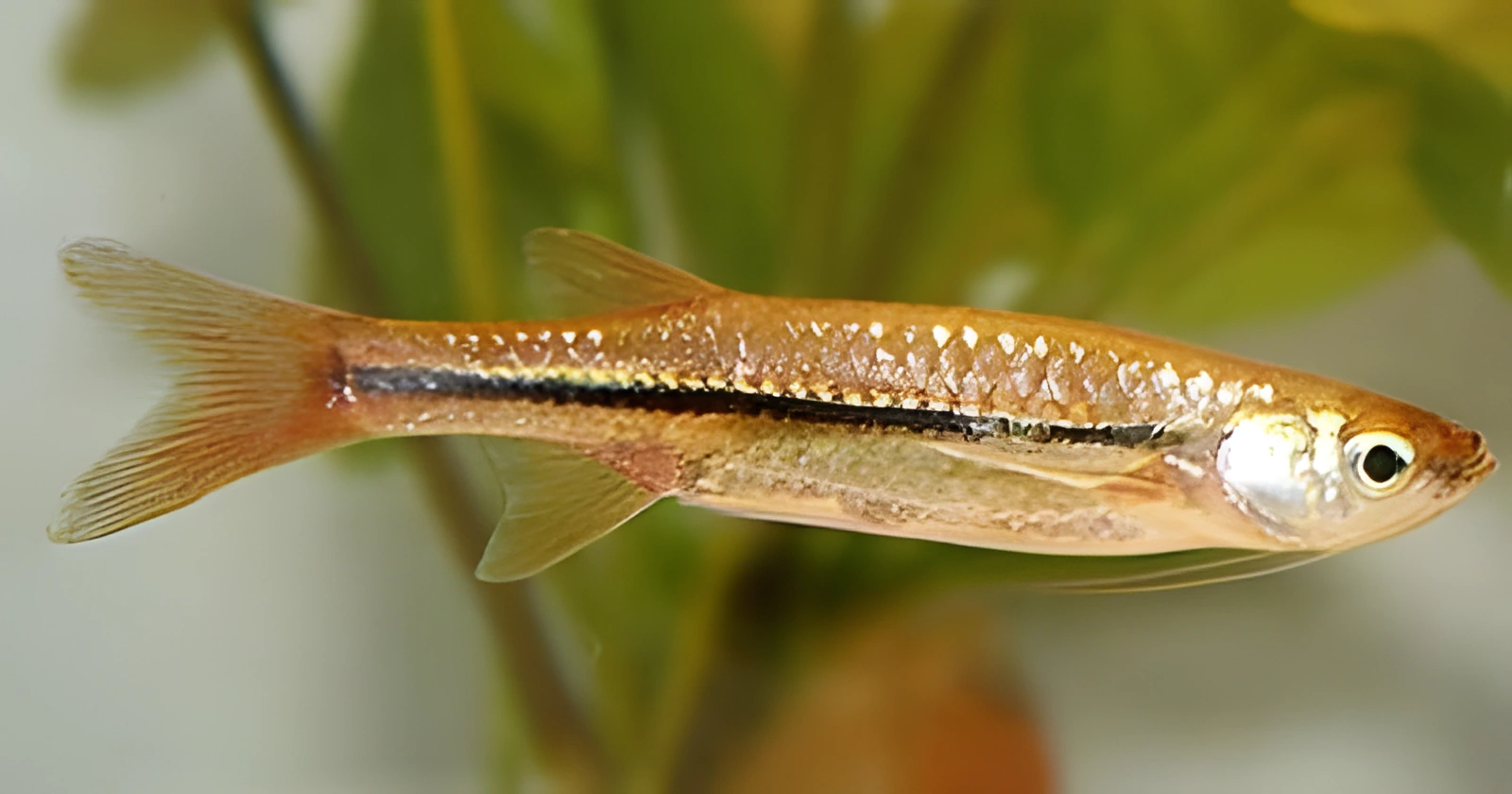
Esomus, scientifically known as Esomus thermoicos, belongs to the extensive Carp family (Cyprinidae). It is sometimes called the Bearded Rasbora due to the presence of two long barbels. These fish have an elongated, dynamic body shape. Their anal and dorsal fins are shifted closer to the caudal peduncle, while their large pectoral fins resemble miniature wings. This structure allows the fish to jump out of the water and develop high speed in pursuit of food.
- Required aquarium volume
- 250 L
- Size in aquarium
- 13 cm
- Temperature
- 24 – 30 °C
- Temperament
- Peaceful (regular)
Parameters
Water pHSlightly acidic (6) – Neutral (7)
Water dHVery soft (1) – Medium hardness (10)
Water salinityno salt (freshwater)
Size in aquarium13 cm
Lifespan4 years
TemperamentPeaceful (regular)
Toward small fishnot a predator
Required aquarium volume250 L
Lightingdimmed
Substrateany (no restrictions)
Water flowweak
FeedingAny (universal)
CareGroup (8–10 individuals)
Description
Esomus thermoicos is a small freshwater fish from the family Danionidae, inhabiting water bodies in South India and Sri Lanka. Outwardly, it is distinguished by an elongated body adapted to life in the surface layers of the water, and the presence of very long barbels, which can reach the base of the pelvic fins. The coloration is usually silvery with a dark longitudinal stripe running along the lateral line. The maximum body length is about 12.7 cm, although in aquarium conditions, fish often grow up to 8 cm. Sexual dimorphism is weakly expressed, but males are usually slimmer than females.
Habitat
This fish is believed to be endemic to the island of Sri Lanka. Its typical habitat is slow-flowing, murky, silty water bodies.
Behavior and Compatibility
Esomus is an active and peaceful fish. In natural conditions, it prefers to stay in small schools. To maintain comfort in a home aquarium, it is also recommended to keep a group of 8–10 individuals. If kept in pairs or alone, it may become timid. These fish get along well with many non-aggressive species of similar size.
Care and Maintenance
The Bearded Rasbora is known as an unpretentious and resilient species, not demanding high maintenance conditions. It adapts excellently to a wide range of pH and dGH values. Its ability to live in an environment that might be unfavorable for many other aquarium fish highlights its hardiness. Nevertheless, aquarium care should not be neglected. It is important to regularly perform necessary maintenance procedures and ensure the presence of essential equipment such as a filtration system, heater, and lighting. Due to its tendency to jump out of the water, it is highly advisable to provide the aquarium with a secure lid. There are no particular restrictions regarding decoration. Dense plant thickets are welcome, as they serve as shelters and potential spawning sites. Esomus lays its eggs on the surface of floating or tall, rooted plants. These fish are omnivorous and readily accept most common aquarium foods: dry, frozen, and live.
Diet
Being an omnivorous species, this fish readily consumes a variety of foods widely used in aquaristics, including dry, frozen, and live.
Breeding and Reproduction
Reproduction occurs by spawning. In their natural habitat, the fish lay semi-adhesive eggs on floating or riparian vegetation. To stimulate spawning in an aquarium, it is recommended to raise the water temperature and provide dense thickets of fine-leaved plants where the female will lay her eggs. Parental care is not exhibited, so after spawning, the parents should be removed to prevent them from eating the eggs or fry. Fry are fed with small live foods.
Diseases
The species is highly resilient and capable of surviving in adverse conditions, including cloudy water with low oxygen content. No specific genetic predispositions to diseases have been identified in Esomus thermoicos. Like other cyprinids, the fish can be susceptible to typical aquarium infections if maintenance conditions are violated.
Key health risks are associated with poor living conditions:
- bacterial infections arising from high levels of organic pollutants;
- fungal infections, often developing on the background of mechanical damage to the skin;
- parasitic infestations, which can be activated by stress caused by sharp fluctuations in water parameters or overcrowding.
Disease prevention is based on maintaining cleanliness in the aquarium and ensuring a stable temperature regime. It is important to avoid overfeeding and to perform timely water changes, as poor water quality is the main factor weakening the fish's immune system. By adhering to basic hygiene standards, the species demonstrates high resistance to pathogens.
How to choose
When purchasing, choose active fish that show interest in food and have no visible damage to their skin or fins. It is important to look for the absence of white film, ulcers, or atypical spots on the body, as these may indicate infectious diseases. A healthy specimen should swim confidently in the water column, without signs of emaciation or unnatural behavior, such as constantly hovering near the surface with labored breathing. It is recommended to inquire about the store's keeping conditions and to quarantine the fish before introducing it into the main aquarium.
Frequently asked questions
The essentials: size, tank volume, water parameters and care
How big does Esomus Fish get?
An adult reaches 13 cm in length. Plan the tank around the maximum size: the fish quickly outgrows a cramped setup.
What size aquarium does Esomus Fish need?
The minimum recommended volume is 250 L. A smaller tank speeds up nitrate build-up and raises stress levels.
What water parameters does Esomus Fish need?
Temperature 24–30 °C, pH 6–7, hardness 1–10 dGH. Stability matters more than exact values: sudden swings are harder on the fish than a small deviation from the ideal.
How long does Esomus Fish live?
Around 4 years when kept properly. Lifespan depends directly on tank volume, water quality and a varied diet.
Is Esomus Fish aggressive?
Temperament: peaceful (regular). Keep this in mind when choosing tank mates.
How many Esomus Fish should be kept together?
Recommended setup: group (8–10 individuals). Ignoring this is a common cause of stress and disease.
What does Esomus Fish eat?
Diet type: any (universal). Feed small portions that are finished within a couple of minutes — overfeeding does more harm than underfeeding.
What is the scientific name of Esomus Fish?
The scientific name of the species is Esomus thermoicos, family Cyprinids (Cyprinidae). It also appears in the literature as: Esmous thermoicus, Esomus danrica, Esomus thermoicus.