Temperature16 – 24 °C
Natural range
- Ganges River
- Brahmaputra River
- India area
- Nepal area
CyprinidsConservation status: Least concern LC
Other scientific names: Barilius barana, Barilius barna, Barilius jayarami, Barilius papillatus, Cyprinus barna, Leuciscus acanthopterus
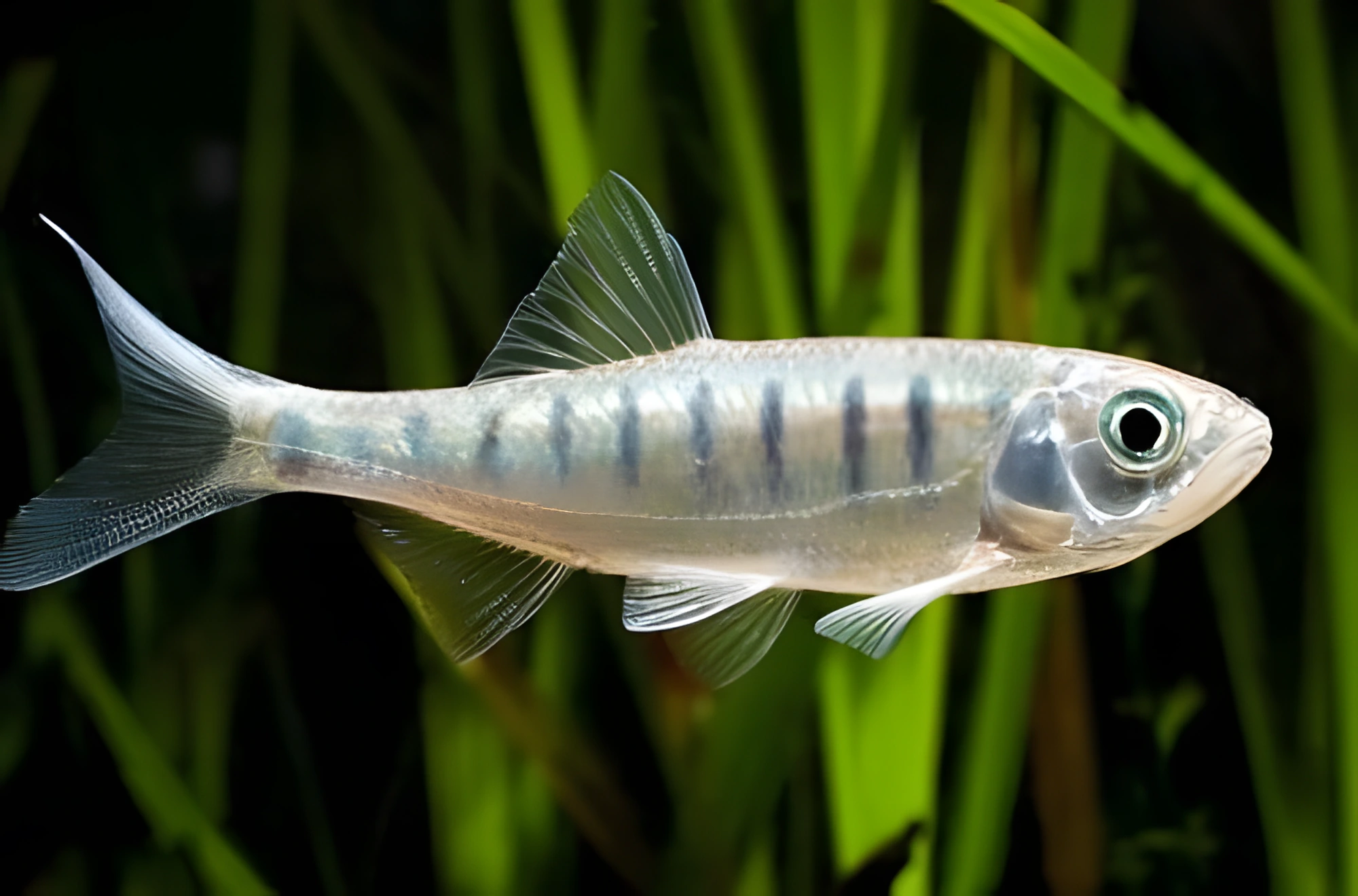
The Barna Barbel, scientifically known as Opsarius barna, belongs to the extensive carp family (Cyprinidae). Its name in Russian is a transcription of the Bengali word traditionally used by locals to refer to this species.
- Required aquarium volume
- 250 L
- Size in aquarium
- 11 – 13 cm
- Temperature
- 16 – 24 °C
- Temperament
- Peaceful (regular)
Parameters
Water pHSlightly acidic (6) – Slightly alkaline (8)
Water dHVery soft (3) – Hard (15)
Water salinityno salt (freshwater)
Size in aquarium11 – 13 cm
Lifespan4 years
TemperamentPeaceful (regular)
Toward small fishnot a predator
Required aquarium volume250 L
Lightingdimmed or moderate
Substraterocky (rock formations, boulders, etc.)
Water flowmoderate or strong
FeedingAny (universal)
CareMixed (solitary / pair / group)
Description
In their natural habitat, adult specimens can reach up to 15 cm in length. However, in aquarium conditions, their growth usually stops at 11–13 cm. The coloration of these fish is most often gray, and juveniles have a silvery hue. A distinctive feature of their pattern is rows of short black vertical dashes along the body. The fins and tail remain translucent.
Habitat
Its natural habitat extends across South Asia, primarily in India. These fish are found in the large river systems of the Ganges and Brahmaputra, and, according to some reports, they can also be found in the waters of Nepal, Bhutan, and Bangladesh. They typically inhabit the main river channels, where the current can be moderate or strong, and the bottom consists of stones and boulders.
Behavior and Compatibility
Although Barna Barbs have a peaceful disposition, their specific habitat requirements limit the choice of tank mates. Suitable companions can include some species of loaches, pleco catfish, and other hardy cyprinids.
Care and Maintenance
For a group of 6–8 Barna Barbs, an aquarium of at least 250–300 liters will be optimal. In such conditions, moderate water movement must be ensured, achieved either by a separate pump or by a high-performance filtration system. For decor, it is preferable to use rock formations, snags, and other decorative elements, which should be securely anchored in the substrate. It should be noted that due to the current and lack of suitable substrate, most plant species will not thrive. It is recommended to choose plants capable of growing on surfaces such as rocks and snags. These include mosses, ferns, and undemanding Anubias. It is extremely important to maintain water purity and oxygen saturation. This is achieved not only by the uninterrupted operation of the filter but also by regular aquarium maintenance. A portion of the water should be replaced with fresh water weekly, and accumulated organic waste should be removed. These fish adapt well to a wide range of hydrochemical parameters. They prefer moderate temperatures, so they usually feel comfortable in an unheated home aquarium. Being omnivores, they readily accept most common dry, frozen, and live foods. It is worth noting that they primarily feed in the upper water layers.
Diet
Being omnivores, Barna Barbs readily consume most standard dry, frozen, and live foods, preferring to feed in the upper water layers. Despite their peaceful nature, the specifics of their habitat dictate certain limitations in the choice of tank mates, so they are often kept with some species of loaches, pleco catfish, and hardy cyprinids.
Breeding and Reproduction
Specific data on breeding in captivity is practically non-existent. It is known that frequent large water changes with fresh, cooler water can stimulate spawning, mimicking the rainy season in their natural habitat. The fish are schooling, so to successfully obtain offspring, it is recommended to keep a group of five or more individuals.
Diseases
The species Opsarius barna is highly sensitive to water quality, so the primary prevention of diseases is maintaining aquarium cleanliness and stable environmental parameters. The fish tolerate the accumulation of organic waste extremely poorly, which, if the water change regimen is not observed (30–50% weekly is recommended), quickly leads to bacterial infections, fin damage, and skin lesions.
To prevent stress and the development of pathologies, it is necessary to ensure a high level of dissolved oxygen and active water circulation, mimicking natural current. In a biologically immature aquarium or with sharp fluctuations in water composition, the fish are susceptible to the following problems:
- bacterial lesions of fins and scales;
- fungal infections, often arising against the background of microtraumas due to careless keeping;
- parasitic infestations, developing with weakened immunity due to unsuitable keeping conditions.
How to choose
When purchasing, choose active, mobile fish with clean fins and no visible damage to the body. It is important to ensure there are no signs of emaciation or unnatural behavior, such as constant hovering at the surface or attempts to rub against objects. Avoid individuals with cloudy eyes or spots on their scales. Given that the species requires high oxygen levels and water purity, before purchasing, it is worth assessing the conditions in the store's aquarium: the water should be clear, and the fish should exhibit the typical high swimming speed for the species.
Frequently asked questions
The essentials: size, tank volume, water parameters and care
How big does Barna Barbel get?
An adult reaches 11–13 cm in length. Plan the tank around the maximum size: the fish quickly outgrows a cramped setup.
What size aquarium does Barna Barbel need?
The minimum recommended volume is 250 L. A smaller tank speeds up nitrate build-up and raises stress levels.
What water parameters does Barna Barbel need?
Temperature 16–24 °C, pH 6–8, hardness 3–15 dGH. Stability matters more than exact values: sudden swings are harder on the fish than a small deviation from the ideal.
How long does Barna Barbel live?
Around 4 years when kept properly. Lifespan depends directly on tank volume, water quality and a varied diet.
Is Barna Barbel aggressive?
Temperament: peaceful (regular). Keep this in mind when choosing tank mates.
How many Barna Barbel should be kept together?
Recommended setup: mixed (solitary / pair / group). Ignoring this is a common cause of stress and disease.
What does Barna Barbel eat?
Diet type: any (universal). Feed small portions that are finished within a couple of minutes — overfeeding does more harm than underfeeding.
What is the scientific name of Barna Barbel?
The scientific name of the species is Opsarius barna, family Cyprinids (Cyprinidae). It also appears in the literature as: Barilius barana, Barilius barna, Barilius jayarami.