Temperature25 – 26 °C
Natural range
- Indo-Pacific Ocean area
- India area
- Japan area
- Indonesia area
UnusualConservation status: Least concern LC
Other scientific names: Cacodoxus argus, Chaetodon argus, Chaetodon atromaculatus, Chaetodon pairatalis, Ephippus argus, Sargus maculatus
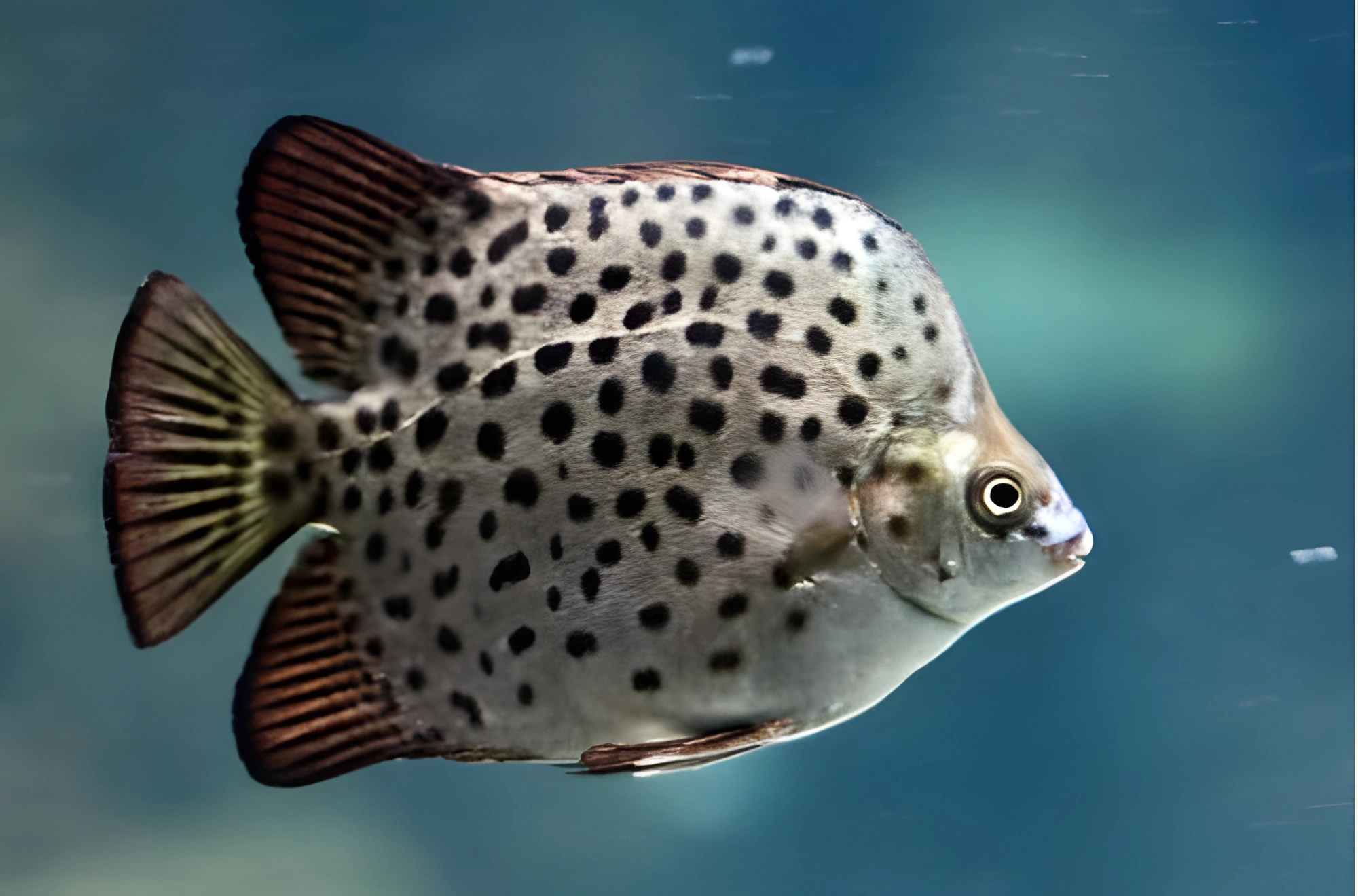
The Argus fish, also known as the Spotted Scat or Argus Scat (scientific name Scatophagus argus), belongs to the Scatophagidae family. This is a large and attractive fish that can live in both marine and freshwater aquariums. Its keeping does not present particular difficulties, provided that the aquarium is equipped with all necessary equipment and regular maintenance is carried out.
- Required aquarium volume
- 1000 L
- Size in aquarium
- 35 cm
- Temperature
- 25 – 26 °C
- Temperament
- Peaceful (regular)
Parameters
Water pHNeutral (7) – Slightly alkaline (8.5)
Water dHMedium hardness (10) – Very hard (25)
Water salinitymoderate (5–10 g/L)
Size in aquarium35 cm
Lifespan15 years
TemperamentPeaceful (regular)
Toward small fishnot a predator
Required aquarium volume1000 L
Lightingmoderate or bright
Substratesoft sandy (including silted)
Water flowweak or moderate
FeedingPlant-based (algae, vegetables)
CareSmall group (3–4 individuals)
Description
Adults can reach a length of about 35 cm. The fish's body has a characteristic "quadrangular" shape, strongly compressed laterally, and a small, slightly protruding head. The dorsal fin is divided into two parts: the anterior part, located on top, is equipped with sharp, venomous spines, which are usually pressed against the body when the fish is calm. The second part of the dorsal fin, along with the anal fin, is located closer to the triangular caudal fin. This body shape allows the fish to easily move through narrow crevices in search of food. Young fish are greenish-brown with diagonal rows of dark stripes and many small spots. As they mature, their coloration changes to silvery, the stripes disappear, giving way only to rounded spots.
Habitat
Its natural habitat is in the coastal areas of the Indo-Pacific region. The distribution range covers the coasts of India, extending to southern Japan, the Indonesian and Philippine archipelagos, and up to northern Australia. This fish can be found in marine, brackish, and even fresh water, where it inhabits flooded mangrove forests, estuaries (places where rivers flow into the sea), and the lower reaches of rivers.
Behavior and Compatibility
This peaceful and calm fish prefers to stay in groups. It coexists well with other non-aggressive species capable of living in similar conditions.
Care and Maintenance
This species is considered quite hardy and can adapt to various water parameters if changes occur gradually. For a small group of Argus fish, an aquarium of 800–1000 L will be required. The tank's decor is chosen based on the aquarist's preferences. For example, if possible, a fragment of mangrove thickets can be recreated. However, one should not count on the longevity of live plants, as they will most likely be eaten. Successful keeping of Argus fish largely depends on maintaining high water quality. Although the main burden falls on the filtration system, regular maintenance procedures should not be forgotten. Weekly partial water changes and timely removal of organic waste are mandatory.
Diet
The diet of this species is based on plant components: detritus, filamentous algae, and phytoplankton. In addition, their diet includes zooplankton and small invertebrates. In aquarium conditions, dry flakes, granules, and other plant-based foods are acceptable.
Breeding and Reproduction
In a home aquarium, spawning of the Spotted Scat is rare, and successful breeding is only possible for experienced aquarists. In nature, reproduction usually begins with the onset of monsoon rains in June-July. Abundant rainfall and the subsequent drop in water temperature serve as key stimuli for spawning.
Diseases
Scats are susceptible to various diseases when husbandry conditions are violated, especially with low pH levels or a lack of water salinity. Among the specific problems is epidemic ulcerative syndrome, which causes skin lesions. The fish are also sensitive to parasitic infestations such as Trichodina and Argulus, the symptoms of which include swaying, itching, emaciation, and the appearance of visible parasites on the body. Incorrect water parameters often lead to stress, manifested as head twitching and hovering near the surface. To prevent diseases, it is necessary to maintain stable water parameters, avoid overpopulation, and ensure proper salinity, as prolonged keeping in freshwater significantly reduces immunity and shortens the lifespan of the fish.
How to choose
When choosing scats, attention should be paid to the activity of the individuals and the cleanliness of their skin. Healthy fish should show curiosity, have bright coloration with a clear spot pattern, and actively respond to food. It is important to avoid specimens with signs of fin damage, ulcers, film on the body, or unnaturally lethargic behavior, as this may indicate bacterial infections or the consequences of prolonged stress from improper transportation and keeping conditions in the store. It is recommended to clarify what water the fish were kept in, as an abrupt change in salinity when transferring them to a home aquarium is a serious risk factor for their health.
Frequently asked questions
The essentials: size, tank volume, water parameters and care
How big does Argus Fish get?
An adult reaches 35 cm in length. Plan the tank around the maximum size: the fish quickly outgrows a cramped setup.
What size aquarium does Argus Fish need?
The minimum recommended volume is 1000 L. A smaller tank speeds up nitrate build-up and raises stress levels.
What water parameters does Argus Fish need?
Temperature 25–26 °C, pH 7–8.5, hardness 10–25 dGH. Stability matters more than exact values: sudden swings are harder on the fish than a small deviation from the ideal.
How long does Argus Fish live?
Around 15 years when kept properly. Lifespan depends directly on tank volume, water quality and a varied diet.
Is Argus Fish aggressive?
Temperament: peaceful (regular). Keep this in mind when choosing tank mates.
How many Argus Fish should be kept together?
Recommended setup: small group (3–4 individuals). Ignoring this is a common cause of stress and disease.
What does Argus Fish eat?
Diet type: plant-based (algae, vegetables). Feed small portions that are finished within a couple of minutes — overfeeding does more harm than underfeeding.
What is the scientific name of Argus Fish?
The scientific name of the species is Scatophagus argus, family Scats (Scatophagidae). It also appears in the literature as: Cacodoxus argus, Chaetodon argus, Chaetodon atromaculatus.