Temperature23 – 26 °C
Natural range
- Peru area
CharacinsConservation status: Least concern LC
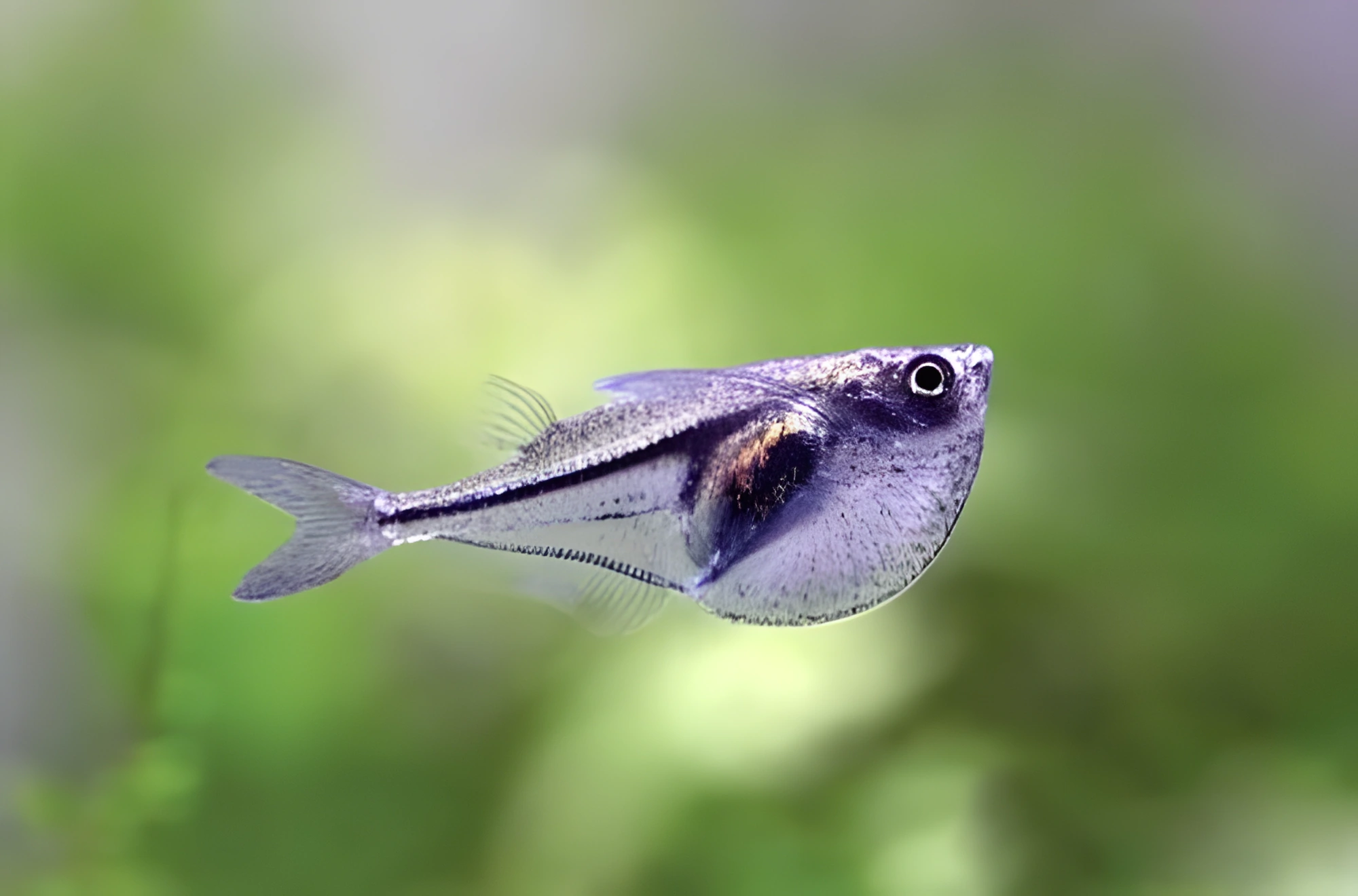
Carnegiella myersi, known as the Pygmy Hatchetfish, belongs to the Gasteropelecidae family. This miniature predator specializes in hunting small insects found near the water's surface. Distinctive features of this fish include not only its small size but also its characteristic 'hatchet-shaped' body. Despite its uniqueness, the popularity of this fish in aquaristics is limited: breeding in home aquariums is extremely difficult, which explains its rare presence in pet stores.
- Required aquarium volume
- 40 L
- Size in aquarium
- 5 cm
- Temperature
- 23 – 26 °C
- Temperament
- Peaceful, calm/shy/inactive
Parameters
Water pHAcidic (4) – Neutral (7)
Water dHVery soft (2) – Soft (6)
Water salinityno salt (freshwater)
Size in aquarium5 cm
Lifespan4 years
TemperamentPeaceful, calm/shy/inactive
Toward small fishnot a predator
Required aquarium volume40 L
Lightingdimmed
Substratesandy (regular, light)
Water flownone or stagnant (no flow)
FeedingFor carnivores (live fish, insects, etc.)
CareMedium group (6–8 individuals)
Description
Adults reach only 2.5 cm in length. Through their translucent body, which has an unusual shape resembling a hatchet with a rounded blade, internal organs are visible. A dark stripe runs from head to tail along the midline.
Habitat
The origin of this species is linked to South America, specifically the Amazon River basin, located in modern-day Peru. The fish prefers to inhabit shaded streams and channels of the tropical rainforest, where the aquatic environment is often rich in plant fragments such as leaves, branches, and snags.
Behavior and Compatibility
Shy by nature due to their size, but generally peaceful fish. It is advisable to keep them in groups of at least 6 individuals. Suitable tank mates include species of comparable size and temperament, as well as other hatchetfish.
Care and Maintenance
For successful keeping of these fish, an aquarium of at least 40 liters is required. When setting up the tank, special attention should be paid to the upper part of the reservoir; the rest of the arrangement can be adapted to the needs of other inhabitants, if any. Several floating plants should be placed on the water surface, grouped so that they occupy no more than half of the area. Dried leaves, soaked for several days beforehand (to prevent them from floating), can be placed on the bottom. Fallen leaves will serve as a natural source of humic substances, which will impart tannins and a slight brownish tint to the water, characteristic of natural waters in the pygmy hatchetfish's habitat. During activity, whether hunting low-flying insects or reacting to fright, the fish may accidentally jump out of the aquarium; to prevent this, it is recommended to use a lid or cover glass. The basic equipment kit includes a filtration and aeration system, a heater, and lighting fixtures. Equipment settings should match the fish's needs: low light levels and no strong currents. Recommended water parameters are characterized by an acidic pH level and low carbonate hardness.
Diet
This is an insectivorous species that feeds on small insects and their larvae, obtained from the water's surface. Optimal feeding options include live or dried fruit flies (Drosophila), as well as finely chopped parts of other insects. It is important to note that the Pygmy Hatchetfish consumes food exclusively from the water surface; objects in the water column or at the bottom do not interest it.
Breeding and Reproduction
Breeding this species in aquarium conditions is extremely difficult, and there are practically no reliable methods for obtaining offspring. In their natural habitat, the fish are egg-layers. Sexually mature females, when ready to spawn, can be identified by a rounded abdomen filled with eggs, which become visible under transmitted light.
Diseases
Balanced nutrition and properly selected keeping conditions are the best prevention of diseases in freshwater fish. If the first signs of illness appear, such as changes in coloration or behavior, the first step should be to check the water parameters and quality. If necessary, all values should be brought back to normal, and only then should treatment begin. More detailed information on symptoms and treatment methods can be found in the "Diseases of Aquarium Fish" section.
How to choose
When selecting fish, pay attention to the following signs:
- activity of individuals and absence of visible damage to fins or scales
- cleanliness and clarity of the water in the retail aquarium, indicating proper care
- general condition of the school, as the fish should exhibit typical behavior near the water surface
- absence of signs of emaciation or unnatural spots on the body
It is recommended to acquire a group of at least 6 individuals at once, as the species is schooling and sensitive to stress when kept alone.
Frequently asked questions
The essentials: size, tank volume, water parameters and care
How big does Pygmy Hatchetfish get?
An adult reaches 5 cm in length. Plan the tank around the maximum size: the fish quickly outgrows a cramped setup.
What size aquarium does Pygmy Hatchetfish need?
The minimum recommended volume is 40 L. A smaller tank speeds up nitrate build-up and raises stress levels.
What water parameters does Pygmy Hatchetfish need?
Temperature 23–26 °C, pH 4–7, hardness 2–6 dGH. Stability matters more than exact values: sudden swings are harder on the fish than a small deviation from the ideal.
How long does Pygmy Hatchetfish live?
Around 4 years when kept properly. Lifespan depends directly on tank volume, water quality and a varied diet.
Is Pygmy Hatchetfish aggressive?
Temperament: peaceful, calm/shy/inactive. Keep this in mind when choosing tank mates.
How many Pygmy Hatchetfish should be kept together?
Recommended setup: medium group (6–8 individuals). Ignoring this is a common cause of stress and disease.
What does Pygmy Hatchetfish eat?
Diet type: for carnivores (live fish, insects, etc.). Feed small portions that are finished within a couple of minutes — overfeeding does more harm than underfeeding.
What is the scientific name of Pygmy Hatchetfish?
The scientific name of the species is Carnegiella myersi, family Freshwater Hatchetfish (Gasteropelecidae).