Temperature22 – 28 °C
Natural range
- Nile River (Upper)
- Central Africa area
UnusualConservation status: Least concern LC
Other scientific names: Gnathonemus brevicaudatus, Gnathonemus histrio, Gnathonemus peters, Mormyrus petersii
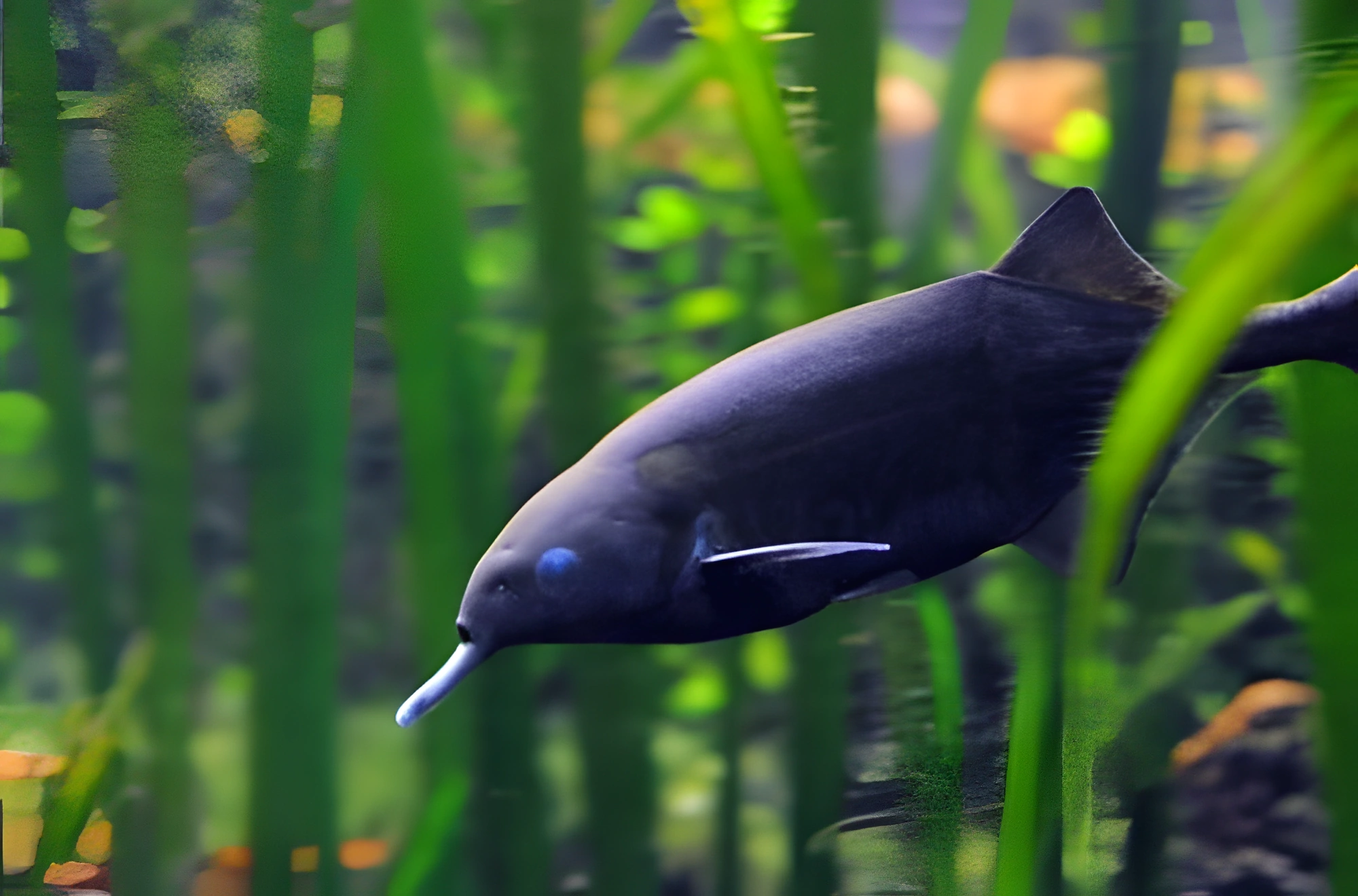
Peters's Elephantnose Fish, often referred to as the Elephantfish or Nile Elephantfish (scientific name Gnathonemus petersii), belongs to the family Mormyridae. Its exotic appearance, resembling an elephant's trunk due to the unique shape of its mouth, gave it this memorable name. However, it's worth noting that successful keeping of this species requires specific conditions, so it is not recommended for inexperienced aquarists.
- Required aquarium volume
- 250 L
- Size in aquarium
- 22 cm
- Temperature
- 22 – 28 °C
- Temperament
- Peaceful (regular)
Parameters
Water pHSlightly acidic (6) – Neutral (7.5)
Water dHSoft (5) – Hard (15)
Water salinityno salt (freshwater)
Size in aquarium22 cm
Lifespan8 years
TemperamentPeaceful (regular)
Toward small fishnot a predator
Required aquarium volume250 L
Lightingdimmed (dull)
Substratesoft silted
Water flowweak or moderate
FeedingSinking (any)
CareSolitary + other species (large / compatible)
Description
Adults can reach a length of approximately 22 cm. Distinguishing males from females is quite difficult, as sexual dimorphism is very weakly expressed. A unique feature of this species is its "trunk" — in fact, an elongated lower jaw, used as a probe to search for food in silty substrate. The body coloration is charcoal black, adorned with two light vertical stripes located closer to the caudal part, between the dorsal and anal fins. Gnathonemus petersii is noted to be primarily active at night. In low light conditions, for orientation and foraging, it relies not on vision but on a special electrogenic organ located in the tail, which constantly generates weak electric fields. Electroreceptors on the head allow it to detect even the slightest changes in this field, helping the fish to "see" its surroundings.
Habitat
This species originates from the African continent. Despite its name "Nile Elephantfish," it is found not only in the Nile River (and then only in its upper reaches) but also in numerous bodies of water in equatorial and tropical zones. They most often inhabit murky, slow-moving waters, preferring bottom layers with abundant aquatic vegetation.
Behavior and Compatibility
Despite its calm nature, this species exhibits territorial behavior. The Elephantfish is not prone to cohabitation with its conspecifics; stronger individuals can even lead to the death of weaker ones. Nevertheless, they are well compatible with other peaceful but not overly active fish. Potential tank mates include Anabantids, Synodontis, Congo Tetras, and Butterflyfish, as well as a number of African river cichlids.
Care and Maintenance
For comfortable living, a single specimen requires an aquarium of at least 250 liters. Key conditions for successful keeping of the Nile Elephantfish include subdued lighting and a soft substrate type. Aquarium design can include driftwood, smooth stones, and shade-tolerant plants such as Anubias, Vallisneria, as well as various mosses and ferns. Particular attention should be paid to the choice of substrate: a hard or sharp substrate can damage the fish's sensitive "trunk," making feeding difficult. Maintaining stable water parameters is also paramount. It is advisable to install a high-performance filtration system, but when choosing it, one should consider that these fish tolerate strong water currents poorly. Therefore, preference should be given to models that do not create excessive water movement. As for regular care, it is standard: weekly partial water changes are necessary, and organic waste should be removed regularly.
Diet
Regarding diet, this species is not particularly demanding. The Nile Elephantfish readily accepts various types of food: dry, frozen, or live. An important condition is that the food must be sinking, for example, granules or flakes combined with bloodworms.
Breeding and Reproduction
Breeding these fish in home aquariums has not yet been successful. One of the factors preventing spawning is the fish's use of electrical impulses to recognize individuals of their own species, including for sex identification. In captivity, sensitivity to these impulses can decrease, which hinders them from finding a partner.
Diseases
Health problems in fish are most often associated with unfavorable keeping conditions. Poor water quality, an unsuitable diet, or mechanical damage can cause various infectious diseases. In a well-balanced aquarium environment, health problems generally do not arise. More detailed information on disease symptoms and treatment methods can be found in the relevant section "Diseases of Aquarium Fish."
How to choose
When choosing an Elephantfish in a store, pay attention to the condition of its skin, as this species lacks scales, making it extremely vulnerable to infections and mechanical damage. A healthy individual should be active (in the evening), without visible ulcers, film, spots, or damage in the area of the mouth-proboscis, which is a key feeding tool. Avoid purchasing fish that appear emaciated, have a sunken belly, or show signs of apathy, constantly hiding even in subdued light.
It is important to consider that these fish are very sensitive to water quality and stress during transportation. Before purchasing, ask the seller how long the fish has been in the store and what it is fed, as some individuals may refuse unfamiliar food. Refuse to purchase if aggressive tank mates are kept with Elephantfish or if signs of death of other individuals are observed in the same system, as Gnathonemus are extremely susceptible to diseases and tolerate treatment with common medications poorly.
Frequently asked questions
The essentials: size, tank volume, water parameters and care
How big does Elephantfish get?
An adult reaches 22 cm in length. Plan the tank around the maximum size: the fish quickly outgrows a cramped setup.
What size aquarium does Elephantfish need?
The minimum recommended volume is 250 L. A smaller tank speeds up nitrate build-up and raises stress levels.
What water parameters does Elephantfish need?
Temperature 22–28 °C, pH 6–7.5, hardness 5–15 dGH. Stability matters more than exact values: sudden swings are harder on the fish than a small deviation from the ideal.
How long does Elephantfish live?
Around 8 years when kept properly. Lifespan depends directly on tank volume, water quality and a varied diet.
Is Elephantfish aggressive?
Temperament: peaceful (regular). Keep this in mind when choosing tank mates.
How many Elephantfish should be kept together?
Recommended setup: solitary + other species (large / compatible). Ignoring this is a common cause of stress and disease.
What does Elephantfish eat?
Diet type: sinking (any). Feed small portions that are finished within a couple of minutes — overfeeding does more harm than underfeeding.
What is the scientific name of Elephantfish?
The scientific name of the species is Gnathonemus petersii, family Mormyridae. It also appears in the literature as: Gnathonemus brevicaudatus, Gnathonemus histrio, Gnathonemus peters.