Temperature15 – 30 °C
Natural range
- Southeast Asia area
- Australia area
Labyrinth fishConservation status: Least concern LC
Other scientific names: Amphiprion scansor, Amphiprion testudineus, Anabas elongatus, Anabas macrocephalus, Anabas microcephalus, Anabas scandens
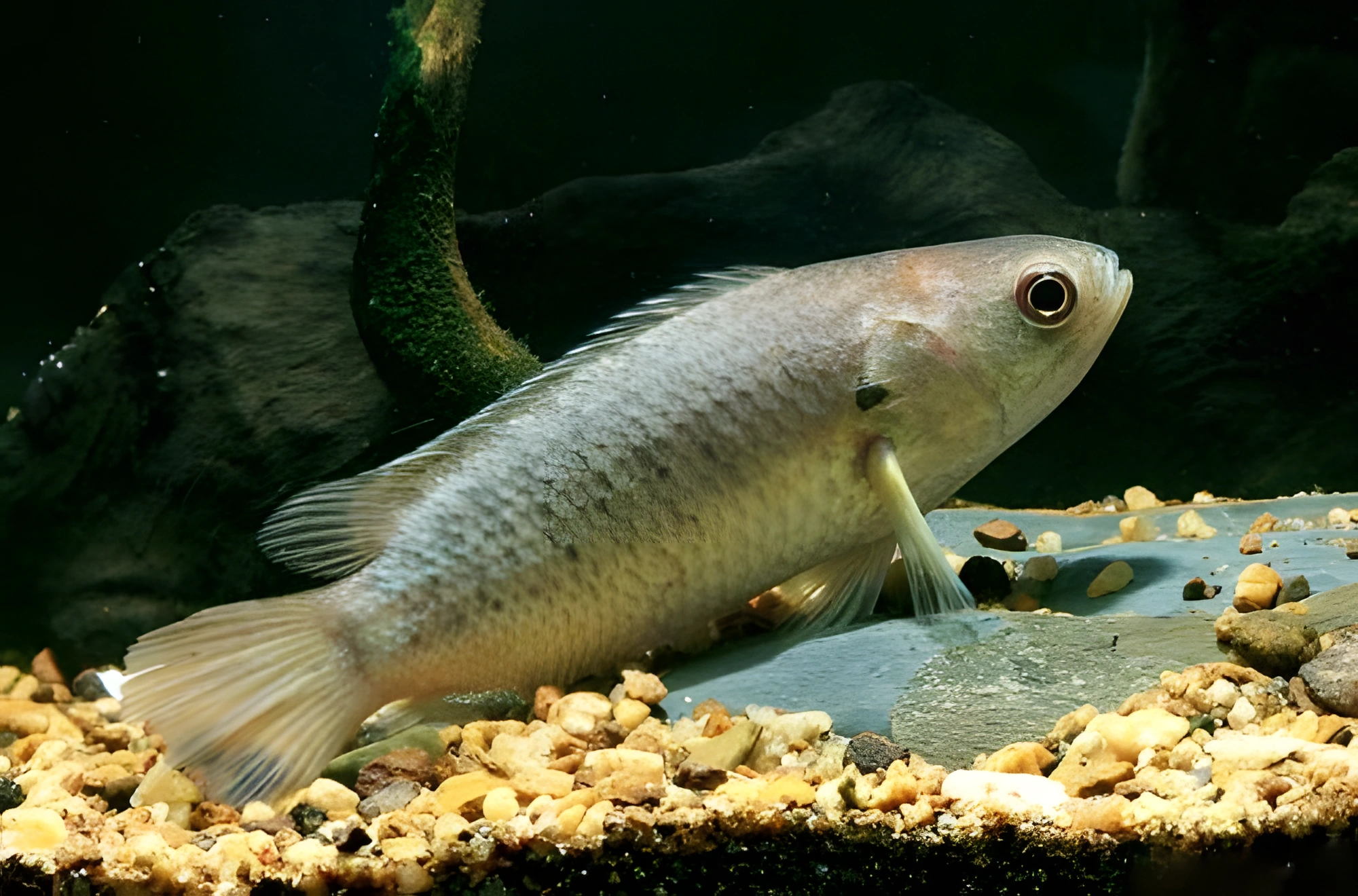
The Climbing Perch, scientifically known as Anabas testudineus, belongs to the family Anabantidae. This species is remarkably hardy and undemanding. The Anabas possesses a unique ability among fish to move on land: it uses its pectoral fins to lift its body above the surface, while its tail provides propulsion. In this way, the fish can cover short distances if its water body dries up. Despite its wide distribution in Asia, it has not gained great popularity in aquaristics, which is attributed to its large size and rather drab coloration. In some countries, it is farmed as an important food source.
- Required aquarium volume
- 200 L
- Size in aquarium
- 20 cm
- Temperature
- 15 – 30 °C
- Temperament
- Aggressive / incompatible / unfriendly
Parameters
Water pHSlightly acidic (5.5) – Slightly alkaline (8)
Water dHVery soft (2) – Very hard (26)
Water salinityno salt (freshwater)
Size in aquarium20 cm
Lifespan8 years
TemperamentAggressive / incompatible / unfriendly
Toward small fishnot a predator
Required aquarium volume200 L
Lightingdimmed
Substratesandy (regular, light)
Water flownone or stagnant (no flow)
FeedingHigh protein (predominantly meat)
CarePair (male/female)
Description
Adults reach up to 20 cm in length, with some specimens growing to 25–30 cm. Females are typically noted to be slightly larger than males. The fish's coloration varies from gray to brown, with barely discernible dark speckles and two black spots located at the base of the tail and behind the gill cover. Their fins are rounded and significantly shifted towards the caudal part of the body.
Habitat
These fish are widely distributed in Southeast Asia and have also been introduced to Australia and the Pacific Islands. They are found in almost all aquatic biotopes: from swamps and lakes to river backwaters, canals, and even in rice paddies or temporary forest puddles. During the rainy season, when coastal areas are flooded, Anabas can move significant distances from the main channel. However, when the water recedes, the fish often find themselves in isolated water bodies. In such cases, to survive, they are capable of long overland migrations, sometimes covering hundreds of meters in search of a new habitat. Movement is achieved using pectoral fins and lateral movements of the tail and posterior part of the body. Such "journeys" do not occur regularly, but only when the water body completely dries up. In extreme conditions, Anabas can enter a state of dormancy for several weeks, burying itself in the substrate.
Behavior and Compatibility
These fish are not suitable for keeping in a community tank due to their large size in adulthood and predatory nature. Any small fish in their vicinity will be eaten. Coexistence is only possible with species of similar size, for example, with Pacu, and only in a very spacious aquarium. There is no precise data on intraspecific aggression in Anabas, which is explained by their great diversity and wide habitat range. In different regions, representatives of this species can exhibit both friendly behavior towards conspecifics and extremely aggressive attacks on potential rivals. It has been noted that an increase in water temperature can provoke more aggressive behavior even in normally calm Anabas.
Care and Maintenance
For keeping a single Climbing Perch, an aquarium of at least 200 liters is required. Anabas can adapt to various conditions, so the aquarium setup primarily depends on the aquarist's preferences. It is only important to follow a few recommendations: provide shelters, a soft substrate, and areas with dense vegetation. The fish is undemanding regarding water hydrochemistry and temperature. However, attention should be paid to the lighting level and internal current: the equipment must be configured to provide subdued light and, if possible, minimize water movement. Aquarium maintenance includes regular cleaning of the substrate from organic waste and weekly partial water changes (10–15% of the total volume) with fresh water.
Diet
The diet of Anabas consists of small fish, invertebrates, and mollusks, as it leads a predatory lifestyle. In a home aquarium, these fish readily accept large live and frozen foods. Many aquarists successfully acclimate them to granulated dry foods, which are protein-based with added plant components. Before purchasing the fish, it is crucial to clarify its current diet.
Breeding and Reproduction
Anabas is one of the few labyrinth fish that shows no parental care for its offspring. During the breeding season, males develop a reddish tint on their ventral fins and tail, and their dark speckles become more distinct. Females become noticeably rounded at this time. After brief courtship rituals, spawning begins, accompanied by peculiar "embraces" between the partners. At the climax, hundreds of eggs and milt are released. The total number of eggs in one spawning can reach several thousand. The eggs float freely on the water surface. Fry hatch within 24 hours, measuring 2–3 mm in length. Breeding Anabas in home aquariums is practically impossible without the use of hormonal injections, which are widely used in commercial aquaculture on fish farms.
Diseases
The main cause of most diseases in Leaf Fish is unsuitable keeping conditions and poor-quality nutrition. If initial symptoms are observed, it is first necessary to check water parameters and the concentration of dangerous substances such as ammonia, nitrites, and nitrates. If the indicators deviate from the norm, they should be brought back into order, and only then should treatment begin. More detailed information on symptoms and treatment methods can be found in the "Aquarium Fish Diseases" section.
How to choose
When purchasing an Anabas, it is advisable to choose young specimens, as adult fish adapt less well to new conditions and may exhibit pronounced intraspecific aggression. Carefully inspect the fish for skin and fin damage, which often occurs during improper transport or housing. A healthy Anabas should have clear, unclouded eyes, and its breathing should be regular. Avoid specimens that appear emaciated or show signs of lethargy, unless this is related to the species' nocturnal activity.
Be aware that Anabas have sharp spines on their gill covers, which can easily damage a net or your hands. In the store, it's best to observe the fish's behavior in the aquarium: a healthy Anabas is curious and may be timid. It's important to ask the seller what type of food the specific specimen is accustomed to, as transitioning to dry pellets after a live diet may take time. Do not purchase fish if there are signs of infectious diseases among other inhabitants in the store's community tank.
Frequently asked questions
The essentials: size, tank volume, water parameters and care
How big does Climbing Perch get?
An adult reaches 20 cm in length. Plan the tank around the maximum size: the fish quickly outgrows a cramped setup.
What size aquarium does Climbing Perch need?
The minimum recommended volume is 200 L. A smaller tank speeds up nitrate build-up and raises stress levels.
What water parameters does Climbing Perch need?
Temperature 15–30 °C, pH 5.5–8, hardness 2–26 dGH. Stability matters more than exact values: sudden swings are harder on the fish than a small deviation from the ideal.
How long does Climbing Perch live?
Around 8 years when kept properly. Lifespan depends directly on tank volume, water quality and a varied diet.
Is Climbing Perch aggressive?
Temperament: aggressive / incompatible / unfriendly. Keep this in mind when choosing tank mates.
How many Climbing Perch should be kept together?
Recommended setup: pair (male/female). Ignoring this is a common cause of stress and disease.
What does Climbing Perch eat?
Diet type: high protein (predominantly meat). Feed small portions that are finished within a couple of minutes — overfeeding does more harm than underfeeding.
What is the scientific name of Climbing Perch?
The scientific name of the species is Anabas testudineus, family Anabantidae. It also appears in the literature as: Amphiprion scansor, Amphiprion testudineus, Anabas elongatus.