Temperature24 – 28 °C
Natural range
- Red Sea area
- East Africa area
UnusualConservation status: Least concern LC
Other scientific names: Chaetodon argenteus, Gasteronemus rhombeus, Monodachtylus argenteus, Monodactylus argentues, Psettus argenteus, Psettus rhombeus
The Silver Moony, also known as the Silver Mono, bears the scientific name Monodactylus argenteus and belongs to the family Monodactylidae. These active and beautiful fish, when kept in a school, always look very impressive. Distinguished by their hardiness and undemanding diet, they are relatively easy to keep if the aquarist is prepared to set up a marine or brackish aquarium. These fish are not recommended for beginner hobbyists.
- Required aquarium volume
- 300 L
- Size in aquarium
- 15 cm
- Temperature
- 24 – 28 °C
- Temperament
- Semi-peaceful (including aggression during spawning / intraspecific conflicts)
Parameters
Water pHNeutral (7.2) – Slightly alkaline (8.5)
Water dHVery hard (18) – Very hard (25)
Water salinityhigh (15–20 g/L)
Size in aquarium15 cm
Lifespan10 years
TemperamentSemi-peaceful (including aggression during spawning / intraspecific conflicts)
Toward small fishnot a predator
Required aquarium volume300 L
Lightingmoderate or bright
Substratesandy (regular, light)
Water flowweak or moderate
FeedingAny (universal)
CareSmall group (5–6 individuals)
Description
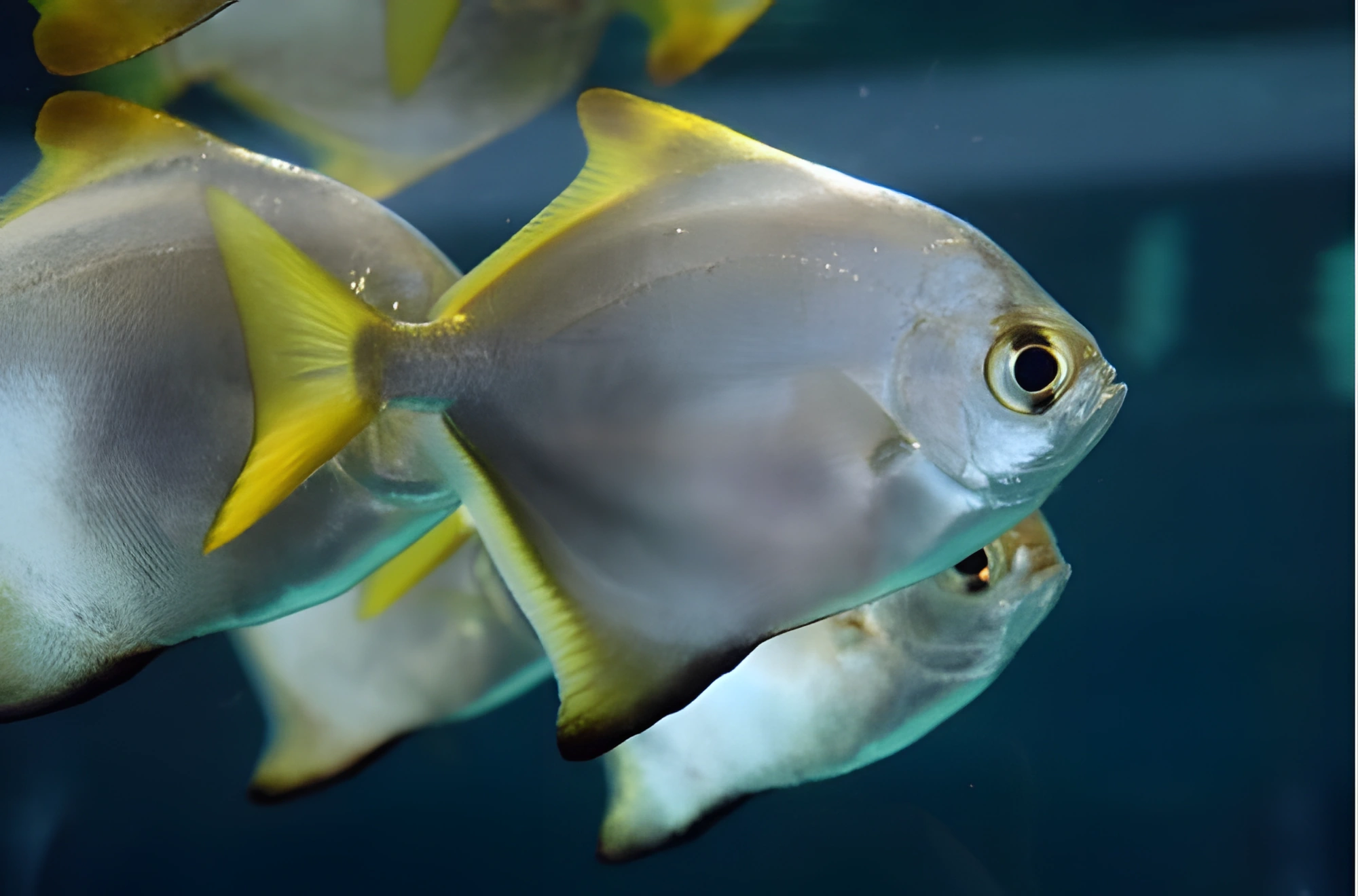
In the wild, adult specimens can reach a length of about 27 cm. However, in an aquarium environment, they typically grow no larger than 15 cm. The fish's body is rhomboid in shape and strongly compressed laterally. The primary coloration is silvery. The tail and dorsal fin stand out with yellow hues, while the anal fin is black. Noticeable black diagonal stripes adorn the head.
Habitat
The natural habitat of Monodactylus argenteus spans the coastal zones of the Red Sea, extending along East Africa, the coasts of Australia, and throughout Southeast Asia. These fish thrive in both saltwater and brackish waters of river deltas flowing into the sea. Their preferred locations are open water expanses.
Behavior and Compatibility
The Silver Moony is a schooling species, exhibiting the greatest comfort in a group consisting of at least five individuals. Relationships within the school are characterized by a pronounced hierarchy: the largest and strongest individual becomes dominant, which is particularly evident during feeding, when it is the first to rush to the food. These fish coexist well with similarly sized species, such as archerfish, mudskippers, mollies, and other brackish water inhabitants. However, it should be noted that very small fish may be perceived as prey and, consequently, eaten.
Care and Maintenance
For comfortable keeping of a school of 4–5 fish, the optimal aquarium volume starts from 300 liters. For decor, it is preferable to use sandy substrate, large boulders, and driftwood. The presence of live plants is not mandatory, but if desired, several undemanding species can be placed, which must first be acclimated to saltwater. Silver Moony should be kept in brackish conditions, which implies the use of specialized equipment for marine aquariums. The recommended salt concentration is 15–20 grams per 1 liter of water. Maintaining high water quality directly depends on the efficiency of the filtration system and regular maintenance procedures, such as cleaning the substrate and decor elements, as well as weekly partial water changes (at least 30% of the total volume) with fresh water.
Diet
The species is omnivorous. The fish readily accepts a variety of foods, including frozen or fresh bloodworms, Artemia, as well as dry foods and vegetable supplements such as spirulina flakes, small pieces of green vegetables, or blanched peas. An important condition for successful keeping is offering a varied diet daily.
Breeding and Reproduction
In captivity, these fish typically do not breed. Isolated cases of spawning have been recorded, but attempts to reproduce them have not been successful, so they are considered accidental. For sale, Silver Moonies are supplied either from commercial fish farms or caught in their natural habitat.
Diseases
This fish is known for its hardiness and adaptability. In favorable conditions and a well-balanced biological system in the aquarium, the risks of disease are extremely low. Health problems usually arise from deteriorating water quality, insufficient nutrition, or injuries. More detailed information on symptoms and treatment methods can be found in the “Aquarium Fish Diseases” section.
How to choose
When choosing Silver Moonies, preference should be given to individuals that are active and consistently remain part of the group. A healthy fish has clean, shiny scales without spots, ulcers, or visible damage, and its fins should be spread and intact. Avoid purchasing fish with signs of depression, such as pale coloration, rapid breathing, or a tendency to stay alone in a corner of the aquarium.
It is important to note that this species is very sensitive to transportation and changes in living conditions. When inspecting them in the store, pay attention to the following factors:
- absence of white film on the fish's body, resembling semolina or cotton;
- clear, transparent eyes without cloudiness;
- calm behavior within the school, absence of signs of emaciation or body deformation.
Since Silver Moonies are schooling fish, it is recommended to purchase a group of 5–8 individuals at once, which reduces stress during adaptation to a new aquarium.
Frequently asked questions
The essentials: size, tank volume, water parameters and care
How big does Silver Moony get?
An adult reaches 15 cm in length. Plan the tank around the maximum size: the fish quickly outgrows a cramped setup.
What size aquarium does Silver Moony need?
The minimum recommended volume is 300 L. A smaller tank speeds up nitrate build-up and raises stress levels.
What water parameters does Silver Moony need?
Temperature 24–28 °C, pH 7.2–8.5, hardness 18–25 dGH. Stability matters more than exact values: sudden swings are harder on the fish than a small deviation from the ideal.
How long does Silver Moony live?
Around 10 years when kept properly. Lifespan depends directly on tank volume, water quality and a varied diet.
Is Silver Moony aggressive?
Temperament: semi-peaceful (including aggression during spawning / intraspecific conflicts). Keep this in mind when choosing tank mates.
How many Silver Moony should be kept together?
Recommended setup: small group (5–6 individuals). Ignoring this is a common cause of stress and disease.
What does Silver Moony eat?
Diet type: any (universal). Feed small portions that are finished within a couple of minutes — overfeeding does more harm than underfeeding.
What is the scientific name of Silver Moony?
The scientific name of the species is Monodactylus argenteus, family Monodactylidae. It also appears in the literature as: Chaetodon argenteus, Gasteronemus rhombeus, Monodachtylus argenteus.