Temperature22 – 28 °C
Natural range
- South Asia area
- Southeast Asia area
- Pakistan area
- India area
Predators UnusualConservation status: Least concern LC
Other scientific names: Belone cancila, Belone graii, Esox cancila, Esox hindostanicus, Esox indica, Malstemcembalus cancila
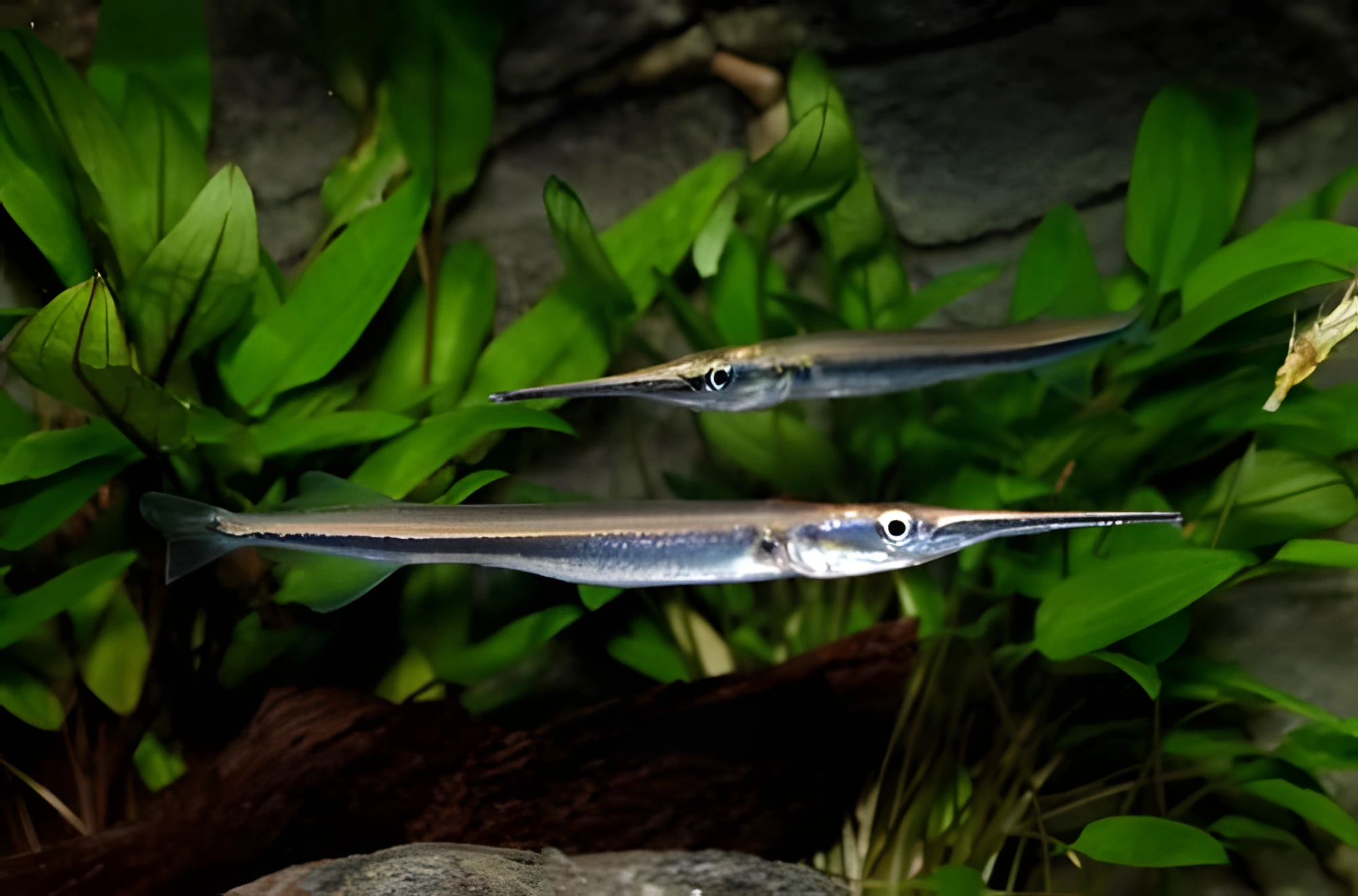
Xenentodon cancila, known as the Freshwater Gar, Freshwater Needlefish, or "Silver Needle," is a member of the Belonidae family. A very similar species, Xenentodon canciloides, is also found under the same name, and their appearance is almost identical. These fish are categorized as peaceful predators. Thanks to their unusual appearance, undemanding care, and good compatibility with many other aquarium inhabitants, they have gained popularity among aquarists. However, their specific dietary preferences mean they cannot be recommended to all hobbyists without exception.
- Required aquarium volume
- 500 L
- Size in aquarium
- 35 cm
- Temperature
- 22 – 28 °C
- Temperament
- Peaceful (regular)
Parameters
Water pHSlightly acidic (6) – Slightly alkaline (8)
Water dHVery soft (2) – Hard (15)
Water salinityno salt (freshwater)
Size in aquarium35 cm
Lifespan5 years
TemperamentPeaceful (regular)
Toward small fishpredator
Required aquarium volume500 L
Lightingdimmed
Substrateany (no restrictions)
Water flowweak or moderate
FeedingMeat / protein (live, frozen, fresh)
CareSmall group (3–4 individuals)
Description
Adults grow up to 35 cm in length. A distinctive feature of these fish is their body shape—it is very thin and greatly elongated, which is why they are sometimes called "Silver Needle." Sexual dimorphism in these fish is not pronounced, but males can be relatively easily distinguished from females. Males have a black fringe on their dorsal and anal fins. Additionally, during the breeding season, they develop a small hump behind the head, the lower jaw acquires a reddish tint, and the belly becomes golden-yellow.
Habitat
The natural habitat of this species covers Southeast Asia, extending from Pakistan and India to Nepal, Bangladesh, Sri Lanka, Myanmar, and Thailand. Wild populations have also successfully established themselves in the Hawaiian Islands, where they were introduced. These fish prefer slow-moving rivers, streams, and swamps. During the rainy season, when water levels rise, they migrate to faster rivers, as well as artificial and irrigation canals. They prefer poorly lit areas with abundant riparian vegetation.
Behavior and Compatibility
Despite being a predator, the Needlefish has a peaceful disposition. It can coexist peacefully with other calm fish species, provided they are large enough not to fit into its mouth. Avoid cohabitation with overly active and restless species, such as Barbs. Intraspecific conflicts are absent. These fish prefer to live in small groups of three to four individuals.
Care and Maintenance
For keeping 3-4 fish, an aquarium of at least 500 L is required, with a depth of at least 30 cm. An important element of the setup is the creation of dense plant thickets along the aquarium walls, which allows for open swimming spaces. Lighting should be subdued. Floating plants and those overhanging the water surface are welcome, as they provide additional shading. In this case, it may be necessary to increase the brightness of the main light. Other decorative elements and substrate type are chosen at the aquarist's discretion. When keeping predatory species, a productive filtration system is crucial. In addition to filter power, attention should be paid to how and where the purified water is returned. Various filter models and types can create excessive current. For Freshwater Needlefish, internal current should be minimal. High water quality is also maintained by weekly water changes (20–30% of the volume) and regular cleaning of organic deposits from the substrate and decor elements.
Diet
In its natural environment, this predator feeds on small fish and various insects. When kept in a home aquarium, adult fish should be fed pieces of fish meat, shrimp, mussels, large earthworms, as well as flies, crickets, and other insects. Young individuals can consume small earthworms or finely chopped shrimp.
Breeding and Reproduction
Breeding needlefish in a home aquarium is significantly challenging, as it requires replicating specific environmental changes characteristic of their natural conditions. The breeding period occurs from May to September, when Southeast Asia experiences abundant rainfall, affecting the hydrochemical composition of the water and lowering its temperature. The female lays several eggs daily, attaching them to submerged vegetation with thin adhesive threads. The incubation period lasts from 7 to 10 days. The hatched fry feed on zooplankton. It is important to note that as they grow, larger fry may prey on their smaller siblings.
Diseases
By maintaining favorable conditions, the risk of disease is minimized. The main factors provoking diseases are deteriorating water quality and the use of inadequate food. For example, feeding live fish can contribute to parasitic infections. More detailed information on symptoms and treatment methods can be found in the "Aquarium Fish Diseases" section.
How to choose
When choosing a needlefish, special attention should be paid to the integrity of the mouth apparatus: any damage, deformities, or signs of injury to the "beak" are unacceptable, as they critically hinder feeding. A healthy individual should be active, without visible spots, ulcers, or film on the body. Avoid fish with cloudy, sunken eyes or signs of emaciation, manifested by an excessively thin body.
Given the species' timid nature, fish may show stress by bumping into the aquarium walls during inspection at the store; it is important to ensure they do not have open wounds from such collisions. It is recommended to acquire individuals that are already adapted to captive conditions and have started accepting offered food. Due to their susceptibility to injury during transport, inspecting the condition of the jaws and general skin covering after purchase is a mandatory step for quarantine.
Frequently asked questions
The essentials: size, tank volume, water parameters and care
How big does Needlefish get?
An adult reaches 35 cm in length. Plan the tank around the maximum size: the fish quickly outgrows a cramped setup.
What size aquarium does Needlefish need?
The minimum recommended volume is 500 L. A smaller tank speeds up nitrate build-up and raises stress levels.
What water parameters does Needlefish need?
Temperature 22–28 °C, pH 6–8, hardness 2–15 dGH. Stability matters more than exact values: sudden swings are harder on the fish than a small deviation from the ideal.
How long does Needlefish live?
Around 5 years when kept properly. Lifespan depends directly on tank volume, water quality and a varied diet.
Is Needlefish aggressive?
Temperament: peaceful (regular). This is a predatory species — any fish small enough to fit in its mouth will eventually be eaten.
How many Needlefish should be kept together?
Recommended setup: small group (3–4 individuals). Ignoring this is a common cause of stress and disease.
What does Needlefish eat?
Diet type: meat / protein (live, frozen, fresh). Feed small portions that are finished within a couple of minutes — overfeeding does more harm than underfeeding.
What is the scientific name of Needlefish?
The scientific name of the species is Xenentodon cancila, family Needlefish (Belonidae). It also appears in the literature as: Belone cancila, Belone graii, Esox cancila.