Temperature24 – 28 °C
Natural range
- Peru area
CharacinsConservation status: Least concern LC
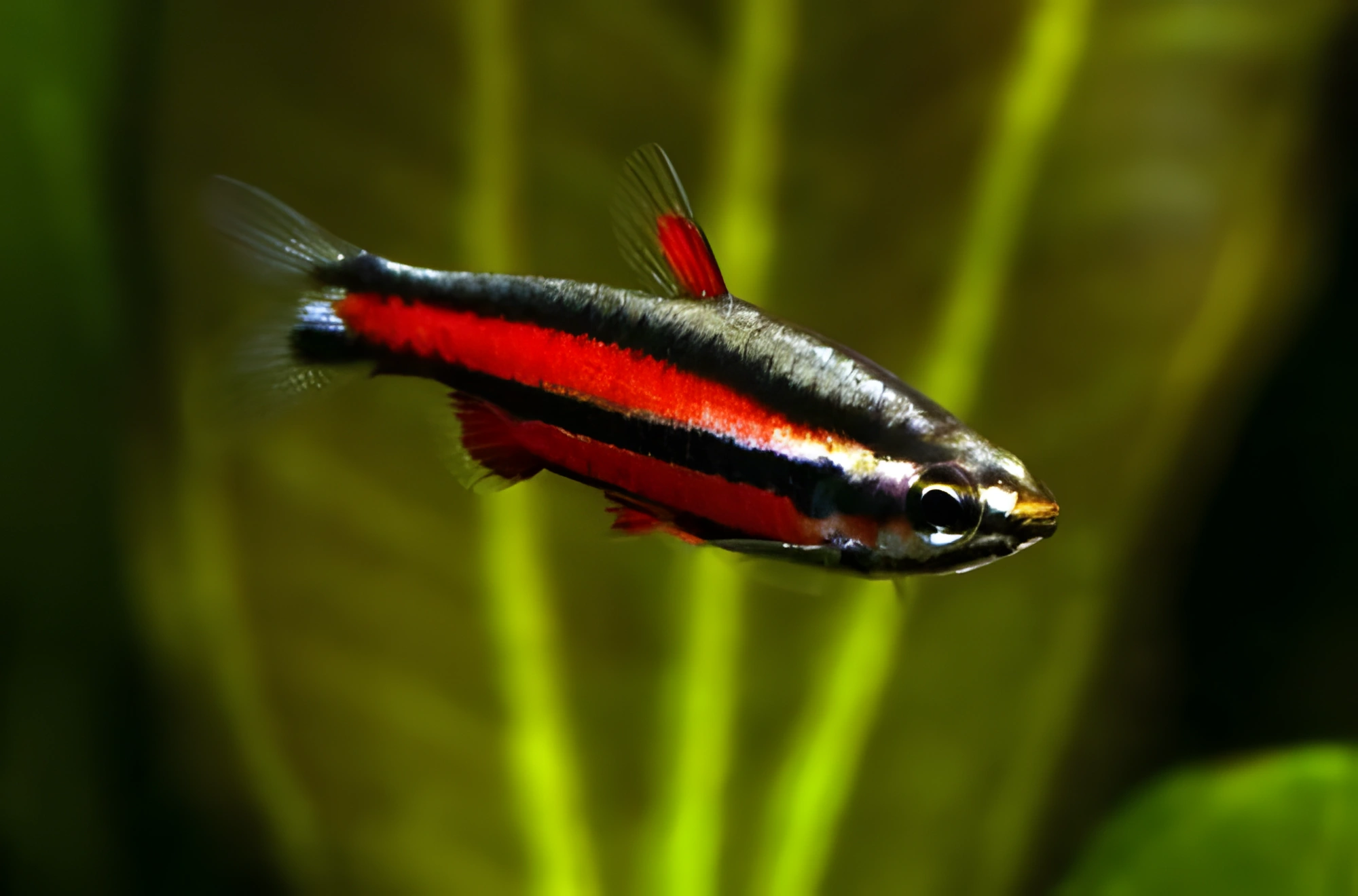
Nannostomus rubrocaudatus, known as the Ruby Nannostomus, belongs to the family Lebiasinidae. This picturesque fish has gained widespread popularity among hobby aquarists due to its vibrant coloration and relatively undemanding care.
- Required aquarium volume
- 80 L
- Size in aquarium
- 2 – 3 cm
- Temperature
- 24 – 28 °C
- Temperament
- Peaceful (regular)
Parameters
Water pHAcidic (4) – Neutral (7.5)
Water dHVery soft (1) – Medium hardness (9)
Water salinityno salt (freshwater)
Size in aquarium2 – 3 cm
Lifespan4 years
TemperamentPeaceful (regular)
Toward small fishnot a predator
Required aquarium volume80 L
Lightingdimmed
Substrateany, but dark
Water flownone or stagnant (no flow)
FeedingAny (universal)
CareLarge group (10+ individuals)
Description
Its resemblance to the Red Nannostomus, a close relative, is noticeable in its appearance. Adult individuals reach a length of up to 3 cm. Males differ from females in their larger size and more intense coloration. The characteristic body pattern features two expressive black horizontal stripes on a silvery-red background. The fins, including the caudal fin, are translucent and have red pigmentation.
Habitat
The natural habitat of these fish extends across Peru, where they are found in the Marañón River basin, up to its confluence with the Ucayali, which forms the headwaters of the Amazon. Although a significant portion of the Marañón flows through mountainous and hilly areas, nannostomus prefer sections with moderate currents, as well as the stagnant waters of swampy zones.
Behavior and Compatibility
These fish are peaceful and active, coexisting well with other non-aggressive species of comparable size that can thrive in similar conditions. Intraspecific relationships are characterized by competition between males, which can sometimes escalate into skirmishes. Weaker individuals, who are "losers," seek refuge among vegetation and driftwood to avoid the attention of their opponents. During the day, nannostomus swim individually, but at night, driven by instinct, they form schools – in their natural environment, this provides them with additional protection from predators.
Care and Maintenance
For a comfortable habitat for a group of 10 Ruby Nannostomus, the aquarium should have a minimum volume of 80 liters. In terms of decor, preference is given to dense thickets of plants arranged in groups, as well as several pieces of driftwood and other natural decorations. The bottom should preferably be covered with dark sand. Such an environment promotes natural fish behavior, reduces their timidity, and provides hiding places for subdominant individuals, as will be discussed in more detail in the "Behavior and Compatibility" section. Dried leaves from certain trees, scattered on the substrate, can also be beneficial. Their function is not so much decorative as it is aimed at recreating a water chemistry close to their natural environment. Gradually decomposing, the leaves release tannins, which affect key hydrochemical parameters – pH and dGH. Successful keeping of this species directly depends on the aquarist maintaining stable water conditions within acceptable temperature ranges, as well as the specified pH and dGH values. To achieve this, regular aquarium maintenance procedures are necessary: weekly partial water changes, timely removal of organic waste, monitoring the concentration of nitrogen cycle products (ammonia, nitrites, nitrates), and equipment prophylaxis.
Diet
In a home aquarium, dry foods such as flakes, granules, or various mixtures can form the basis of their diet. However, the addition of live or frozen foods to the menu is highly recommended.
Breeding and Reproduction
Breeding Ruby Nannostomus in a home aquarium is quite possible, but without special measures, the fry generally do not survive to adulthood. In artificial conditions, there is no specific spawning season. Females become ready to breed at different times, independently of each other. It is not uncommon for one group of females to have already spawned, while others have not yet filled with eggs. If breeding is planned, it is important to carefully observe the population: if eggs are found among the plants, they should be promptly transferred to a separate, pre-prepared tank with identical water parameters. The sooner this is done, the more eggs can be saved, as nannostomus tend to eat their own offspring. The incubation period lasts only 1–2 days. Newly hatched fry require microscopic food. Paramecia will be an ideal option for feeding them; if unavailable, specialized powdered foods or suspensions can be used. After 8 weeks, the fry reach adulthood.
Diseases
Health problems usually arise only as a result of injuries or keeping in unsuitable conditions, which leads to a weakening of the immune system and, as a rule, provokes the development of various diseases. At the first signs of illness, the primary task is to check the water parameters for excesses or dangerous concentrations of toxic substances (nitrates, nitrites, ammonia, etc.). After bringing all indicators back to normal, treatment can begin. More detailed information on symptoms and treatment methods is presented in the "Aquarium Fish Diseases" section.
How to choose
When selecting Ruby Nannostomus, caution should be exercised, as the species is sensitive to transportation and adaptation conditions. Signs of a healthy individual include: active behavior, absence of visible damage, clean fins, and a robust body without signs of emaciation or dropsy. Avoid purchasing fish that appear lethargic, stay near the surface, or have sunken bellies.
Considering the risk of internal parasites, characteristic of wild-caught specimens, it is recommended to inquire with the seller about the quarantine period and the appetite of the group. In the store, the fish should exhibit typical schooling behavior for the species. Since the species can be territorial, it is best to acquire a group of 6–10 individuals to reduce stress levels during relocation.
Frequently asked questions
The essentials: size, tank volume, water parameters and care
How big does Ruby Nannostomus get?
An adult reaches 2–3 cm in length. Plan the tank around the maximum size: the fish quickly outgrows a cramped setup.
What size aquarium does Ruby Nannostomus need?
The minimum recommended volume is 80 L. A smaller tank speeds up nitrate build-up and raises stress levels.
What water parameters does Ruby Nannostomus need?
Temperature 24–28 °C, pH 4–7.5, hardness 1–9 dGH. Stability matters more than exact values: sudden swings are harder on the fish than a small deviation from the ideal.
How long does Ruby Nannostomus live?
Around 4 years when kept properly. Lifespan depends directly on tank volume, water quality and a varied diet.
Is Ruby Nannostomus aggressive?
Temperament: peaceful (regular). Keep this in mind when choosing tank mates.
How many Ruby Nannostomus should be kept together?
Recommended setup: large group (10+ individuals). Ignoring this is a common cause of stress and disease.
What does Ruby Nannostomus eat?
Diet type: any (universal). Feed small portions that are finished within a couple of minutes — overfeeding does more harm than underfeeding.
What is the scientific name of Ruby Nannostomus?
The scientific name of the species is Nannostomus rubrocaudatus, family Lebiasinidae.