Temperature20 – 28 °C
Natural range
- Colombia area
CharacinsConservation status: Least concern LC
Axelrodia riesei, also known as the Ruby Tetra or Axelrod's Tetra, is a fish from the Characin family. Its Latin name has an interesting origin, being a combination of the names of two scientists — Herbert R. Axelrod and William Riese. The fish is considered quite demanding in terms of living conditions, which partly limits its distribution among aquarium enthusiasts.
- Required aquarium volume
- 40 L
- Size in aquarium
- 2 – 3 cm
- Temperature
- 20 – 28 °C
- Temperament
- Peaceful (regular)
Parameters
Water pHAcidic (4) – Neutral (6.5)
Water dHVery soft (1) – Soft (5)
Water salinityno salt (freshwater)
Size in aquarium2 – 3 cm
Lifespan3 years
TemperamentPeaceful (regular)
Toward small fishnot a predator
Required aquarium volume40 L
Lightingdimmed
Substratesandy (regular, light)
Water flowweak
FeedingAny (universal)
CareGroup (8–10 individuals)
Description
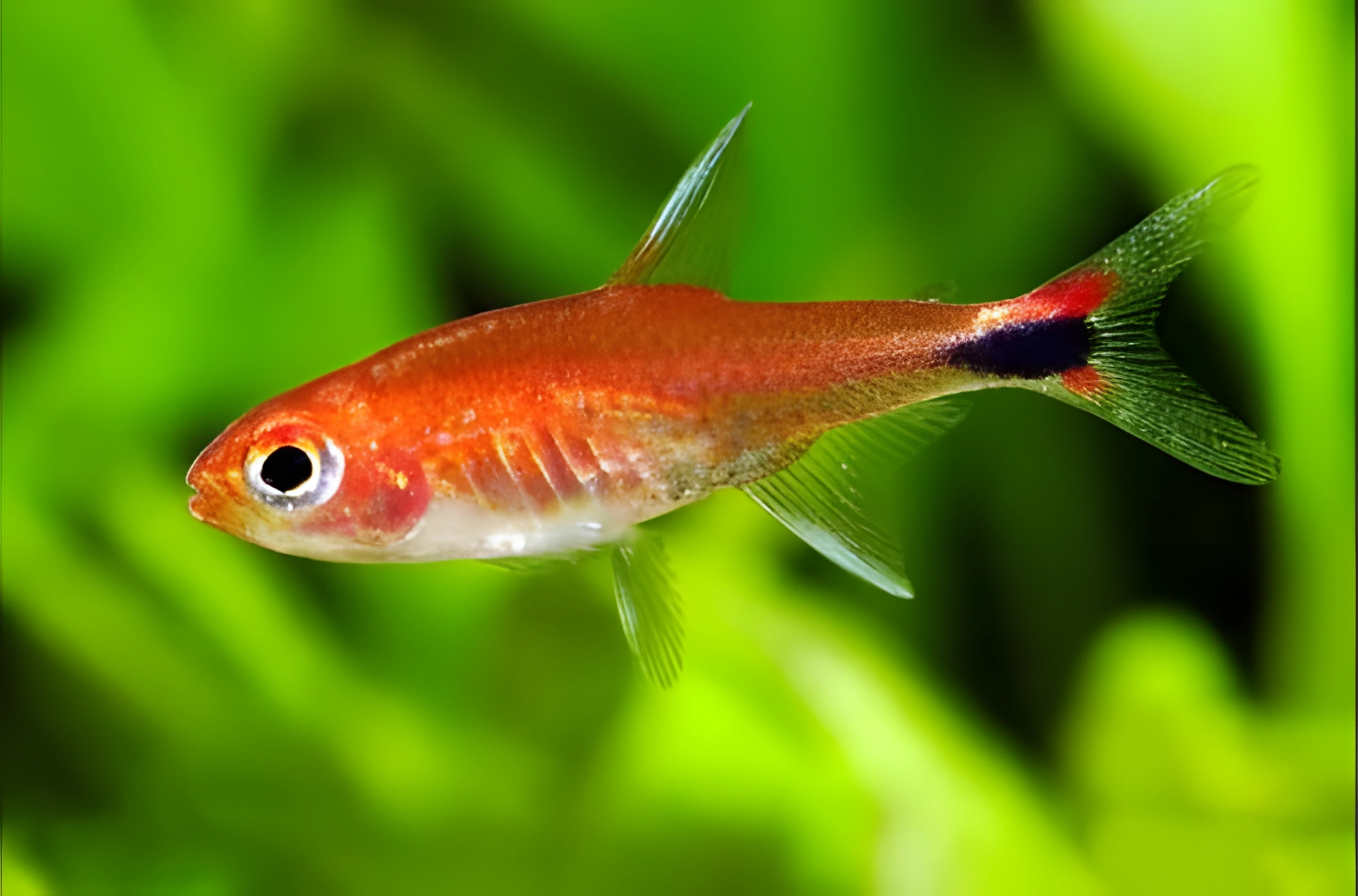
Adult Ruby Tetras reach a modest 2 cm in length. Sexual dimorphism is extremely weak; females and males look almost identical. This fish resembles its close relative, the Peppered Tetra, but differs from it in its more intense, bright orange coloration. Its fins are translucent, and a characteristic black and white mark is noticeable at the base of the caudal fin.
Habitat
The natural habitat of this species is in South America, specifically in the Meta River basin in Colombia, which is a left tributary of the Orinoco. These fish prefer small streams and minor rivers, and are less frequently found in the main channels of water bodies under the dense canopy of the tropical forest. Their natural habitats often consist of shaded channels with bottoms strewn with fallen leaves and snags from roots and branches, and the water in them is enriched with tannins from decomposing organic matter, which gives it a characteristic brownish tint.
Behavior and Compatibility
These fish exhibit a peaceful disposition towards other species, which is quite understandable given their modest size. They are well compatible with non-aggressive fish of comparable size. A schooling lifestyle is not typical for them; males usually occupy certain areas and compete with each other for territory and the attention of females. This competition is harmless and rarely leads to injuries. Nevertheless, for their comfortable existence, it is recommended to keep a group of at least 8–10 individuals.
Care and Maintenance
For maintaining a group of 8–10 Ruby Tetras, an aquarium of at least 40 L is considered optimal. The aquarium setup can be arbitrary, but it is preferable to create conditions with subdued lighting and the use of natural elements such as sandy substrate, driftwood, and shade-loving aquatic plants. An interesting, but not mandatory, decorative addition is dried leaves of certain trees placed on the bottom. As the leaves decompose, processes similar to natural water bodies occur: tannins are released, giving the water a characteristic brown tint, and a valuable secondary food source for fry is created in the form of microorganism colonies, such as paramecia. Successful keeping of Ruby Tetras requires acidic water with low carbonate hardness. To create such conditions, a filtration system with acidifying materials may be needed, as well as the use of reverse osmosis to reduce hardness. The fish is very sensitive to the accumulation of organic waste, so weekly partial water changes with fresh water and timely removal of food residues and excrement are mandatory.
Diet
The Ruby Tetra is omnivorous and actively accepts most appropriately sized foods designed for aquarium fish. Daily feeding can consist exclusively of dry foods such as flakes and granules. However, to maintain health and vibrant coloration, it is recommended to diversify their diet with live or frozen foods whenever possible, such as Artemia, Daphnia, and pieces of bloodworms. It should be remembered that poor-quality foods can cause dullness, and in some cases, a complete loss of their characteristic coloration.
Breeding and Reproduction
Reproduction of Ruby Tetras in aquarium conditions occurs successfully when favorable conditions and a balanced diet are maintained. The fish are capable of producing offspring year-round, without pronounced seasonality, which means that in a large group, the appearance of fry can be observed almost every week. However, these fish do not exhibit parental instincts and often eat their own eggs. To preserve the offspring, fertilized eggs are recommended to be moved to a separate tank with identical water parameters. The hatched fry are very small and require microscopic food, such as the aforementioned infusoria, or specialized liquid or powdered products.
Diseases
Specific diseases that affect only this particular fish species have not been identified. When kept in suitable conditions, including high water quality, a balanced diet, and peaceful tank mates, health issues usually do not arise. The most common cause of illness is a deterioration of living conditions, which weakens the immune system and makes the fish susceptible to infections that are always present in their environment. Upon noticing initial signs of sickness (such as lethargy, emaciation, refusal to eat, or clamped fins), it is crucial to immediately check the basic water parameters. Often, restoring acceptable living conditions will lead to self-recovery, but if the fish is too weak or has suffered visible damage, medicinal treatment may be required. For more details on symptoms and treatment methods, consult the section “Diseases of Aquarium Fish.”
How to choose
When purchasing, choose active fish with bright coloration, as a dull color may indicate stress, poor keeping conditions, or inadequate nutrition. Avoid individuals with visible fin damage, signs of emaciation, or unnatural behavior. Given the species' sensitivity to water quality, ensure that the fish are kept in a clean aquarium without signs of disease, and that their overall condition appears healthy and vigorous.
Frequently asked questions
The essentials: size, tank volume, water parameters and care
How big does Ruby Tetra get?
An adult reaches 2–3 cm in length. Plan the tank around the maximum size: the fish quickly outgrows a cramped setup.
What size aquarium does Ruby Tetra need?
The minimum recommended volume is 40 L. A smaller tank speeds up nitrate build-up and raises stress levels.
What water parameters does Ruby Tetra need?
Temperature 20–28 °C, pH 4–6.5, hardness 1–5 dGH. Stability matters more than exact values: sudden swings are harder on the fish than a small deviation from the ideal.
How long does Ruby Tetra live?
Around 3 years when kept properly. Lifespan depends directly on tank volume, water quality and a varied diet.
Is Ruby Tetra aggressive?
Temperament: peaceful (regular). Keep this in mind when choosing tank mates.
How many Ruby Tetra should be kept together?
Recommended setup: group (8–10 individuals). Ignoring this is a common cause of stress and disease.
What does Ruby Tetra eat?
Diet type: any (universal). Feed small portions that are finished within a couple of minutes — overfeeding does more harm than underfeeding.
What is the scientific name of Ruby Tetra?
The scientific name of the species is Axelrodia riesei, family Characidae.