Temperature22 – 26 °C
Natural range
- Western Ecuador area
- Costa Rica area
CharacinsConservation status: Least concern LC
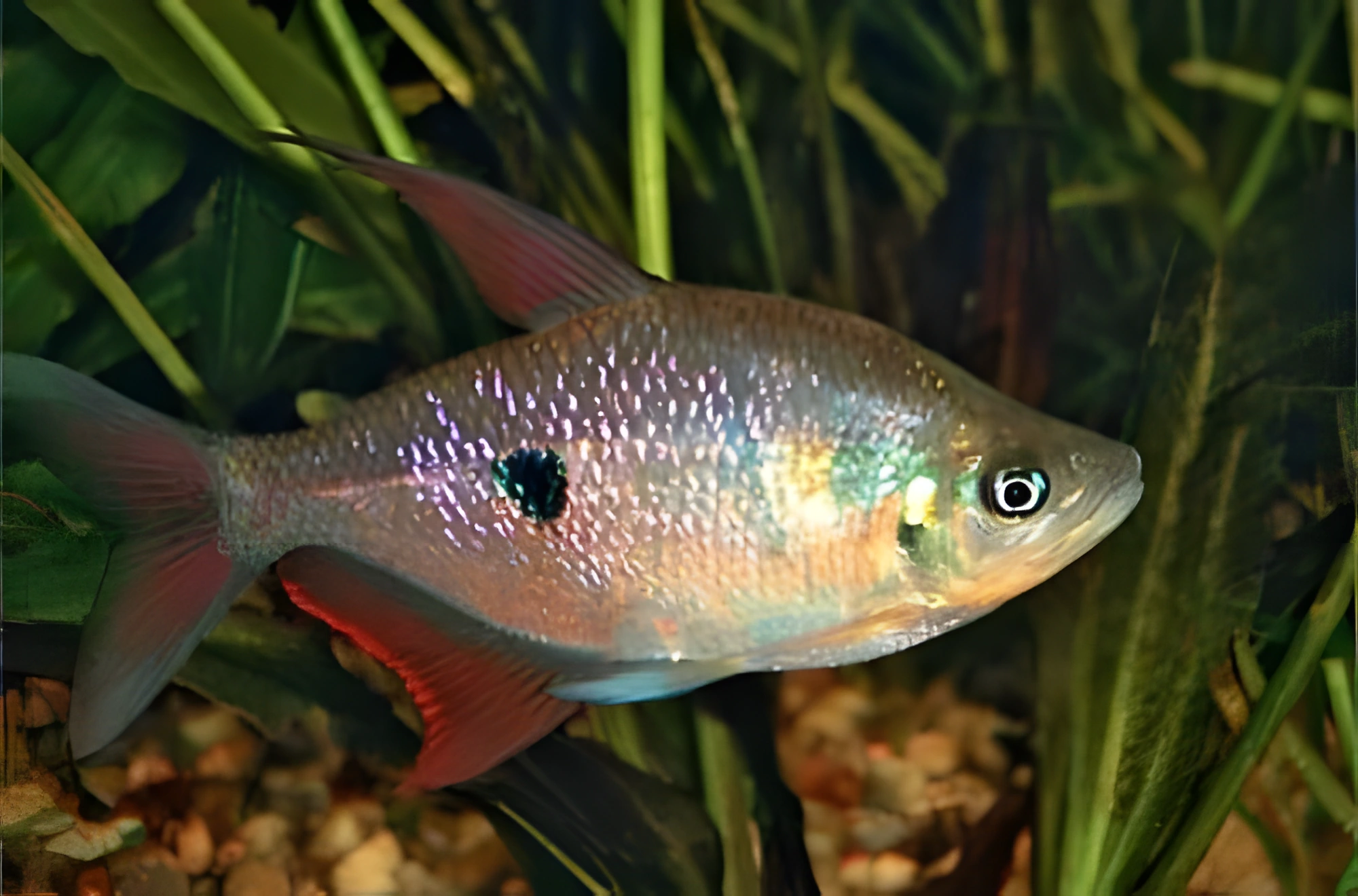
Rhoadsia altipinna, or the high-finned Rhoadsia, belongs to the family Characidae and originates from the waters of South America. These fish inhabit river systems that primarily flow through Ecuador and empty into the Pacific Ocean.
- Required aquarium volume
- 300 L
- Size in aquarium
- 10 – 17 cm
- Temperature
- 22 – 26 °C
- Temperament
- Territorial (often aggressive)
Parameters
Water pHSlightly acidic (6) – Neutral (7)
Water dHSoft (5) – Medium hardness (10)
Water salinityno salt (freshwater)
Size in aquarium10 – 17 cm
Lifespan8 years
TemperamentTerritorial (often aggressive)
Toward small fishnot a predator
Required aquarium volume300 L
Lightingdimmed
Substrateany, but dark
Water flowweak or moderate
FeedingMeat with plant additives (omnivores)
CareSmall group (5–6 individuals)
Description
In their natural habitat, adult individuals can reach 17 cm in length, but in a home aquarium, their size rarely exceeds 10–12 cm. It is important to note that these dimensions are characteristic of males; females are usually significantly smaller. The coloration of these fish has a silvery hue, which, depending on the lighting, can shimmer with iridescent colors. A distinctive feature is a large black spot located on the caudal part of the body.
Habitat
The high-finned Rhoadsia inhabits freshwater bodies in western Ecuador and Costa Rica. In natural conditions, the fish prefer biotopes with clean, oxygen-rich water. The temperature regime in their habitats corresponds to a tropical climate, usually ranging from 22–25°C.
Behavior and Compatibility
This is an active and temperamental fish that is more comfortable in a group. It is recommended to acquire them in a shoal of 5–6 individuals. Although Rhoadsia do not exhibit pronounced territorial behavior, they can become aggressive towards slower or smaller aquarium inhabitants if there is insufficient space. They are also prone to damaging the fins of other fish. They get along well with active fish of a similar size that inhabit the upper water column, as well as with robust catfish, such as Armored Catfish or Plecostomus.
Care and Maintenance
For a small shoal of these fish, an aquarium of at least 200 liters will be optimal. The decor should include shelters and sufficient open space for swimming. It is recommended to use dark substrate — sand or gravel. Lighting should be subdued, and floating plants can create additional shading; if the light is too bright, the fish's coloration may fade. In nature, Rhoadsia inhabit diverse conditions: from fast, shallow rivers to stagnant swamps subject to heavy rainfall, as well as river estuaries with brackish water. However, acclimatized individuals, or those born in captivity, usually thrive in soft, slightly acidic water. Before acquiring these fish, it is important to clarify their keeping conditions to provide them with the most similar environment possible.
Diet
Rhoadsia are considered an omnivorous species. They readily accept various types of food: dry, frozen, and live. When choosing a diet, preference should be given to protein-rich foods.
Breeding and Reproduction
Breeding is possible in a large aquarium of at least 1000 liters. The process involves forming a pair or a harem, where the dominant male exhibits territorial behavior and guards the egg clutch. After the fry become free-swimming, they are fed infusoria, followed by a transition to Artemia nauplii.
Diseases
No specific species-specific diseases have been described for Rhoadsia altipinna; however, the fish are susceptible to typical characin infections if keeping conditions are violated. The main risk factors are the accumulation of organic waste in the water and insufficient aeration, which can lead to the development of bacterial lesions of the fins and skin.
To prevent diseases, the following rules must be observed:
- maintain stable water parameters and perform regular water changes to prevent nitrate accumulation
- ensure powerful filtration and constant oxygen saturation of the water, as the species is sensitive to environmental quality
- avoid overpopulation of the aquarium, which provokes stress and intraspecific aggression, often leading to injuries and subsequent secondary infections
How to choose
When selecting individuals, attention should be paid to the activity of the fish and the absence of visible damage to scales or fins. Given the territorial nature of the species, it is important to assess compatibility with other aquarium inhabitants before purchase. Healthy fish should show interest in food and have clear eyes without cloudiness.
Frequently asked questions
The essentials: size, tank volume, water parameters and care
How big does Rhoadsia get?
An adult reaches 10–17 cm in length. Plan the tank around the maximum size: the fish quickly outgrows a cramped setup.
What size aquarium does Rhoadsia need?
The minimum recommended volume is 300 L. A smaller tank speeds up nitrate build-up and raises stress levels.
What water parameters does Rhoadsia need?
Temperature 22–26 °C, pH 6–7, hardness 5–10 dGH. Stability matters more than exact values: sudden swings are harder on the fish than a small deviation from the ideal.
How long does Rhoadsia live?
Around 8 years when kept properly. Lifespan depends directly on tank volume, water quality and a varied diet.
Is Rhoadsia aggressive?
Temperament: territorial (often aggressive). Keep this in mind when choosing tank mates.
How many Rhoadsia should be kept together?
Recommended setup: small group (5–6 individuals). Ignoring this is a common cause of stress and disease.
What does Rhoadsia eat?
Diet type: meat with plant additives (omnivores). Feed small portions that are finished within a couple of minutes — overfeeding does more harm than underfeeding.
What is the scientific name of Rhoadsia?
The scientific name of the species is Rhoadsia altipinna, family Characidae.