Temperature18 – 24 °C
Natural range
- Santa Catarina area
- Joinville area
KillifishConservation status: Least concern LC
Other scientific names: Rivulus luelingi
The fish, known by the scientific name Atlantirivulus luelingi (formerly Rivulus luelingi) and belonging to the family Rivulidae, is Rivulus luelingi. This species originates from shallow waters in the southern regions of Brazil in South America.
- Required aquarium volume
- 40 L
- Size in aquarium
- 5 cm
- Temperature
- 18 – 24 °C
- Temperament
- Semi-peaceful (including aggression during spawning / intraspecific conflicts)
Parameters
Water pHSlightly acidic (5.5) – Neutral (7)
Water dHSoft (5) – Hard (12)
Water salinityno salt (freshwater)
Size in aquarium5 cm
Lifespan3 years
TemperamentSemi-peaceful (including aggression during spawning / intraspecific conflicts)
Toward small fishnot a predator
Required aquarium volume40 L
Lightingdimmed
Substratesoft sandy (including silted)
Water flownone or stagnant (no flow)
FeedingHigh protein (predominantly meat)
CareHarem (1 male and several females)
Description
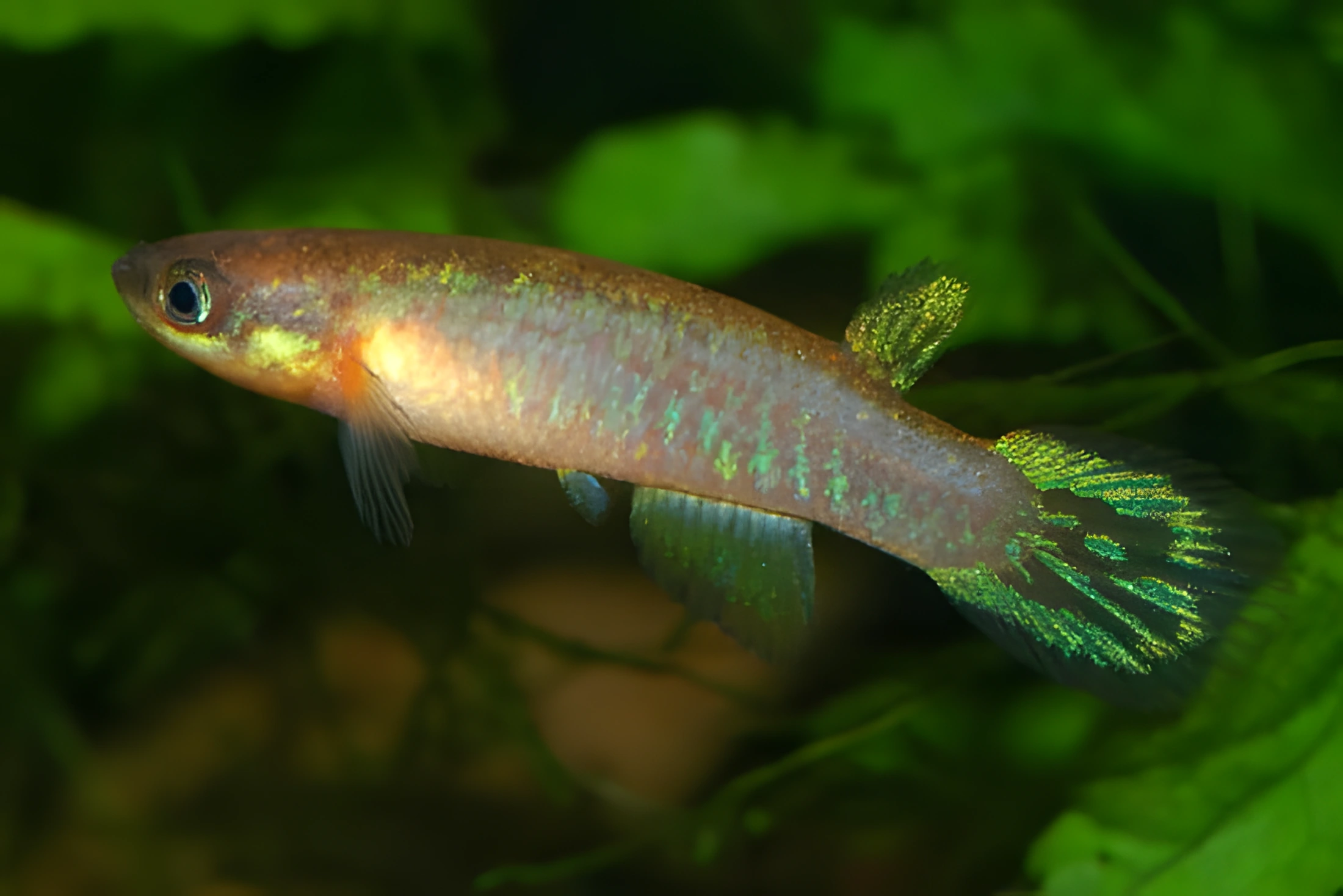
Rivulus luelingi has an elongated body, typical of Rivulidae members. The maximum length of adult specimens is about 5 cm. The coloration and intensity of the pattern on the fins and body vary depending on the sex, with males usually appearing brighter than females. The species is known for its jumping ability, which necessitates a tight-fitting lid on the aquarium.
Habitat
Its habitat is limited to the southeastern regions of Brazil, including the vicinity of Joinville and Araquari. The fish inhabit small freshwater bodies, often found in marshy areas and coastal zones. In nature, they prefer biotopes with water temperatures ranging from 18 to 24 degrees Celsius and lead a benthopelagic lifestyle.
Behavior and Compatibility
Males of this species actively compete with each other, striving to achieve the top position in the hierarchy and attract females. For small aquariums, it is advisable to limit the presence to one male and several females. Females are peaceful towards other members of their own species. Rivulus luelingi do not show aggression and exhibit a friendly attitude towards fish of other species. However, this exception does not extend to closely related species, as males from such groups can also conflict with each other.
Care and Maintenance
For a group of 4-5 fish, an aquarium with a volume starting from 40-50 liters is recommended. The aquascape should be based on soft substrate and abundant aquatic plant thickets, including floating plants, which provide good shading. It is important to maintain a temperature regime in the range of 18–24°C, with pH and GH levels corresponding to 5.0–7.0 and 5–12 dH, respectively. Excessive or strong currents are undesirable, as the fish react negatively to intense water movement. Rivulus luelingi are known for their tendency to jump, so the aquarium must be equipped with a secure lid or other device to prevent accidental escapes. The use of natural materials in the aquarium's decoration, such as certain tree leaves and cones (e.g., alder cones), which serve as a source of valuable tannins, is welcomed. Additional information can be found in the article "What tree leaves can be used in an aquarium."
Diet
In natural conditions, their diet consists mainly of small invertebrates and insect larvae. In the aquarium, the fish require a varied diet of live or frozen food, such as Artemia, Daphnia, or bloodworms. Feeding should be regular, as the species is active throughout the daylight hours.
Breeding and Reproduction
If Rivulus luelingi are kept with other fish species, a specially designated spawning aquarium will be required for successful breeding. A tank of about 10 liters, equipped with a simple air-driven filter, will be suitable for this purpose. The bottom of such an aquarium should be covered with aquatic mosses or ferns, which will serve as an ideal place for egg-laying. Provided with a varied and protein-rich diet, the fish will spawn throughout their adult lives, laying 5 to 15 eggs daily. The amber-colored eggs, about 1.6 mm in size, should be carefully collected and placed in a separate container for further development over approximately 14 days. To prevent fungal diseases, which are a common problem in killifish breeding, it is recommended to add one or two alder cones to the container water, as their tannins serve as an excellent antifungal agent. After hatching, the fry can feed on newly hatched Artemia nauplii. It will take 4-5 months to reach the adult stage. Source of scientific data: FishBase.
Diseases
The species is considered sensitive to water quality and keeping conditions. If environmental parameters are not met, the fish are susceptible to fungal and bacterial infections, especially if their skin is damaged. Prevention involves maintaining water cleanliness, regular water changes, and using peat additives to stabilize pH, which also helps reduce the risk of fungus on the eggs.
How to choose
When selecting specimens, attention should be paid to the activity of the fish and the cleanliness of their skin, without visible spots or growths. Healthy individuals should show curiosity and no signs of emaciation. It is recommended to inquire about the conditions in which the fish were kept, as a sudden change in water parameters can negatively affect their adaptation to a new aquarium.
Frequently asked questions
The essentials: size, tank volume, water parameters and care
How big does Rivulus luelingi get?
An adult reaches 5 cm in length. Plan the tank around the maximum size: the fish quickly outgrows a cramped setup.
What size aquarium does Rivulus luelingi need?
The minimum recommended volume is 40 L. A smaller tank speeds up nitrate build-up and raises stress levels.
What water parameters does Rivulus luelingi need?
Temperature 18–24 °C, pH 5.5–7, hardness 5–12 dGH. Stability matters more than exact values: sudden swings are harder on the fish than a small deviation from the ideal.
How long does Rivulus luelingi live?
Around 3 years when kept properly. Lifespan depends directly on tank volume, water quality and a varied diet.
Is Rivulus luelingi aggressive?
Temperament: semi-peaceful (including aggression during spawning / intraspecific conflicts). Keep this in mind when choosing tank mates.
How many Rivulus luelingi should be kept together?
Recommended setup: harem (1 male and several females). Ignoring this is a common cause of stress and disease.
What does Rivulus luelingi eat?
Diet type: high protein (predominantly meat). Feed small portions that are finished within a couple of minutes — overfeeding does more harm than underfeeding.
What is the scientific name of Rivulus luelingi?
The scientific name of the species is Atlantirivulus luelingi (прежнее название Rivulus luelingi), family Rivulidae. It also appears in the literature as: Rivulus luelingi.