Temperature26 – 32 °C
Natural range
- Pará area
- Mato Grosso area
CichlidsConservation status: Least concern LC
Retroculus xinguensis, a member of the Cichlidae family, has not gained widespread popularity among American cichlid enthusiasts. This is likely due to its rather modest coloration and specific habitat requirements, including strong currents, which are not suitable for all freshwater fish. This fish thrives best in species-specific tanks or biotope setups.
- Required aquarium volume
- 700 L
- Size in aquarium
- 15 – 20 cm
- Temperature
- 26 – 32 °C
- Temperament
- Semi-peaceful (including aggression during spawning / intraspecific conflicts)
Parameters
Water pHSlightly acidic (6) – Slightly alkaline (8)
Water dHVery soft (1) – Hard (12)
Water salinityno salt (freshwater)
Size in aquarium15 – 20 cm
Lifespan10 years
TemperamentSemi-peaceful (including aggression during spawning / intraspecific conflicts)
Toward small fishnot a predator
Required aquarium volume700 L
Lightingdimmed
Substratesand or gravel + stones/boulders
Water flowmoderate or strong
FeedingAny (universal)
CareMedium group (6–8 individuals)
Description
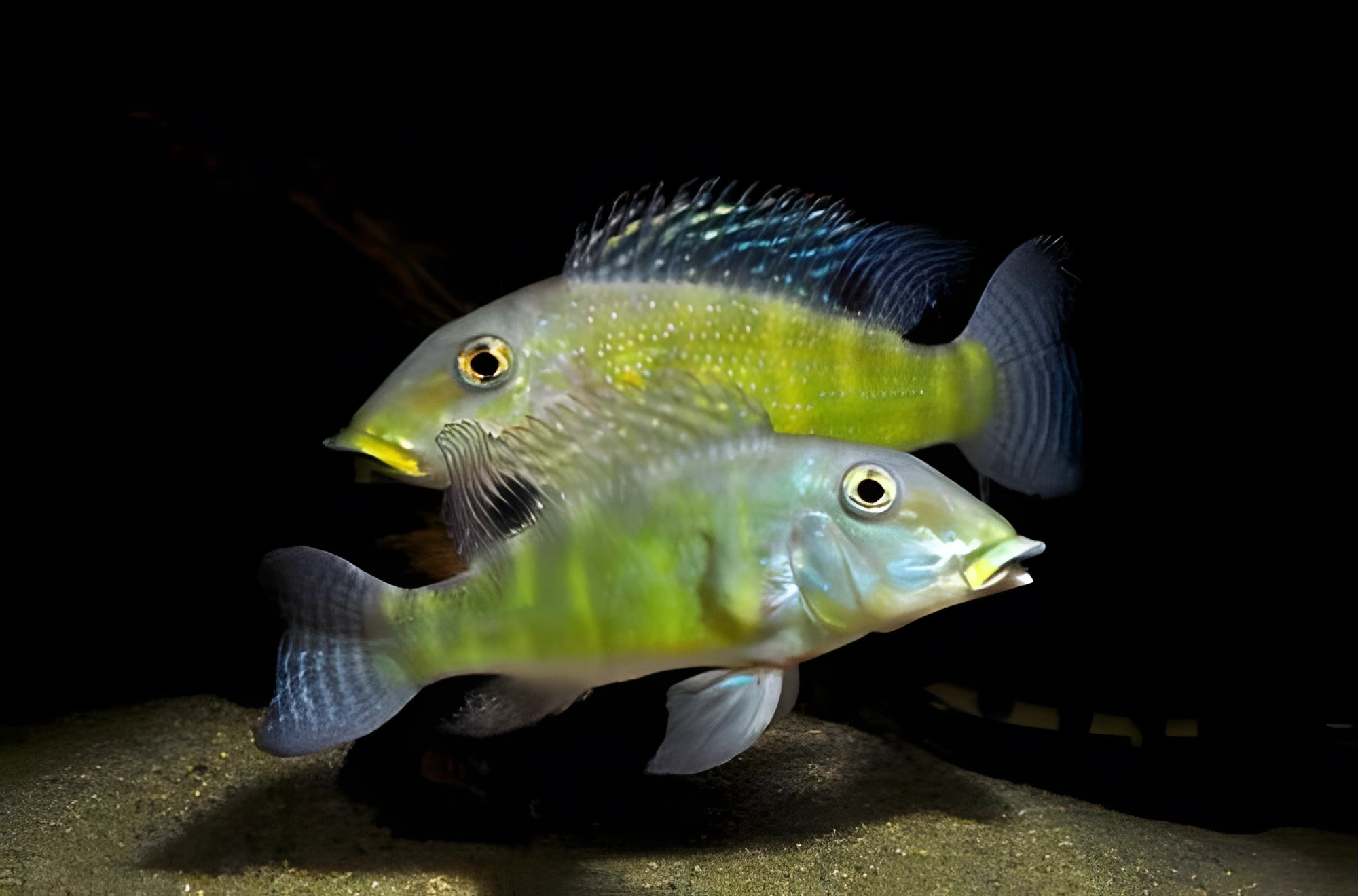
Adult males can reach up to 20 cm in length, while females are typically smaller, growing to about 15 cm. Males also differ from females in the shape and color of their pelvic and anal fins: in males, they are more pointed and have a reddish tint, whereas in females, the fins are rounded, gray, and semi-transparent. In young individuals and fry, sexual dimorphism is weakly expressed. The fish's coloration is a combination of pale yellow, green, and gray tones. Broad, dark vertical stripes are clearly visible on their bodies.
Habitat
Its natural range is South America, specifically the Xingu River basin and its left tributary, the Iriri, which flow through Brazil (in the states of Pará and Mato Grosso). There are reports that this cichlid species has also been observed in the Tapajós River basin. Preferred habitats are river sections with numerous rapids, where the current can be fast, sometimes even turbulent. Such regions are characterized by boulders of various sizes, as well as sandy and rocky substrates.
Behavior and Compatibility
Although Retroculus xinguensis is a relatively peaceful fish, it is worth noting that it can pose a danger to very small species. Furthermore, it is not recommended to keep this fish with other bottom-dwelling species, such as catfish and loaches. The choice of tank mates is also limited by the rather turbulent environment that Retroculus xinguensis prefers. During spawning, the male may show aggression towards those who intrude on his territory. It is recommended to keep a group of at least 5–8 individuals of both sexes. In smaller groups, dominant alpha males may harass weaker conspecifics.
Care and Maintenance
For a comfortable existence of a group of 5–8 fish, the optimal aquarium volume starts from 700 liters. The aquarium setup should recreate their natural habitat: use boulders of various sizes, driftwood, and a sand-gravel substrate. It is possible to add hardy plants that can grow in moderate to strong currents. Preference is given to species that root directly on rocks or wood. Often, powerful filters are sufficient to create the necessary internal current, but in some cases, additional powerheads may be required. Retroculus xinguensis are extremely sensitive to the accumulation of organic waste and require high levels of dissolved oxygen. Ensuring stable water conditions, without sharp fluctuations in temperature and hydrochemical parameters, is critically important for successful keeping. Exceeding safe concentrations of nitrogen cycle products—ammonia, nitrites, and nitrates—is also unacceptable. Achieving and maintaining ecological balance in the aquarium is accomplished by installing necessary equipment (filters, aerators, heaters, lighting systems, etc.) and regular maintenance. Maintenance includes weekly partial water changes with fresh water, removal of organic debris, including uneaten food, and equipment servicing.
Diet
This species is omnivorous and prefers to feed at the bottom, but it readily takes food from the water column as well. Their diet can consist of dry foods, supplemented with live or frozen brine shrimp, daphnia, bloodworms, mosquito larvae, and small earthworms. Occasionally, they may eat small fish. It is important to include vegetable supplements in their diet, such as spirulina flakes. It is recommended to feed the fish small portions 3–5 times a day.
Breeding and Reproduction
In favorable conditions, these fish are capable of frequent breeding. With the onset of the breeding season, a male and female form a temporary pair. Depending on the group size, there may be several such pairs. The pair selects an area on the aquarium bottom and, after a short courtship period, prepares a nest—a small pit in the substrate. The female lays up to 200 adhesive eggs, to which sand grains and small debris immediately stick, weighing them down and preventing them from drifting away with the current. The incubation period lasts 3–4 days, and after another week, the fry begin to swim freely. Throughout this time, the parents guard their offspring, chasing away potential predators from the nest.
Diseases
The main cause of diseases often lies in the keeping conditions: if they go beyond acceptable limits, immunity decreases, making the fish vulnerable to various infections inevitably present in the environment. At the first suspicion of illness, it is important first of all to check the water parameters and ensure there are no dangerous concentrations of nitrogen cycle products. Often, restoring normal, suitable conditions promotes recovery. However, in some cases, medication may be required. Detailed information on symptoms and treatment methods is presented in the "Aquarium Fish Diseases" section.
How to choose
When choosing Retroculus xinguensis, prioritize individuals with clean fins, no spots, ulcers, or visible body damage. A healthy fish should be active, react normally to external stimuli, and show no signs of emaciation, such as a sunken belly. Avoid purchasing fish that appear lethargic, stay at the water surface, or constantly hide in a corner of the aquarium in the store, as this species is sensitive to water quality and stress during transportation.
- inspect the condition of the gill covers; they should be symmetrical and move rhythmically
- ensure the fish's eyes are clear, without cloudiness or signs of popeye
- ask the seller about their current diet to ensure a smooth transition to familiar foods at home
- assess the overall cleanliness of the aquarium in the store, as poor filtration or infrequent water changes negatively affect the immunity of this species
Frequently asked questions
The essentials: size, tank volume, water parameters and care
How big does Retroculus xinguensis get?
An adult reaches 15–20 cm in length. Plan the tank around the maximum size: the fish quickly outgrows a cramped setup.
What size aquarium does Retroculus xinguensis need?
The minimum recommended volume is 700 L. A smaller tank speeds up nitrate build-up and raises stress levels.
What water parameters does Retroculus xinguensis need?
Temperature 26–32 °C, pH 6–8, hardness 1–12 dGH. Stability matters more than exact values: sudden swings are harder on the fish than a small deviation from the ideal.
How long does Retroculus xinguensis live?
Around 10 years when kept properly. Lifespan depends directly on tank volume, water quality and a varied diet.
Is Retroculus xinguensis aggressive?
Temperament: semi-peaceful (including aggression during spawning / intraspecific conflicts). Keep this in mind when choosing tank mates.
How many Retroculus xinguensis should be kept together?
Recommended setup: medium group (6–8 individuals). Ignoring this is a common cause of stress and disease.
What does Retroculus xinguensis eat?
Diet type: any (universal). Feed small portions that are finished within a couple of minutes — overfeeding does more harm than underfeeding.
What is the scientific name of Retroculus xinguensis?
The scientific name of the species is Retroculus xinguensis, family Cichlids (Cichlidae).