Temperature24 – 30 °C
Natural range
- Pará area
- Brazil area
Catfish
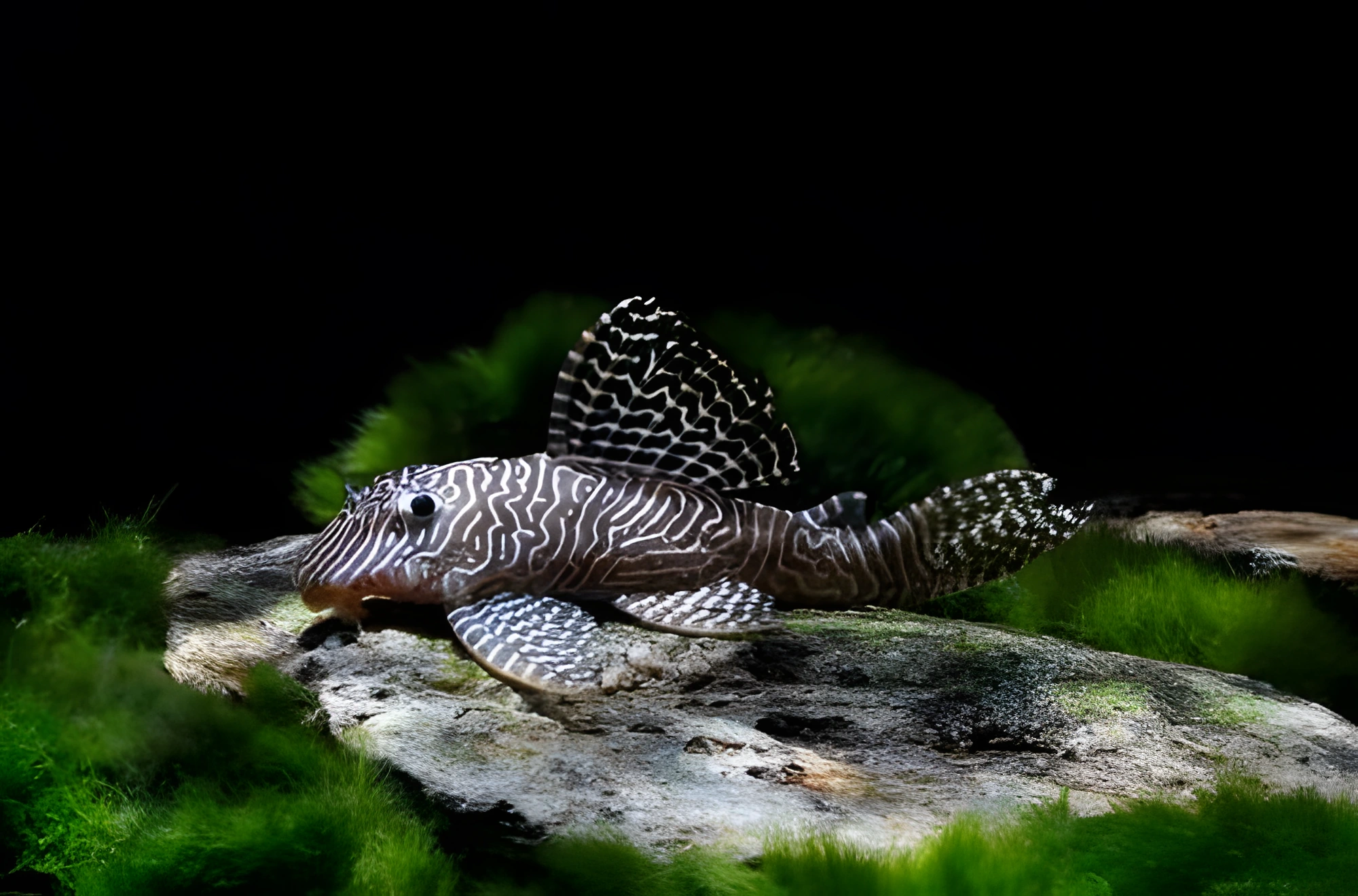
The Queen Arabesque Pleco, or Painted Pleco, scientifically known as Hypancistrus sp. L260, belongs to the Loricariidae family, which includes armored catfish. The lack of a universally recognized scientific classification for this catfish, as indicated by the indices in its Latin name, does not diminish its popularity; on the contrary, it has become one of the most sought-after representatives of its family. This species is distinguished by its attractive contrasting coloration, ease of care, and good compatibility with other aquarium inhabitants. All these qualities make it an excellent choice for both beginners in aquaristics and experienced hobbyists.
- Required aquarium volume
- 80 L
- Size in aquarium
- 8 – 9 cm
- Temperature
- 24 – 30 °C
- Temperament
- Peaceful (regular)
Parameters
Water pHSlightly acidic (5.5) – Neutral (7.5)
Water dHVery soft (1) – Hard (15)
Water salinityno salt (freshwater)
Size in aquarium8 – 9 cm
Lifespan12 years
TemperamentPeaceful (regular)
Toward small fishnot a predator
Required aquarium volume80 L
Lightingdimmed or moderate
Substrateany (no restrictions)
Water flowmoderate or strong
FeedingSinking (any)
CareBoth solitary and in group (flexible)
Description
Adults typically reach 8–9 cm in length. The catfish's body has the characteristic Pleco shape: a large head and large fins, the first rays of which are thickened and transformed into sharp spines. The dark body coloration is adorned with a pattern of winding white lines. Sexual dimorphism is weakly expressed, making it difficult to distinguish males from females.
Habitat
Its homeland is South America, specifically the lower Tapajós River basin in the Brazilian state of Pará. This species inhabits both the main river channel and its numerous tributaries. It prefers areas with a rocky substrate and an abundance of snags, which serve as reliable shelters from predators.
Behavior and Compatibility
This catfish is distinguished by its peaceful and calm disposition, coexisting perfectly with many other freshwater species. Thanks to its strong “armor,” it can even live with some more aggressive, but not overly large, fish. However, it is advisable to avoid cohabiting with other members of the genus Hypancistrus to exclude the risk of hybrid offspring.
Care and Maintenance
For 2–3 catfish, an aquarium of at least 80 liters will be optimal. The decor can be chosen arbitrarily, but it is important to provide a sufficient number of suitable shelters. These can be created from snags, piles of large stones, as well as artificial decor elements, pipe fragments, or inverted ceramic pots. When choosing live plants, preference should be given to species that can grow on the surface of snags and stones, as rooting plants may be dug up from the substrate by the fish. Keeping the Painted Pleco is not difficult if suitable water conditions are maintained within the permissible range of temperatures and hydrochemical parameters. Maintaining stable water parameters is not a difficult task. For this, it is necessary to install the required equipment and regularly perform aquarium maintenance: weekly replacement of 30–50% of the water with fresh water and removal of organic residues, such as excrement and uneaten food.
Diet
This is an omnivorous species. Its diet includes both dry foods in the form of flakes and granules, and live or frozen foods such as Artemia, Daphnia, and bloodworms. Occasionally, pieces of green vegetables can be offered: for example, cabbage, cucumber, or zucchini.
Breeding and Reproduction
Breeding these catfish is considered relatively simple, and under suitable conditions, spawning occurs quite frequently. However, determining the sex of the fish is quite difficult, so to successfully obtain offspring, it is recommended to acquire a group of 5 or more individuals to increase the likelihood of having at least one pair. During the spawning period, the process begins with the male occupying a certain territory at the bottom of the aquarium, the center of which is usually his chosen shelter. After brief courtship, the pair forms a clutch. Then the female leaves the spawning site, and the male remains to guard the future offspring until the fry emerge and begin to swim freely.
Diseases
Most often, diseases are caused by unsuitable keeping conditions. Maintaining a stable environment in the aquarium is a key factor for successful keeping. If any symptoms of illness appear, the first step is to check the water quality. If deviations are found, measures should be taken immediately to correct them. If symptoms persist or even worsen, medicinal treatment will be required. Detailed information on the symptoms of various diseases and their treatment methods can be found in the “Aquarium Fish Diseases” section.
How to choose
When choosing a healthy specimen, pay attention to the fish's activity: in the store, it may hide, but upon inspection, it should show cautious curiosity. The body should be clean, without visible wounds, white spots, ulcers, or signs of fungus. Avoid specimens with sunken bellies, which may indicate emaciation or internal parasites, and with unnaturally bloated bellies. Make sure the fins are intact and the eyes are clear and transparent. Since the species is often imported, it is advisable to ask the seller about the fish's adaptation period to aquarium conditions, as recently arrived specimens are subject to severe stress.
Frequently asked questions
The essentials: size, tank volume, water parameters and care
How big does Painted Pleco get?
An adult reaches 8–9 cm in length. Plan the tank around the maximum size: the fish quickly outgrows a cramped setup.
What size aquarium does Painted Pleco need?
The minimum recommended volume is 80 L. A smaller tank speeds up nitrate build-up and raises stress levels.
What water parameters does Painted Pleco need?
Temperature 24–30 °C, pH 5.5–7.5, hardness 1–15 dGH. Stability matters more than exact values: sudden swings are harder on the fish than a small deviation from the ideal.
How long does Painted Pleco live?
Around 12 years when kept properly. Lifespan depends directly on tank volume, water quality and a varied diet.
Is Painted Pleco aggressive?
Temperament: peaceful (regular). Keep this in mind when choosing tank mates.
How many Painted Pleco should be kept together?
Recommended setup: both solitary and in group (flexible). Ignoring this is a common cause of stress and disease.
What does Painted Pleco eat?
Diet type: sinking (any). Feed small portions that are finished within a couple of minutes — overfeeding does more harm than underfeeding.
What is the scientific name of Painted Pleco?
The scientific name of the species is Hypancistrus sp. L260, family Armored Catfishes (Loricariidae).