Temperature20 – 26 °C
Natural range
- Thailand area
- Cambodia area
- Vietnam area
- Sumatra area
CyprinidsConservation status: Least concern LC
The Rasbora tornieri, known scientifically as Rasbora tornieri, belongs to the extensive Cyprinidae family. It is named after Gustav Tornier, a German zoologist and paleontologist who described many fish species from Southeast Asia. This species is low-maintenance and easy to keep, making it an excellent addition to a freshwater aquarium. For this reason, it can be recommended even to beginner aquarists.
- Required aquarium volume
- 100 L
- Size in aquarium
- 8 – 9 cm
- Temperature
- 20 – 26 °C
- Temperament
- Peaceful (regular)
Parameters
Water pHAcidic (4) – Neutral (7)
Water dHVery soft (1) – Medium hardness (10)
Water salinityno salt (freshwater)
Size in aquarium8 – 9 cm
Lifespan7 years
TemperamentPeaceful (regular)
Toward small fishnot a predator
Required aquarium volume100 L
Lightingany
Substrateany (no restrictions)
Water flowany
FeedingAny (universal)
CareMedium group (6–8 individuals)
Description
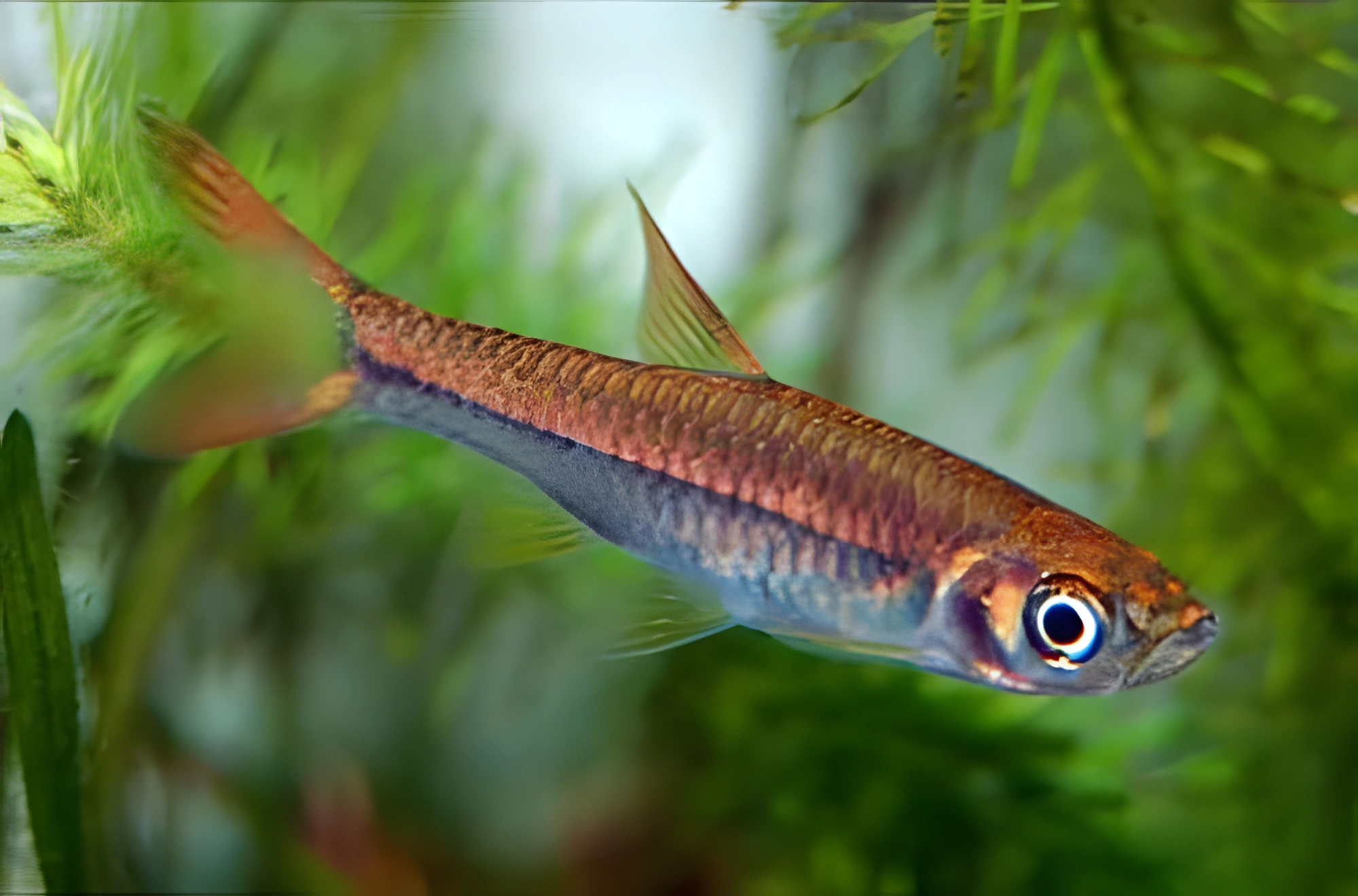
Adults of this fish typically reach a length of 8–9 cm. Sexual dimorphism is not pronounced. Generally, females become somewhat larger than males, especially during the pre-spawning period. The coloration of Rasbora tornieri is rather subdued: the back is usually gray, the belly is silvery, and a double horizontal stripe—dark and golden—runs along the sides. Sometimes, their coloration may acquire delicate pinkish hues.
Habitat
The natural habitat of Rasbora tornieri spans Southeast Asia, where it can be found in Thailand, Cambodia, Vietnam, and on Malaysian islands, including Sumatra and Borneo. Such a wide geographical distribution explains its ability to adapt to diverse aquatic conditions: from acidic, organic-rich swamps to fast, clear rivers, as well as temporary backwaters and flooded forest areas that form during the rainy season.
Behavior and Compatibility
This peaceful schooling fish coexists well with other non-aggressive species of comparable size. Tankmates can be chosen from various regions; however, representatives from its native Southeast Asian habitat will look most harmonious in a community tank.
Care and Maintenance
An aquarium of 100 liters or more is suitable for keeping a small school of Rasbora tornieri. The setup of their aquatic home depends entirely on the aquarist's preferences and can be quite varied: the fish will feel comfortable both in a virtually empty aquarium and among abundant aquatic vegetation. An important condition is the presence of a lid to prevent the fish from jumping out. Caring for this species will not be difficult even for beginners. Maintaining favorable water conditions is achieved through standard care procedures such as substrate cleaning and regular water changes, combined with a quality filtration system.
Diet
This species does not have particular demands regarding its diet. Rasbora tornieri readily accepts most popular types of food. To maintain a complete diet, it is recommended to include both dry foods, such as flakes and granules, and fresh or frozen foods, such as Artemia and bloodworms, in their daily menu. During the breeding season, it is especially important to provide the fish with protein-rich food.
Breeding and Reproduction
When the breeding season arrives, the fish lay their eggs directly on the substrate. The incubation period lasts from 1 to 2 days, depending on the water temperature. The hatched fry begin to swim freely on the second day. Parental care is absent in this species, so adults may eat their eggs and fry. If there are not enough dense thickets or other hiding places in the main tank, the survival rate of the fry will be minimal. For successful breeding, offspring can be obtained by timely moving the eggs to a separate aquarium with similar water conditions, which will ensure their safety. Fry should be fed specialized microfoods or Artemia nauplii.
Diseases
In a stable aquarium ecosystem, with suitable water conditions and regular care, fish health problems usually do not arise. Diseases can be a consequence of improper maintenance or injuries. More detailed information on symptoms and treatment methods can be found in the "Aquarium Fish Diseases" section.
How to choose
When purchasing, it is important to assess the overall condition of the school in the aquarium. Healthy fish should be active, have clean fins without signs of erosion or film, and smooth scales without spots or ulcers. Avoid individuals with sunken bellies or apathetic behavior, as this species is sensitive to water quality and transport conditions.
- choose fish from the same batch to minimize stress during adaptation
- carefully inspect the gills for any unnatural redness or mucus
- ensure that there are no signs of dead individuals or recent additions in the aquarium with the fish, which increases the risk of infections
Frequently asked questions
The essentials: size, tank volume, water parameters and care
How big does Rasbora tornieri get?
An adult reaches 8–9 cm in length. Plan the tank around the maximum size: the fish quickly outgrows a cramped setup.
What size aquarium does Rasbora tornieri need?
The minimum recommended volume is 100 L. A smaller tank speeds up nitrate build-up and raises stress levels.
What water parameters does Rasbora tornieri need?
Temperature 20–26 °C, pH 4–7, hardness 1–10 dGH. Stability matters more than exact values: sudden swings are harder on the fish than a small deviation from the ideal.
How long does Rasbora tornieri live?
Around 7 years when kept properly. Lifespan depends directly on tank volume, water quality and a varied diet.
Is Rasbora tornieri aggressive?
Temperament: peaceful (regular). Keep this in mind when choosing tank mates.
How many Rasbora tornieri should be kept together?
Recommended setup: medium group (6–8 individuals). Ignoring this is a common cause of stress and disease.
What does Rasbora tornieri eat?
Diet type: any (universal). Feed small portions that are finished within a couple of minutes — overfeeding does more harm than underfeeding.
What is the scientific name of Rasbora tornieri?
The scientific name of the species is Rasbora tornieri, family Cyprinids (Cyprinidae).