Temperature20 – 25 °C
Natural range
- Northern Thailand area
- Laos area
Cyprinids
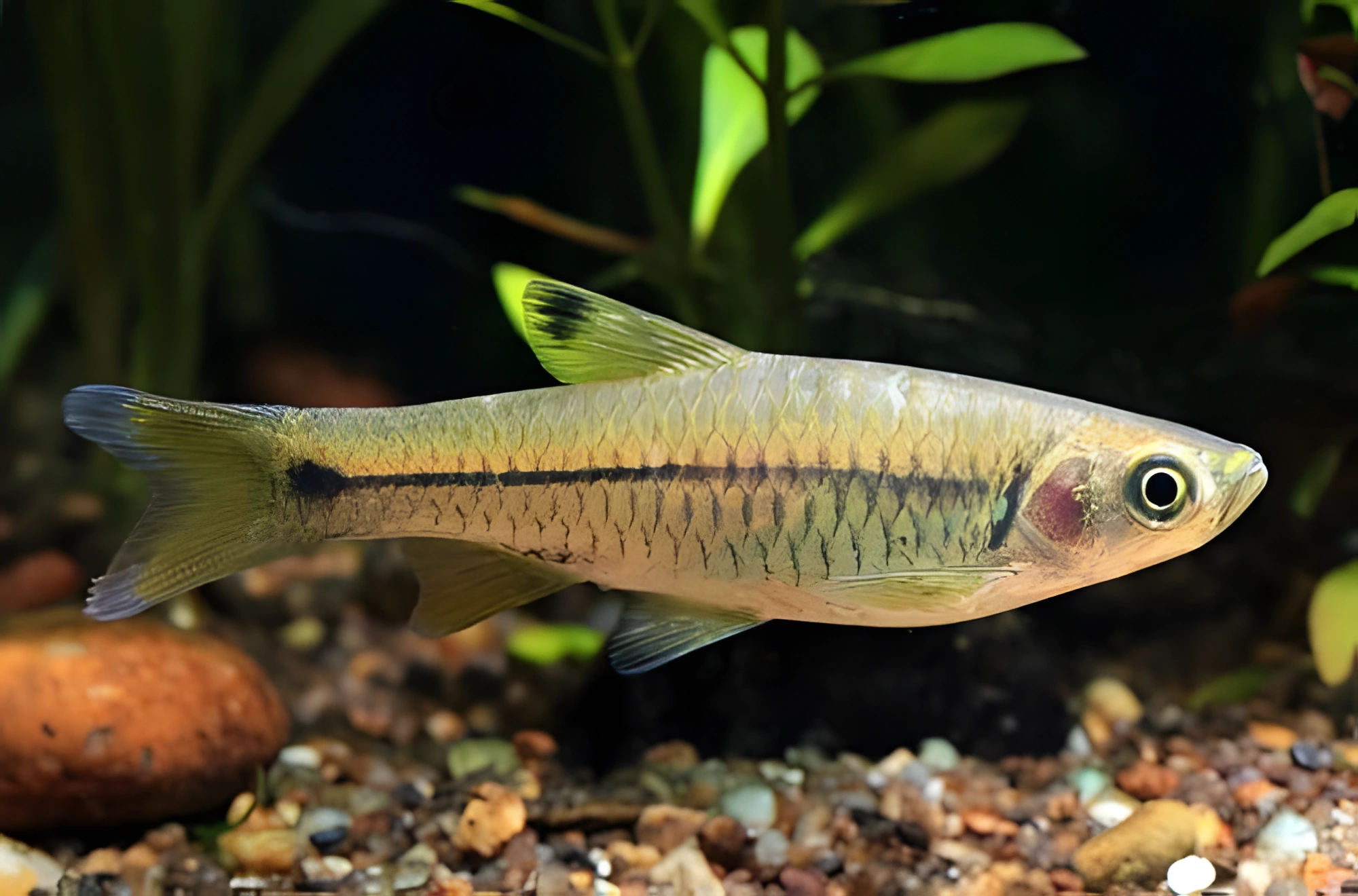
Rasbora dorsinotata, also known by its scientific name Rasbora dorsinotata, belongs to the Cyprinidae family. It is quite rare in aquariums, which is most often explained by its somewhat less striking coloration compared to other members of the Rasbora genus. Nevertheless, this fish possesses all the same excellent qualities characteristic of its relatives: it is undemanding to care for, easy to keep and successfully breeds, and also gets along well with many other species. Thus, it can be recommended even to novice aquarists.
- Required aquarium volume
- 80 L
- Size in aquarium
- 4 cm
- Temperature
- 20 – 25 °C
- Temperament
- Peaceful (regular)
Parameters
Water pHSlightly acidic (6) – Neutral (7.5)
Water dHVery soft (2) – Hard (12)
Water salinityno salt (freshwater)
Size in aquarium4 cm
Lifespan4 years
TemperamentPeaceful (regular)
Toward small fishnot a predator
Required aquarium volume80 L
Lightingany
Substratesand or gravel + stones/boulders
Water flowmoderate or strong
FeedingAny (universal)
CareSchooling (usually from 5–6 individuals and more)
Description
Adults typically reach about 4 centimeters in length. Their coloration is light, beige tones, with a noticeable black stripe that runs along the entire body, from head to caudal fin. The fins of these fish are translucent. Sexual dimorphism is weakly expressed: females are usually slightly larger than males and have a more rounded abdomen.
Habitat
Its natural habitat is in Southeast Asia, including the territories of northern Thailand and Laos. These fish inhabit the basins of rivers such as the Mekong and Chao Phraya. They prefer to live in shallow channels and streams with abundant aquatic vegetation, while avoiding the main, deeper channels of large rivers.
Behavior and Compatibility
This fish is peaceful and schooling, coexisting well with other non-aggressive species of comparable size. It should be kept in a group of at least 8–10 individuals; if their number is smaller, the fish may become overly timid.
Care and Maintenance
For a small group of these fish, an aquarium with a volume of 80 liters or more will be optimal. When decorating, it is recommended to use a sand-gravel substrate, add several snags, and plant hardy plant species such as Anubias or Bolbitis. Since Rasbora dorsinotata inhabits flowing waters, moderate water movement in the aquarium will be beneficial for it. The fish require high water quality and are sensitive to pollution. To maintain stable conditions, it is necessary to regularly remove organic waste (food remnants, waste products), replace 30–50% of the water volume with fresh water weekly, and monitor key hydrochemical parameters.
Diet
This species is undemanding regarding diet. In aquarium conditions, the fish readily consume most popular foods of suitable size. The daily diet may include, for example, dry flakes or granules, supplemented with live or frozen daphnia, bloodworms, or brine shrimp.
Breeding and Reproduction
As with most cyprinids, spawning occurs regularly and does not require any special conditions. The fish scatter their eggs in the water column and thereafter show no parental care; moreover, if given the opportunity, they may eat their own offspring. In a community tank, fry survival is extremely low due to this, and only a few will grow to adulthood if there are sufficiently dense thickets of fine-leaved plants where they can hide. To save the entire brood, separate spawning tanks of about 20 liters are usually used, with identical water conditions, equipped with a simple sponge air-lift filter and a heater. A lighting system is not required. When the breeding period begins, the eggs are carefully transferred to such an aquarium, where the young will be completely safe. The incubation period lasts from 18 to 48 hours, depending on the water temperature, and after just one day, the fry begin to swim freely in search of food. They should be fed specialized micro-foods or Artemia nauplii.
Diseases
Cottelata brittani is a hardy and undemanding fish. When suitable keeping conditions are met, health problems usually do not arise. Diseases can appear in cases of injury, contact with already sick fish, or a significant deterioration of habitat parameters (for example, in a dirty aquarium or with poor nutrition). More detailed information on symptoms and treatment methods can be found in the section "Diseases of aquarium fish."
How to choose
When purchasing Rasbora dorsinotata, choose active, mobile individuals without visible damage to the skin, fins, or signs of emaciation. It is important to pay attention to the water clarity in the store's aquarium: fish of this species are sensitive to the accumulation of organic pollutants, so cloudy or foul-smelling water is an unfavorable factor.
- Avoid individuals with clamped fins, rapid breathing, or unnatural behavior, such as constantly hovering at the surface.
- Prefer fish from the same batch, as this reduces the risk of stress during adaptation to a new group.
- Ensure that the fish's coloration matches the species characteristics, and that there are no whitish spots or growths on the body, indicating the presence of parasites or fungal infections.
Frequently asked questions
The essentials: size, tank volume, water parameters and care
How big does Rasbora dorsinotata get?
An adult reaches 4 cm in length. Plan the tank around the maximum size: the fish quickly outgrows a cramped setup.
What size aquarium does Rasbora dorsinotata need?
The minimum recommended volume is 80 L. A smaller tank speeds up nitrate build-up and raises stress levels.
What water parameters does Rasbora dorsinotata need?
Temperature 20–25 °C, pH 6–7.5, hardness 2–12 dGH. Stability matters more than exact values: sudden swings are harder on the fish than a small deviation from the ideal.
How long does Rasbora dorsinotata live?
Around 4 years when kept properly. Lifespan depends directly on tank volume, water quality and a varied diet.
Is Rasbora dorsinotata aggressive?
Temperament: peaceful (regular). Keep this in mind when choosing tank mates.
How many Rasbora dorsinotata should be kept together?
Recommended setup: schooling (usually from 5–6 individuals and more). Ignoring this is a common cause of stress and disease.
What does Rasbora dorsinotata eat?
Diet type: any (universal). Feed small portions that are finished within a couple of minutes — overfeeding does more harm than underfeeding.
What is the scientific name of Rasbora dorsinotata?
The scientific name of the species is Rasbora dorsinotata, family Cyprinids (Cyprinidae).