Temperature20 – 25 °C
Natural range
- Peninsular Malaysia area
- Sumatra area
CyprinidsConservation status: Least concern LC
The scientific name Brevibora cheeya is assigned to the Cheeya Rasbora, a member of the Cyprinidae family. Interestingly, the name of this species comes from the Chinese word “Chee,” which can be interpreted as “short,” accurately reflecting the modest size of this fish. Unfortunately, it is quite rare to find it in amateur aquariums. There are no specialized supplies of this fish, and it usually enters the trade as an accidental bycatch during the transportation of other Rasboras. Despite its unassuming, sometimes even drab coloration, this fish is easy to keep, undemanding, and coexists well with various freshwater species.
- Required aquarium volume
- 70 L
- Size in aquarium
- 4 cm
- Temperature
- 20 – 25 °C
- Temperament
- Peaceful (regular)
Parameters
Water pHAcidic (4) – Neutral (7)
Water dHVery soft (1) – Medium hardness (8)
Water salinityno salt (freshwater)
Size in aquarium4 cm
Lifespan6 years
TemperamentPeaceful (regular)
Toward small fishnot a predator
Required aquarium volume70 L
Lightingdimmed
Substratesoft sandy (including silted)
Water flowweak
FeedingMixed diet (meat + plant-based)
CareGroup (8–10 individuals)
Description
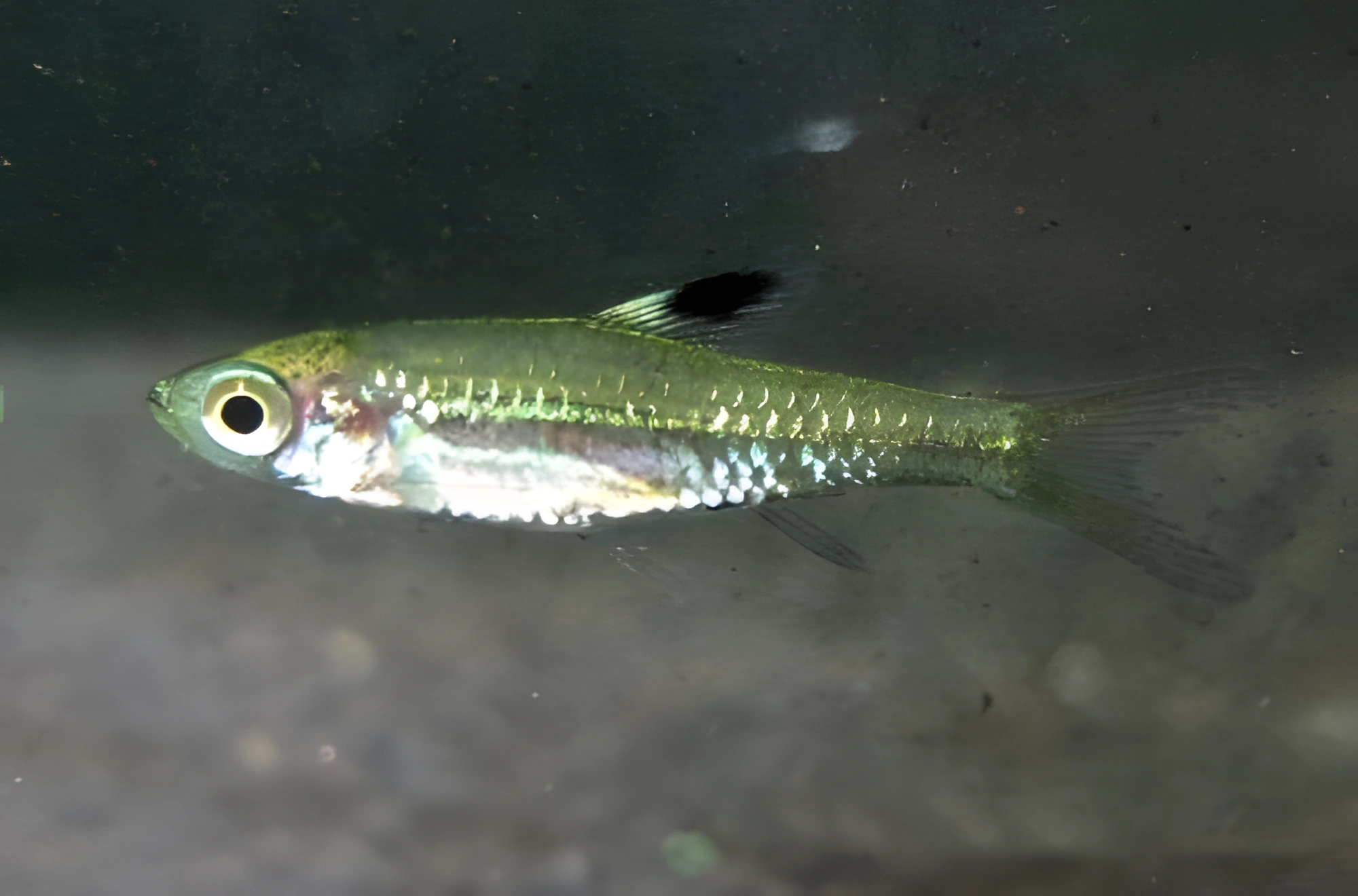
Adults of this fish typically reach 4–5 cm in length. Differences between males and females are not pronounced and are manifested in nuances of size: females are generally slightly larger and have a more rounded abdomen. Their coloration is predominantly gray, with a silvery belly and transparent fins.
Habitat
The natural habitats of this fish are located in Southeast Asia, specifically in peninsular Malaysia, Sumatra, and the adjacent island of Bangka. Here, the Cheeya Rasbora inhabits bodies of water with slow currents or stagnant water, such as forest streams and swampy areas. A characteristic feature of its natural environment is acidic water, which acquires a brownish tint due to the saturation of dissolved tannins. The bottom of these water bodies is most often a mixture of peat and sand. In general, these are the main facts about this species.
Behavior and Compatibility
This peaceful and compatible fish will be an excellent addition to a community tank consisting of similar freshwater species. They should be kept in a school of at least 8–10 individuals. With fewer numbers, the fish may become overly timid and spend most of their time hiding in a corner of the aquarium or in shelters.
Care and Maintenance
For a comfortable existence, a small school of these fish requires an aquarium of at least 70 liters. While the choice of decorations is not critical, maintaining good water quality is far more important. Nevertheless, it is recommended to use a dark substrate and abundant thickets of shade-loving aquatic plants. Several snags would also be appropriate. Lighting should be subdued. To more accurately recreate natural conditions, it is useful to add several dried tree leaves to the aquarium, such as oak leaves. As they gradually decompose, the leaves stain the water brownish and enrich it with tannins, which has a beneficial effect on the overall well-being of the fish. You can learn more about this in the article “What tree leaves can be used in an aquarium.” Successful keeping of Rasbora chia largely depends on ensuring stable aquatic conditions with suitable hydrochemical parameters. To achieve this, it is sufficient to follow a series of standard procedures: regularly remove organic waste (excrement, food remnants), weekly replace a portion of the water with fresh water, and perform timely maintenance of equipment.
Diet
In their natural environment, their primary food consists of small invertebrates such as insects, worms, and crustaceans, as well as other components of zooplankton. In a home aquarium, these fish readily accept most common foods, provided their size is appropriate. The daily diet can be formed from dry flakes or granules, supplemented with live or frozen bloodworms, daphnia, and brine shrimp.
Breeding and Reproduction
To date, there is no confirmed data on successful breeding of Rasbora chia. However, this lack of information may be due to the low popularity of this species in aquaristics, and the breeding process itself is likely to be similar to that of other Rasbora species.
Diseases
Cottelata brittani is a hardy and undemanding fish. When suitable keeping conditions are met, health problems usually do not arise. Diseases can appear in cases of injury, contact with already sick fish, or a significant deterioration of habitat parameters (for example, in a dirty aquarium or with poor nutrition). More detailed information on symptoms and treatment methods can be found in the section "Diseases of aquarium fish."
How to choose
The species is rarely found in regular sale and often enters pet stores as an accidental bycatch when importing other fish. When purchasing, it is important to ensure correct identification of the individual, as it is externally similar to related species. Choose active fish without signs of fin damage, ulcers, or unnatural film on the body. Given their territorial behavior, avoid acquiring individuals with signs of emaciation or injuries sustained from intraspecific conflicts in overcrowded retail tanks.
Frequently asked questions
The essentials: size, tank volume, water parameters and care
How big does Cheeya Rasbora get?
An adult reaches 4 cm in length. Plan the tank around the maximum size: the fish quickly outgrows a cramped setup.
What size aquarium does Cheeya Rasbora need?
The minimum recommended volume is 70 L. A smaller tank speeds up nitrate build-up and raises stress levels.
What water parameters does Cheeya Rasbora need?
Temperature 20–25 °C, pH 4–7, hardness 1–8 dGH. Stability matters more than exact values: sudden swings are harder on the fish than a small deviation from the ideal.
How long does Cheeya Rasbora live?
Around 6 years when kept properly. Lifespan depends directly on tank volume, water quality and a varied diet.
Is Cheeya Rasbora aggressive?
Temperament: peaceful (regular). Keep this in mind when choosing tank mates.
How many Cheeya Rasbora should be kept together?
Recommended setup: group (8–10 individuals). Ignoring this is a common cause of stress and disease.
What does Cheeya Rasbora eat?
Diet type: mixed diet (meat + plant-based). Feed small portions that are finished within a couple of minutes — overfeeding does more harm than underfeeding.
What is the scientific name of Cheeya Rasbora?
The scientific name of the species is Brevibora cheeya, family Cyprinids (Cyprinidae).