Temperature24 – 28 °C
Natural range
- Lake Sentani area
- West Papua area
RainbowfishConservation status: Critically endangered CR
Other scientific names: Chilaterina sentaniensi, Rhombatractus sentaniensis
The scientific name for this fish is Chilatherina sentaniensis, and it belongs to the family Melanotaeniidae, known as Rainbowfishes. This species is found exclusively in Lake Sentani, located in the Indonesian province of Irian Jaya, on the island of New Guinea. Geographically, this island is situated north of Australia, in the eastern Pacific Ocean.
- Required aquarium volume
- 150 L
- Size in aquarium
- 10 – 12 cm
- Temperature
- 24 – 28 °C
- Temperament
- Peaceful (regular)
Parameters
Water pHNeutral (6.5) – Slightly alkaline (8)
Water dHMedium hardness (8) – Hard (15)
Water salinityno salt (freshwater)
Size in aquarium10 – 12 cm
Lifespan6 years
TemperamentPeaceful (regular)
Toward small fishnot a predator
Required aquarium volume150 L
Lightingdimmed
Substrateany (no restrictions)
Water flowweak or moderate
FeedingAny (universal)
CareMedium group (6–8 individuals)
Description
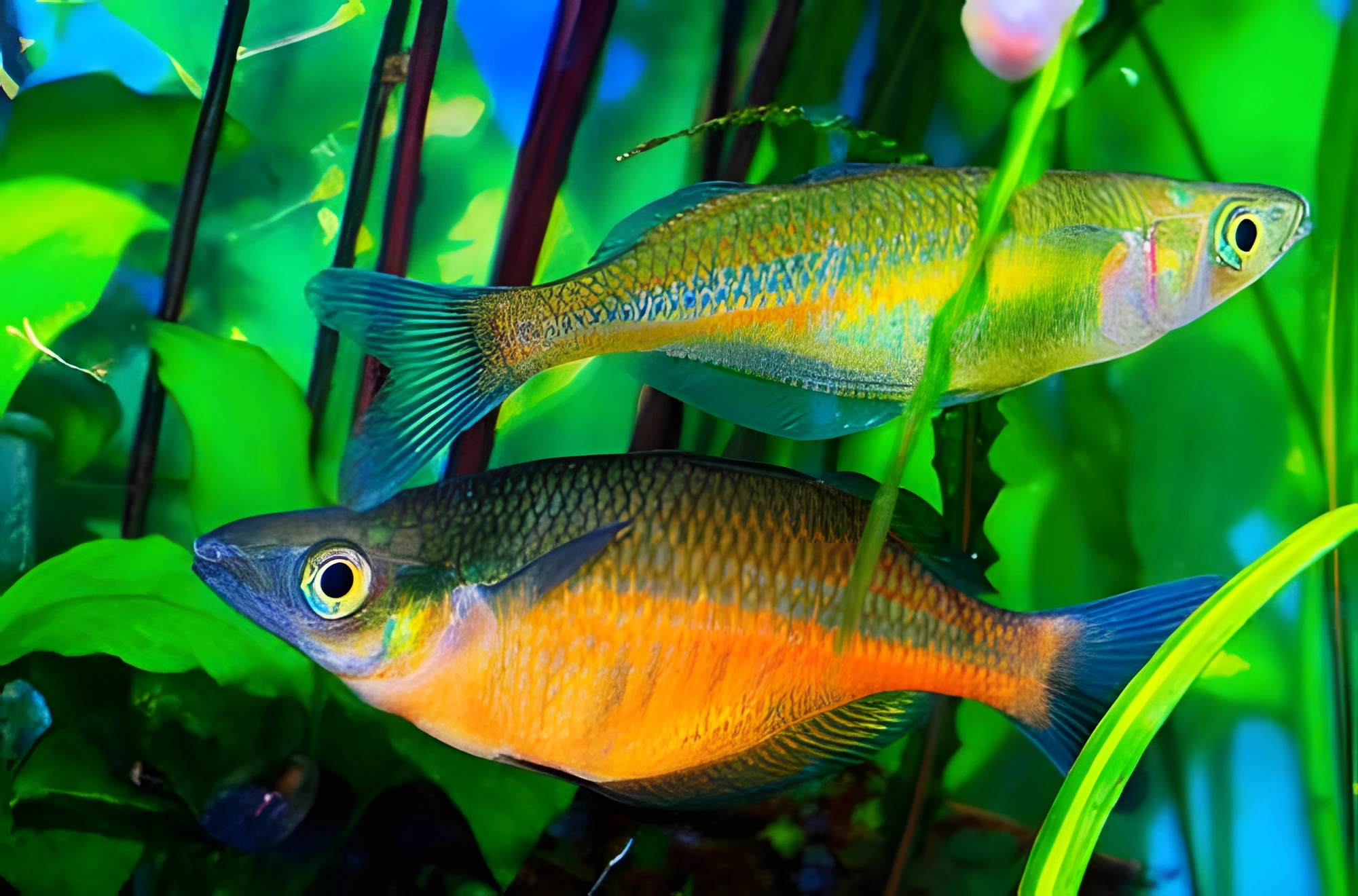
Males of this species can grow up to 12 centimeters in length, while females are typically smaller, reaching approximately 10 centimeters. The fish's body is laterally compressed, and its head is pointed. The main body color is silvery-blue; the back often shimmers with silver or takes on greenish hues. Orange and red tones can be observed on the belly. Narrow stripes run along the lateral line, alternating between blue (or green) and orange (or red) colors.
Habitat
The species is endemic to Lake Sentani and its tributaries on the island of New Guinea (West Papua, Indonesia). These fish prefer to inhabit the pelagic layers of tropical freshwater bodies. In their natural habitat, water parameters are characterized by a temperature range of 24–28°C.
Behavior and Compatibility
This fish is distinguished by its peaceful disposition and active behavior. It feels comfortable in a group of its own kind, as well as in the company of other fish of similar size and character. Compatibility with other species of similar temperament is usually good.
Care and Maintenance
For a school of 6–8 individuals, an aquarium of 150 liters or more will be optimal. When decorating, it is recommended to create open swimming spaces, as well as providing areas with shelters formed by dense plant thickets and natural snags. The water composition in Lake Sentani is not stable due to numerous tributaries, and its parameters vary depending on the season. Thanks to these conditions, the fish have adapted to a wide range of pH and GH values, which greatly simplifies water preparation for aquarium care. Aquarium maintenance is standard and includes regular procedures: weekly partial water changes and timely removal of organic waste. This species is omnivorous and readily accepts most common dry foods, as well as fresh or frozen products, such as small zooplankton. Additional information is available on the resources: rainbowfish.angfaqld.org.au, FishBase
Diet
This species is omnivorous. These fish readily consume most available dry foods, as well as various fresh or frozen food products, including small zooplankton.
Breeding and Reproduction
Spawning is paired or group-based and requires a separate species-specific aquarium to prevent hybridization with other members of the genus. Eggs are laid on fine-leaved plants or substrate. The incubation period at a temperature of about 26°C is approximately 12 days. Fry after hatching are extremely small and require very fine starter food, such as infusoria or copepod nauplii, gradually transitioning to larger foods.
Diseases
Lake Sentani rainbowfish are susceptible to diseases typical of the Melanotaeniidae family, which arise when keeping conditions are violated. The fish are sensitive to water quality, so the accumulation of organic waste and high levels of ammonia or nitrites quickly provoke bacterial infections, manifesting as fin erosion, ulcers, or cloudy mucous membranes. Also, under stress caused by sharp fluctuations in parameters or overcrowding, the species is prone to ichthyophthiriasis (white spots on the body) and fungal infections.
Disease prevention involves maintaining stable water parameters and regular water changes. A particular danger is the species' tendency to hybridize with other members of the genus, which, in uncontrolled breeding, weakens the immunity of the offspring and leads to population degeneration. To maintain fish health, it is recommended to avoid keeping them in the same aquarium with closely related species, as this not only leads to a loss of line purity but also complicates the diagnosis of species-specific conditions due to the external similarity of individuals.
How to choose
When selecting individuals, attention should be paid to the purity of the line, as the species is extremely rare and has often been crossbred with closely related species. Healthy fish should be active, have clean fins without signs of erosion, and a robust physique. Avoid purchasing individuals from aquariums where other species of the genus Chilatherina are kept, to eliminate the risk of buying hybrids. It is critically important to ensure the absence of external parasites and signs of emaciation in the fish in the retail aquarium.
Frequently asked questions
The essentials: size, tank volume, water parameters and care
How big does Lake Sentani Rainbowfish get?
An adult reaches 10–12 cm in length. Plan the tank around the maximum size: the fish quickly outgrows a cramped setup.
What size aquarium does Lake Sentani Rainbowfish need?
The minimum recommended volume is 150 L. A smaller tank speeds up nitrate build-up and raises stress levels.
What water parameters does Lake Sentani Rainbowfish need?
Temperature 24–28 °C, pH 6.5–8, hardness 8–15 dGH. Stability matters more than exact values: sudden swings are harder on the fish than a small deviation from the ideal.
How long does Lake Sentani Rainbowfish live?
Around 6 years when kept properly. Lifespan depends directly on tank volume, water quality and a varied diet.
Is Lake Sentani Rainbowfish aggressive?
Temperament: peaceful (regular). Keep this in mind when choosing tank mates.
How many Lake Sentani Rainbowfish should be kept together?
Recommended setup: medium group (6–8 individuals). Ignoring this is a common cause of stress and disease.
What does Lake Sentani Rainbowfish eat?
Diet type: any (universal). Feed small portions that are finished within a couple of minutes — overfeeding does more harm than underfeeding.
What is the scientific name of Lake Sentani Rainbowfish?
The scientific name of the species is Chilatherina sentaniensis, family Rainbowfishes (Melanotaeniidae). It also appears in the literature as: Chilaterina sentaniensi, Rhombatractus sentaniensis.