Temperature22 – 26 °C
Natural range
- West Africa area
- Central Africa area
CatfishConservation status: Least concern LC
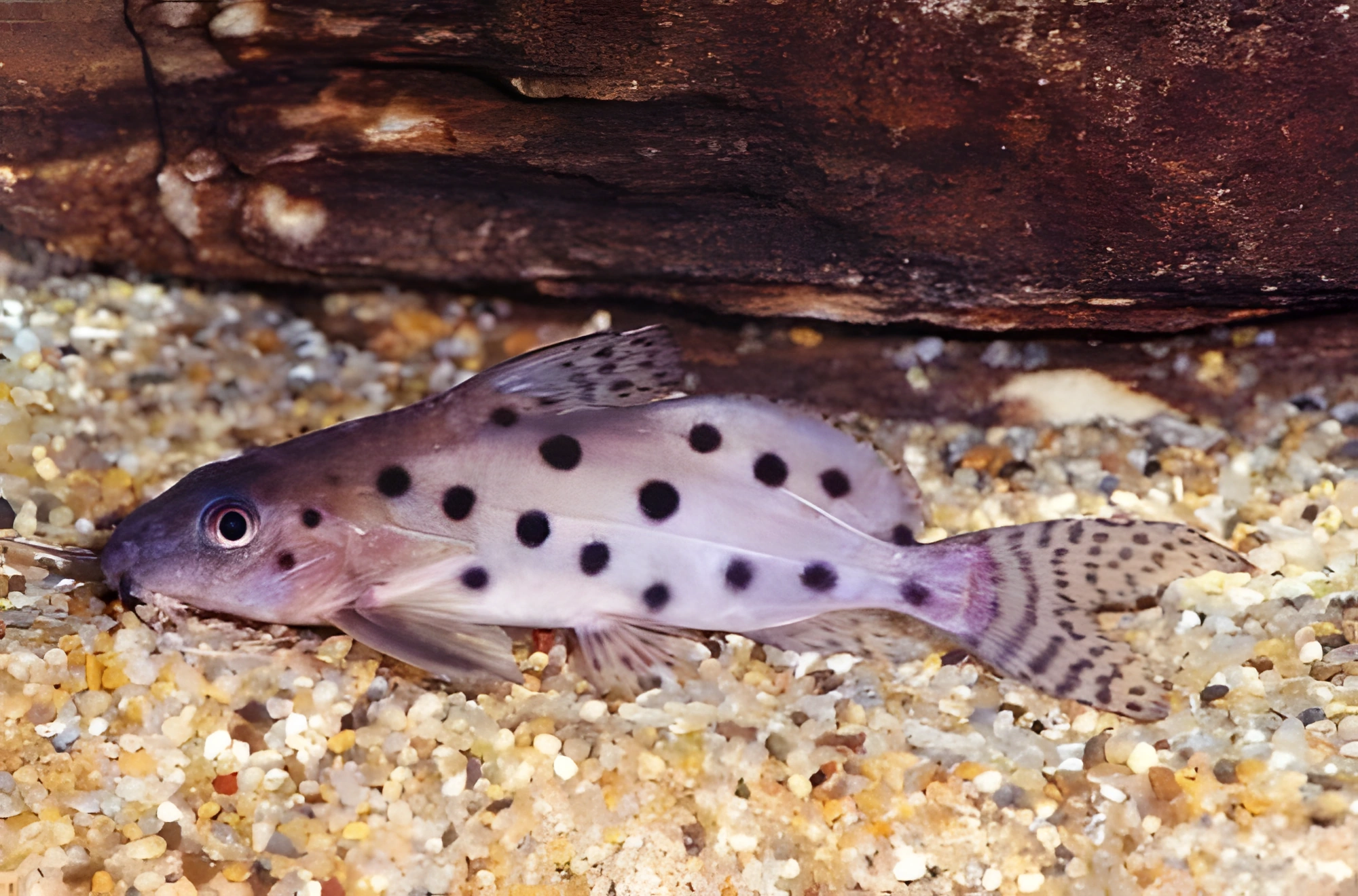
The Spotted Synodontis, scientifically known as Synodontis ocellifer, is a member of the Mochokidae family. Its distinguishing feature is large spots that strikingly contrast with its main body coloration. This catfish has also earned recognition for its hardiness. The combination of an attractive appearance and ease of care makes it a good choice for many aquariums.
- Required aquarium volume
- 250 L
- Size in aquarium
- 30 cm
- Temperature
- 22 – 26 °C
- Temperament
- Semi-peaceful (dangerous to smaller ones)
Parameters
Water pHNeutral (6.5) – Slightly alkaline (7.8)
Water dHVery soft (2) – Hard (15)
Water salinityno salt (freshwater)
Size in aquarium30 cm
Lifespan20 years
TemperamentSemi-peaceful (dangerous to smaller ones)
Toward small fishnot a predator
Required aquarium volume250 L
Lightingmoderate (regular)
Substrateany (no restrictions)
Water flowmoderate
FeedingMeat with plant additives (omnivores)
CareMixed (solitary / pair / group)
Description
As a classic representative of the order Siluriformes, the Spotted Synodontis possesses all their inherent characteristics. Although various color variations exist, specimens from yellowish to brownish hues, covered with large dark spots, are most commonly found. A prominent fin with sharp spines is located on its back, so when transporting the fish, it is recommended to use rigid glass or plastic containers, avoiding soft bags.
Habitat
The species is widely distributed in West and Central Africa, including the Senegal, Gambia, Niger, and Volta river basins, as well as Lake Chad. It inhabits river systems with varying currents, preferring the bottom layers of water. In its natural environment, it leads a secretive lifestyle, often staying among snags, rocks, and other natural shelters that provide protection during daylight hours.
Behavior and Compatibility
In most cases, the Spotted Synodontis successfully coexists with various species of peaceful fish, regardless of their size. However, it should be noted that due to the significant size of the catfish itself, smaller tankmates may experience some stress. These fish can be kept both in groups of their own kind and individually.
Care and Maintenance
The fish demonstrates a high degree of adaptation to various water parameters, making no special demands on its composition or quality. Adult specimens, however, produce a significant amount of waste, so to reduce the load on the biological filter, it is advisable to change about 20% of the water volume every two weeks. Successful keeping requires a sufficiently large aquarium — at least 300 liters for adult specimens, necessarily equipped with shelters such as grottoes or caves. Natural wood, whether snags or roots, will serve well as decorations. In addition, the aquarium must be equipped with a powerful filtration system that provides not only effective water purification but also creates a moderate current, imitating natural conditions. Special lighting is not mandatory, as synodontis prefer to hide in shelters during daylight hours.
Diet
The diet of this fish can include all types of dry commercial foods, such as flakes and granules, as well as plant-based foods, live and frozen foods. Despite its omnivorous nature, it is important to ensure that meat products (e.g., tubifex worms, bloodworms, brine shrimp) constitute at least half of its daily diet. This is necessary to meet the fish's protein requirements, which are critically important for its full development.
Breeding and Reproduction
Sexual differences in these fish are weakly expressed, making them difficult to determine. Breeding the Spotted Synodontis in home aquariums has not yet been successful, so all available specimens are either caught in natural conditions or raised in specialized fish farms.
Diseases
The fish exhibits high resistance to diseases when kept under proper conditions. The main health problems arise from poor water quality, accumulation of organic waste, and high nitrate levels. Sensitivity to conditions manifests as weakened immunity, making the individual vulnerable to bacterial infections and ectoparasites. For prevention, it is necessary to maintain water cleanliness, ensure powerful filtration, and regular partial water changes.
How to choose
When choosing, attention should be paid to the fish's activity in the evening, as daytime passivity is normal. Healthy individuals should have clean skin without white spots, ulcers, or fin damage, and show no signs of emaciation. Avoid purchasing fish with a sunken belly or an unnaturally bloated abdomen. Given the presence of sharp spines on the fins, transportation is recommended in rigid containers to avoid injuring the fish and damaging bags.
Frequently asked questions
The essentials: size, tank volume, water parameters and care
How big does Spotted Synodontis get?
An adult reaches 30 cm in length. Plan the tank around the maximum size: the fish quickly outgrows a cramped setup.
What size aquarium does Spotted Synodontis need?
The minimum recommended volume is 250 L. A smaller tank speeds up nitrate build-up and raises stress levels.
What water parameters does Spotted Synodontis need?
Temperature 22–26 °C, pH 6.5–7.8, hardness 2–15 dGH. Stability matters more than exact values: sudden swings are harder on the fish than a small deviation from the ideal.
How long does Spotted Synodontis live?
Around 20 years when kept properly. Lifespan depends directly on tank volume, water quality and a varied diet.
Is Spotted Synodontis aggressive?
Temperament: semi-peaceful (dangerous to smaller ones). Keep this in mind when choosing tank mates.
How many Spotted Synodontis should be kept together?
Recommended setup: mixed (solitary / pair / group). Ignoring this is a common cause of stress and disease.
What does Spotted Synodontis eat?
Diet type: meat with plant additives (omnivores). Feed small portions that are finished within a couple of minutes — overfeeding does more harm than underfeeding.
What is the scientific name of Spotted Synodontis?
The scientific name of the species is Synodontis ocellifer, family Mochokidae Catfish.