Temperature22 – 28 °C
Natural range
- South America area
CharacinsConservation status: Least concern LC
Other scientific names: Hiphostoma taedo, Hydrocynus maculatus, Xiphostoma maculata, Xiphostoma taedo
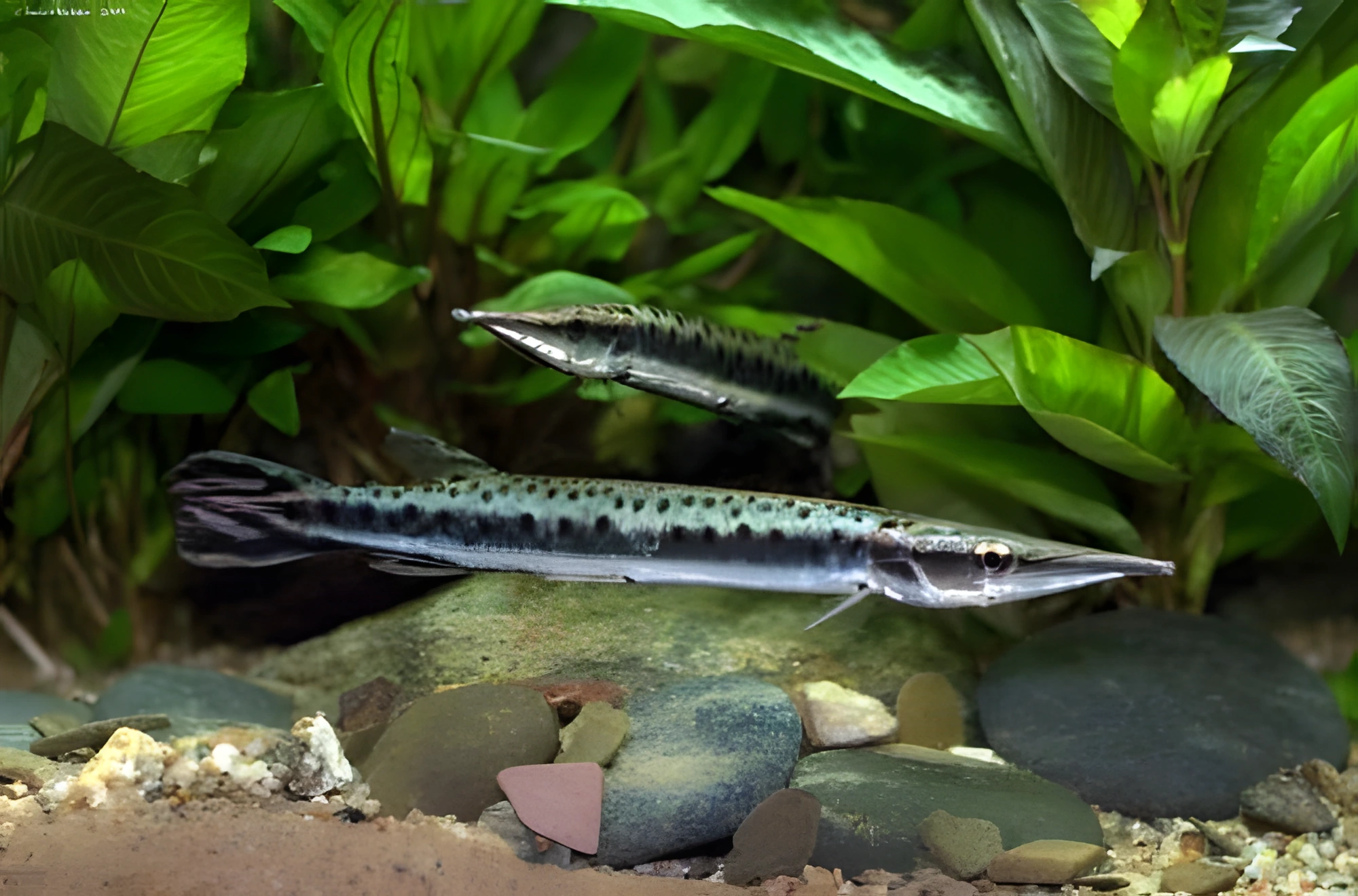
Boulengerella maculata, also known as the Spotted Boulengerella, belongs to the family Ctenoluciidae, which unites South American pike characins. It was named in honor of the Belgian-British zoologist George Albert Boulenger, who lived from 1858 to 1937. This predator has a peaceful disposition and is relatively easy to keep, provided it receives a well-chosen diet. It will fit perfectly into a community of other large, calm aquarium inhabitants.
- Required aquarium volume
- 300 L
- Size in aquarium
- 30 cm
- Temperature
- 22 – 28 °C
- Temperament
- Predator, but semi-peaceful (gets along with large ones)
Parameters
Water pHSlightly acidic (5) – Neutral (6.5)
Water dHVery soft (1) – Medium hardness (10)
Water salinityno salt (freshwater)
Size in aquarium30 cm
Lifespan8 years
TemperamentPredator, but semi-peaceful (gets along with large ones)
Toward small fishpredator
Required aquarium volume300 L
Lightingdimmed
Substrateany (no restrictions)
Water flowweak or moderate
FeedingHigh protein (predominantly meat)
CareBoth solitary and in group (flexible)
Description
Adults reach up to 30 cm in length. Their body shape resembles a pike: an elongated body, a large mouth, and a powerful tail adapted for rapid bursts in pursuit of prey. The body coloration is grayish, adorned with a pattern of rounded dark spots. Individuals from the upper Amazon often display a black stripe along the body, which is absent in fish from the lower reaches of the river. The presence of such a stripe makes them very similar to a closely related species – the Pike Characin, found nearby in the Orinoco River.
Habitat
The natural habitat of this fish is located in South America. It is widely distributed in the vast Amazon river system, and also found in the neighboring Tocantins and Orinoco river basins. The Spotted Boulengerella prefers calm sections of rivers, backwaters, and areas with abundant aquatic vegetation.
Behavior and Compatibility
Despite its predatory lifestyle, Boulengerella maculata is characterized by a non-aggressive and even timid disposition. When choosing tank mates, preference should be given to large, peaceful fish that will not exhibit aggression or territorial behavior. Excellent choices include bottom-dwelling species such as Geophagus, catfish from the Armored and Loricariid groups, as well as other fish with a similar temperament, sometimes known as "freshwater Barracudas." Boulengerella maculata coexists well with its own kind. However, it is important to remember: any fish small enough to fit into its mouth will likely become prey!
Care and Maintenance
For comfortable keeping of a single Spotted Boulengerella, an aquarium of at least 500 L and a length of 150 cm or more is required. When aquascaping, special attention should be paid to the upper water column. It is important to provide a sufficient number of hiding places, which can include dense thickets of live plants, including floating ones, as well as tall snags reaching the water surface. The aquarium must be equipped with a tight-fitting lid to prevent the fish from jumping out of the water. Optimal environmental conditions include warm, soft, slightly acidic, oxygen-rich water. Regular maintenance and impeccable filtration will help keep organic pollutants to a minimum. In its natural environment, this fish ambushes small fish, insects, and worms. In a home aquarium, it is recommended to feed it according to the recommendations of the breeders from whom the fish was acquired. Typically, the diet consists of fish fillets, mussels, shrimp, earthworms, and some types of insects. It is strictly forbidden to feed poultry and mammal meat (such as beef or pork), as such products are poorly digested and can cause serious digestive problems in the fish.
Diet
In natural conditions, this fish hunts from ambush, feeding on small fish, insects, and worms. In a home aquarium, it is recommended to follow the advice of the breeders from whom the Spotted Boulengerella was acquired. Typically, the diet includes fish fillets, mussels, shrimp, earthworms, and some insects. Poultry and mammal meat (e.g., beef or pork) should be excluded, as these products are poorly digested and can cause digestive problems. Despite its predatory nature, Boulengerella maculata does not show aggression and is even prone to timidity. When choosing tank mates, preference should be given to large, peaceful fish species that will not show hostility or territorial behavior. Good choices include bottom-dwelling inhabitants such as Geophagus, as well as catfish from the Armored and Loricariid families, and other fish with a similar temperament, sometimes called "freshwater Barracudas." These fish get along well with their own kind. However, it's worth remembering: any fish that can fit into their mouth will likely be eaten! Keeping Boulengerella in a favorable environment and providing it with a balanced diet minimizes the likelihood of diseases. The main danger can come from aquarium decorations. Being an ambush predator, the Spotted Boulengerella can get injured during an attack (jump). In aquariums, the tip of the mouth is most often damaged, which can lead to complications in the form of bacterial or fungal infections. More details on the causes, symptoms, and treatment methods can be found in the "Aquarium Fish Diseases" section.
Breeding and Reproduction
Breeding this species in aquarium conditions is considered an extremely difficult task, and reliable information about the spawning process in captivity is practically non-existent. In their natural habitat, these fish are pelagic predators. Successful reproduction in an aquarium requires large volumes of water, imitation of seasonal changes in environmental parameters, and the availability of high-quality live food to stimulate the breeders. Due to pronounced cannibalism among the fry, successful rearing requires regular sorting by size and providing ample swimming space.
Diseases
Being in favorable conditions and receiving a complete, balanced diet minimizes the likelihood of diseases. However, the main threat can come from aquarium decorations. Being an ambush predator, the Spotted Boulengerella can get injured during an attack or jump. In aquariums, the tip of the mouth is most often damaged, which can lead to complications in the form of bacterial or fungal infections. More detailed information on the causes, symptoms, and treatment methods for these conditions can be found in the "Aquarium Fish Diseases" section.
How to choose
When selecting individuals, attention should be paid to the integrity of the fins and the absence of visible damage on the body, as this species is prone to injury when startled. A healthy fish should be active, have clear eyes, and regular breathing. It is recommended to avoid purchasing individuals with signs of emaciation, sunken bellies, or unnatural behavior, such as constantly lying on the bottom. Given the timid nature of the species, it is important to assess the fish's reaction to external stimuli — a healthy individual should react quickly to movement near the aquarium.
Frequently asked questions
The essentials: size, tank volume, water parameters and care
How big does Spotted Boulengerella get?
An adult reaches 30 cm in length. Plan the tank around the maximum size: the fish quickly outgrows a cramped setup.
What size aquarium does Spotted Boulengerella need?
The minimum recommended volume is 300 L. A smaller tank speeds up nitrate build-up and raises stress levels.
What water parameters does Spotted Boulengerella need?
Temperature 22–28 °C, pH 5–6.5, hardness 1–10 dGH. Stability matters more than exact values: sudden swings are harder on the fish than a small deviation from the ideal.
How long does Spotted Boulengerella live?
Around 8 years when kept properly. Lifespan depends directly on tank volume, water quality and a varied diet.
Is Spotted Boulengerella aggressive?
Temperament: predator, but semi-peaceful (gets along with large ones). This is a predatory species — any fish small enough to fit in its mouth will eventually be eaten.
How many Spotted Boulengerella should be kept together?
Recommended setup: both solitary and in group (flexible). Ignoring this is a common cause of stress and disease.
What does Spotted Boulengerella eat?
Diet type: high protein (predominantly meat). Feed small portions that are finished within a couple of minutes — overfeeding does more harm than underfeeding.
What is the scientific name of Spotted Boulengerella?
The scientific name of the species is Boulengerella maculata, family South American Pike Characins (Ctenoluciidae). It also appears in the literature as: Hiphostoma taedo, Hydrocynus maculatus, Xiphostoma maculata.