Temperature20 – 28 °C
Natural range
- Panama area
- Eastern Colombia area
- Pacific drainage of Panama and Colombia area
CharacinsConservation status: Least concern LC
Other scientific names: Thoracocharax brevis, Thoracocharax maculatus, Thoracocharax magdalenae
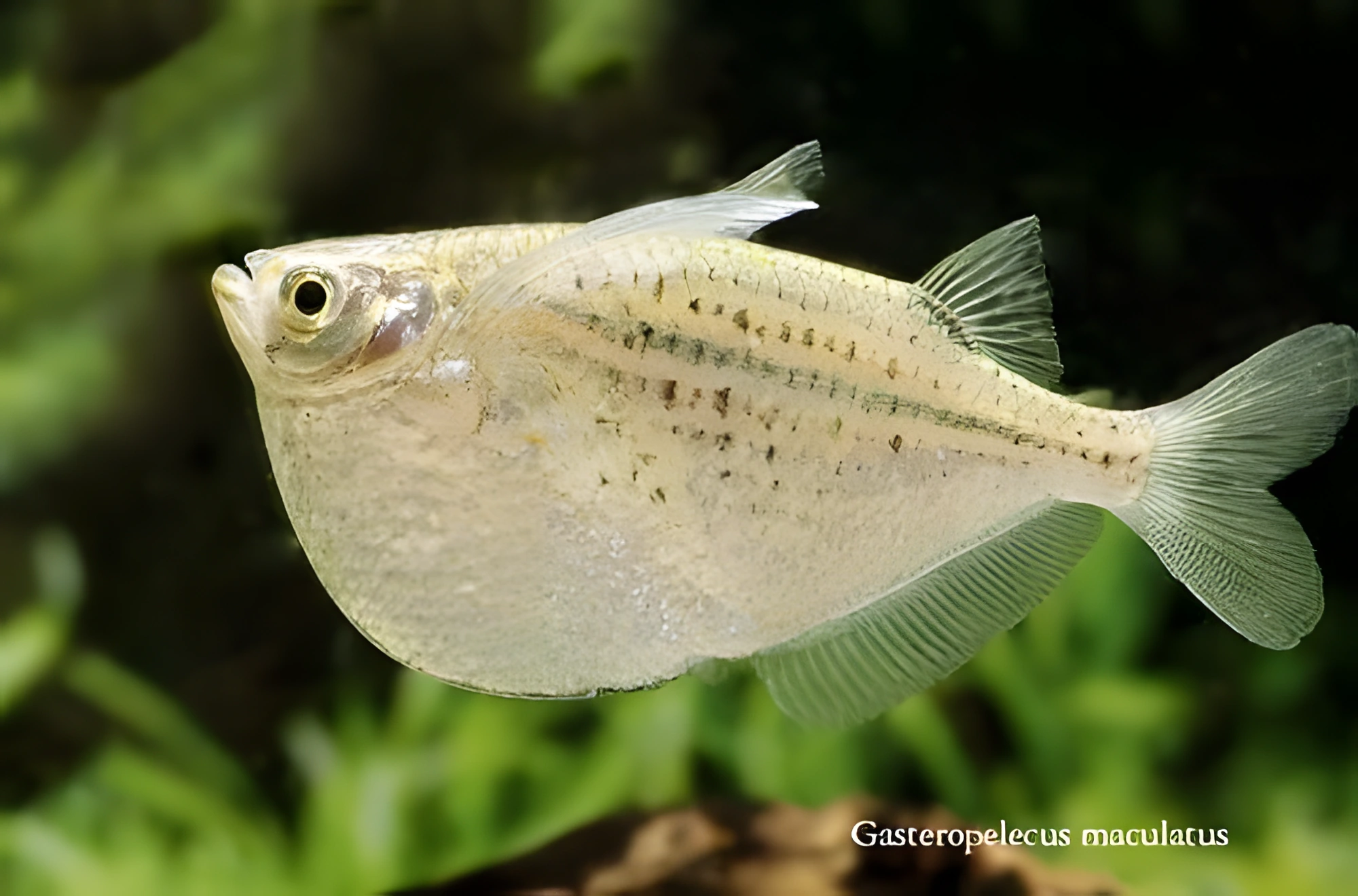
The Spotted Hatchetfish, also known as Gasteropelecus maculatus, belongs to the family Gasteropelecidae, which comprises the hatchetfish.
- Required aquarium volume
- 250 L
- Size in aquarium
- 6 – 7 cm
- Temperature
- 20 – 28 °C
- Temperament
- Peaceful (regular)
Parameters
Water pHSlightly acidic (5) – Neutral (7)
Water dHVery soft (1) – Hard (15)
Water salinityno salt (freshwater)
Size in aquarium6 – 7 cm
Lifespan5 years
TemperamentPeaceful (regular)
Toward small fishnot a predator
Required aquarium volume250 L
Lightingdimmed or moderate
Substrateany (no restrictions)
Water flowweak or moderate
FeedingFloating (any)
CareGroup (8–10 individuals)
Description
In the wild, the Spotted Hatchetfish typically grows up to 6 cm in length. However, in aquariums, under favorable conditions and without predators, some individuals can reach 8–9 cm. Their body shape is characteristic of hatchetfish: the belly is strongly developed, resembling the keel of a ship or the blade of an axe. In appearance, size, and silvery coloration, the Spotted Hatchetfish is similar to the Platinum Hatchetfish, but it is distinguished by the presence of dark speckles. Sexual dimorphism in these fish is weakly expressed; adult males and females are practically indistinguishable. Only during the spawning period may females appear somewhat distended due to eggs.
Habitat
This fish is found in the waters of South and Central America. Its natural range includes Panama and eastern Colombia, where it inhabits river systems flowing into the Pacific Ocean. It prefers to live in small streams and rivers, staying near the water surface, in the upper layer. It is most often seen near plant clusters, under overhanging foliage, and among other potential hiding places.
Behavior and Compatibility
This peaceful and active fish prefers to live in large groups. It is recommended to acquire at least 8–10 individuals. It is well compatible with most calm fish species of comparable size. Fish that inhabit the middle or bottom layers of the aquarium would be an excellent choice.
Care and Maintenance
As mentioned, Gasteropelecus maculatus spends most of its time in the surface layer of the water. Therefore, when setting up an aquarium, the main emphasis should be on the upper stratum, providing sufficient free space for swimming and several hiding places. Plants reaching the surface can serve as such shelters. The decoration of the lower stratum is not significantly important for this species. The optimal aquarium volume for a group of 8–10 fish starts from 250 liters; in this case, the surface area of the water plays a more important role than the depth. Hatchetfish tolerate excessive current poorly. The main source of water movement in the aquarium is the filter, so a model capable of providing a relatively calm, non-turbulent environment should be chosen. The fish prefer soft, slightly acidic water and require a warm, well-oxygenated environment, which sometimes necessitates additional aeration. The daily diet should be based on protein-rich foods that float on the surface. Foods that sink to the bottom will likely be ignored by the fish.
Diet
The basis of the daily diet should consist of foods that float on the surface and contain sufficient protein. Food that sinks to the bottom is generally ignored by these fish.
Breeding and Reproduction
Breeding is considered a challenging task and requires a separate spawning tank of at least 50 liters. The water should be soft and slightly acidic, with a pH of 5.5–6.5 and a temperature of about 25 °C. To stimulate spawning, the breeders are fed abundantly with live foods such as mosquito larvae or Artemia nauplii. Fine-leaved plants or floating vegetation are placed in the spawning tank, among the roots of which the fish lay their eggs. After the process is complete, the breeders must be removed, as they are prone to eating the eggs. Larvae hatch after 30 hours, and on the fifth day, the fry begin to swim freely and require infusoria or the finest starter food.
Diseases
The species is sensitive to water quality and is susceptible to typical characin diseases if kept in improper conditions. The main problems arise from the accumulation of organic matter, which can lead to bacterial infections or fin rot. The fish react extremely negatively to sharp fluctuations in environmental parameters and chemical preparations containing copper or aggressive dyes. Prevention involves maintaining stable parameters, regular water changes, and ensuring high oxygen content. When stressed or in poor conditions, the fish become susceptible to Ichthyophthiriasis.
How to choose
When purchasing, attention should be paid to the activity of the fish and the integrity of their fins. Healthy individuals should stay in a school in the upper water layers and show interest in the surface. Avoid specimens with damaged scales, film on the body, or an unnaturally sunken belly. It is important to ensure that the fish show no signs of emaciation, as hatchetfish tolerate prolonged starvation or stress during transport poorly. It is recommended to acquire a group of 6 or more individuals to reduce timidity, as single fish in a store are often under severe stress.
Frequently asked questions
The essentials: size, tank volume, water parameters and care
How big does Spotted Hatchetfish get?
An adult reaches 6–7 cm in length. Plan the tank around the maximum size: the fish quickly outgrows a cramped setup.
What size aquarium does Spotted Hatchetfish need?
The minimum recommended volume is 250 L. A smaller tank speeds up nitrate build-up and raises stress levels.
What water parameters does Spotted Hatchetfish need?
Temperature 20–28 °C, pH 5–7, hardness 1–15 dGH. Stability matters more than exact values: sudden swings are harder on the fish than a small deviation from the ideal.
How long does Spotted Hatchetfish live?
Around 5 years when kept properly. Lifespan depends directly on tank volume, water quality and a varied diet.
Is Spotted Hatchetfish aggressive?
Temperament: peaceful (regular). Keep this in mind when choosing tank mates.
How many Spotted Hatchetfish should be kept together?
Recommended setup: group (8–10 individuals). Ignoring this is a common cause of stress and disease.
What does Spotted Hatchetfish eat?
Diet type: floating (any). Feed small portions that are finished within a couple of minutes — overfeeding does more harm than underfeeding.
What is the scientific name of Spotted Hatchetfish?
The scientific name of the species is Gasteropelecus maculatus, family Freshwater Hatchetfish (Gasteropelecidae). It also appears in the literature as: Thoracocharax brevis, Thoracocharax maculatus, Thoracocharax magdalenae.