Temperature24 – 27 °C
Natural range
- Lake Malawi area
- East Africa area
Cichlids
Other scientific names: Melanochromis crabro
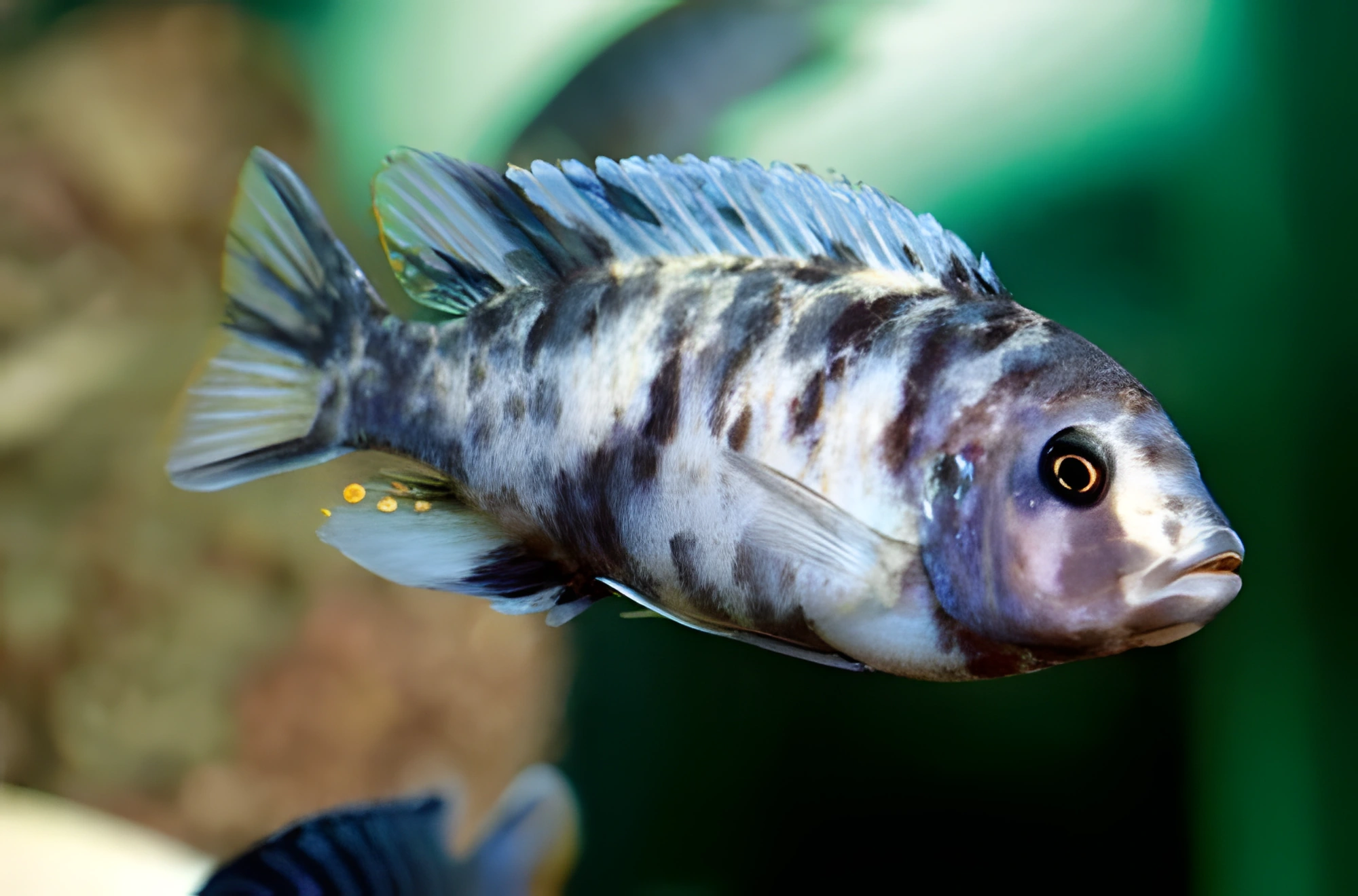
The OB Mbuna form (OB Mbuna) represents an example of natural polymorphism, characteristic of some species of Malawian cichlids. These fish inhabit the African Lake Nyasa and are distinguished by their peculiar coloration.
- Required aquarium volume
- 150 L
- Size in aquarium
- 7 – 14 cm
- Temperature
- 24 – 27 °C
- Temperament
- Aggressive / incompatible / unfriendly
Parameters
Water pHSlightly alkaline (7.6) – Alkaline (8.8)
Water dHMedium hardness (8) – Very hard (25)
Water salinityno salt (freshwater)
Size in aquarium7 – 14 cm
Lifespan8 years
TemperamentAggressive / incompatible / unfriendly
Toward small fishnot a predator
Required aquarium volume150 L
Lightingmoderate (regular)
Substratesandy (regular, light)
Water flowweak or moderate
FeedingMixed diet (meat + plant-based)
CareSmall group (5–6 individuals)
Description
OB Mbuna (OB Mbuna) is a natural color variation (morph) of some Mbuna cichlid species from Lake Malawi. The coloration is characterized by the presence of dark spots on the main body background, caused by an uneven distribution of melanin pigment. Almost all individuals with this type of coloration are females. The body shape is typical for representatives of the group: dense, moderately elongated, with a large mouth and well-developed fins.
Habitat
In nature, these fish inhabit the African Lake Malawi (Nyasa), predominantly in coastal areas with rocky bottoms. The typical biotope consists of rocky areas with an abundance of caves and grottoes, providing shelter. Water parameters in their natural environment are characterized by high hardness and alkaline reaction: pH 7.6–8.8, dGH 8–25, water temperature 24–28°C.
Behavior and Compatibility
These fish have a rather temperamental and quarrelsome nature. In a closed aquarium ecosystem, it is recommended to form a group of one male and several females. If the aquarium is large enough, several hundred liters, cohabitation with other Malawian cichlids is possible. Otherwise, there is a risk of conflicts between males, which can lead to the death of weaker individuals.
Care and Maintenance
Keeping these fish is similar to the conditions required for other Mbuna. For a group of 5–6 individuals, a spacious aquarium of 150 to 200 liters will be needed. The decor should include a sandy substrate, as well as rock and driftwood formations. It is important to provide a sufficient number of shelters, such as caves, where subdominant fish or females can find refuge during spawning. The hydrochemical composition of the water is of key importance for successful keeping, as it differs significantly from most freshwater biotopes. For Lake Nyasa cichlids, it is critical to maintain high pH (7.6–8.8) and dGH (8–25) values. Aquarium maintenance includes two main procedures: weekly partial water changes with fresh water and constant removal of organic residues, such as uneaten food and excrement.
Diet
In their natural habitat, these fish feed by scraping algal growths from the surface of stones and rocks. Along with algae, their diet includes small crustaceans, insects, and other invertebrates. Thus, the daily diet in the aquarium should be balanced and include both plant and protein components. For beginner aquarists, specialized Mbuna cichlid foods, available from manufacturers in various forms such as flakes, pellets, or tablets, will be an optimal choice.
Breeding and Reproduction
Reproduction occurs according to the typical scenario for Malawian cichlids, with the female incubating the eggs in her mouth. During the spawning period, the male prepares a spot on a rock or substrate. After laying and fertilizing the eggs, the female collects them into her mouth, where development lasts about 3 weeks. During this time, the female does not feed and needs peace. Fry, after emerging from the mother's mouth, are capable of self-feeding on Artemia nauplii.
Diseases
The main threat to their health is the so-called “Malawi bloat,” which often occurs when water parameters are disturbed or the diet is unbalanced. Fish are sensitive to the accumulation of nitrogenous compounds (ammonia, nitrites, nitrates). To prevent diseases, it is necessary to ensure powerful filtration, aeration, and weekly water changes, as well as to avoid overfeeding with protein-rich food.
How to choose
When purchasing, choose active fish with clean fins and no external damage or sores on their bodies. It is important to ensure that the fish exhibit typical Mbuna behavior: actively exploring the space or occupying shelters. It is recommended to avoid individuals with sunken bellies or unnaturally bloated abdomens, which may indicate digestive problems or the presence of internal parasites.
Frequently asked questions
The essentials: size, tank volume, water parameters and care
How big does OB Mbuna get?
An adult reaches 7–14 cm in length. Plan the tank around the maximum size: the fish quickly outgrows a cramped setup.
What size aquarium does OB Mbuna need?
The minimum recommended volume is 150 L. A smaller tank speeds up nitrate build-up and raises stress levels.
What water parameters does OB Mbuna need?
Temperature 24–27 °C, pH 7.6–8.8, hardness 8–25 dGH. Stability matters more than exact values: sudden swings are harder on the fish than a small deviation from the ideal.
How long does OB Mbuna live?
Around 8 years when kept properly. Lifespan depends directly on tank volume, water quality and a varied diet.
Is OB Mbuna aggressive?
Temperament: aggressive / incompatible / unfriendly. Keep this in mind when choosing tank mates.
How many OB Mbuna should be kept together?
Recommended setup: small group (5–6 individuals). Ignoring this is a common cause of stress and disease.
What does OB Mbuna eat?
Diet type: mixed diet (meat + plant-based). Feed small portions that are finished within a couple of minutes — overfeeding does more harm than underfeeding.
What is the scientific name of OB Mbuna?
The scientific name of the species is Maylandia crabro, family Cichlids (Cichlidae). It also appears in the literature as: Melanochromis crabro.