Temperature23 – 27 °C
Natural range
- Peru area
CharacinsConservation status: Least concern LC
Other scientific names: Hemigrammus pulchra
The Pulcher fish, also known by its scientific name Hemigrammus pulcher, belongs to the Characidae family. Despite its rather narrow natural habitat, it has gained popularity among aquarists worldwide due to its unpretentiousness, ease of breeding, and good compatibility with many other fish species.
- Required aquarium volume
- 70 L
- Size in aquarium
- 5 cm
- Temperature
- 23 – 27 °C
- Temperament
- Peaceful (regular)
Parameters
Water pHSlightly acidic (5.5) – Neutral (7)
Water dHVery soft (1) – Hard (12)
Water salinityno salt (freshwater)
Size in aquarium5 cm
Lifespan5 years
TemperamentPeaceful (regular)
Toward small fishnot a predator
Required aquarium volume70 L
Lightingdimmed
Substratecoarse sand / gravel / pebbles
Water flowweak
FeedingAny (universal)
CareGroup (8–10 individuals)
Description
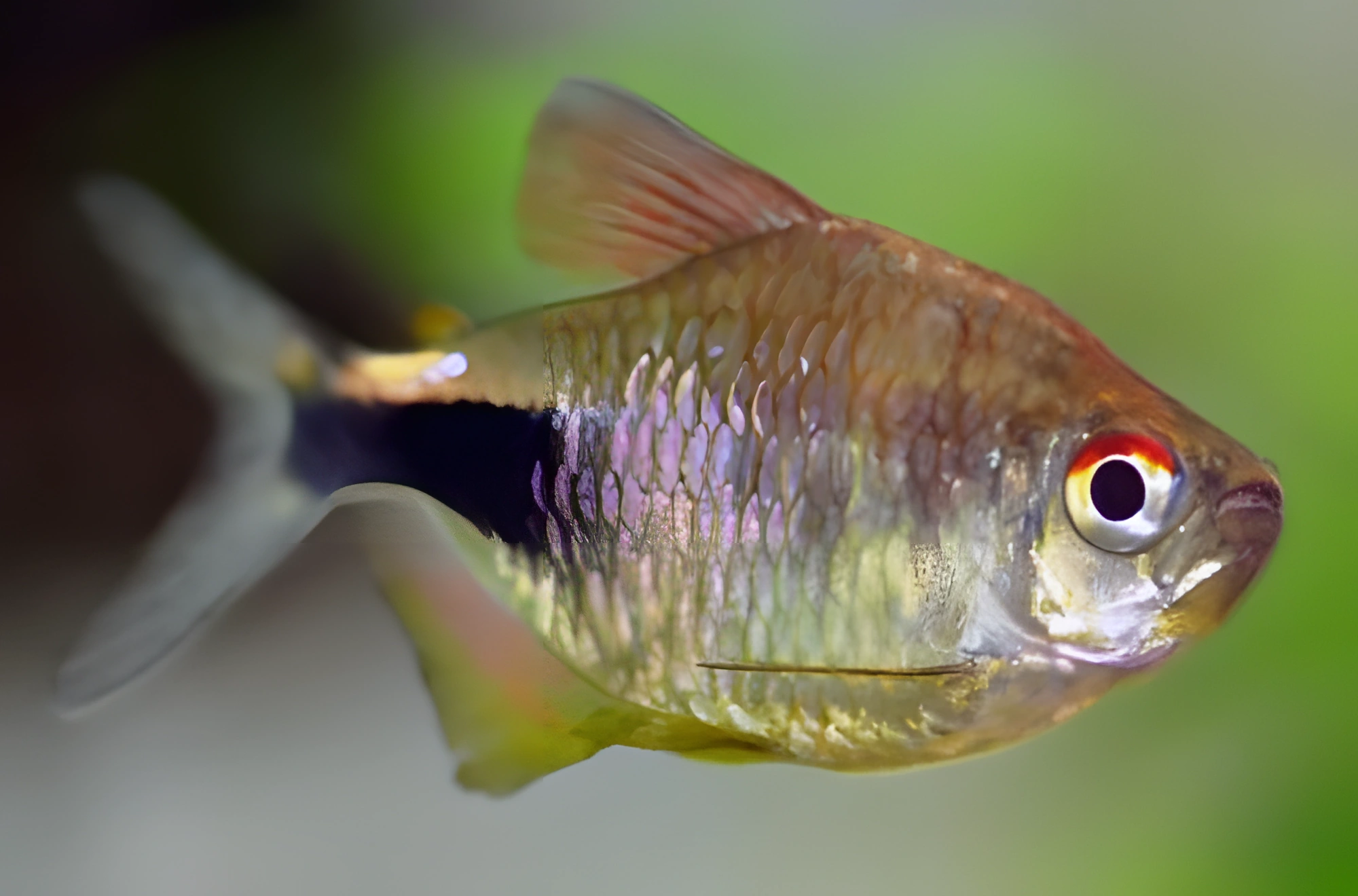
The appearance of this fish resembles its close relative, the Glowlight Tetra. The Pulcher reaches the same size, up to 4.5 cm, and possesses a characteristic feature — red pigment in the upper part of the eye. Differences, however, are evident in the pattern and overall body coloration: the Pulcher lacks two dark spots; instead, it has a large black stripe at the base of the tail, and a noticeable yellow or lemon hue is added to the silvery base color.
Habitat
This species is endemic to a small part of the Upper Amazon, located in modern-day Peru, South America. Their natural habitat consists of tributaries of the main river, characterized by slow currents and flowing through tropical rainforests. Today, it is extremely difficult to find wild-caught specimens for sale; most specimens available to aquarists come from commercial breeding.
Behavior and Compatibility
This peaceful and calm species should be kept in a school of at least 6 individuals. They get along well with most other peaceful fish of similar size and temperament. However, there is a risk that larger fish may perceive the Pulcher as a potential food source.
Care and Maintenance
This is a fairly undemanding fish, capable of thriving even in minimalist aquarium conditions. Nevertheless, you shouldn't limit it to such Spartan keeping, as your aquatic pets deserve more comfort. An optimal solution would be a tank of at least 70 L. Its decor should include sandy river substrate, a couple of snags (both natural and decorative), and several types of rooted and floating plants. Aquarium equipment should be set up so that lighting fixtures create subdued light, and filter operation does not cause too strong a current. Water parameters for the Pulcher should be characterized by a slightly acidic pH with low hardness, and the temperature regime maintained within 23–27°C. To recreate the tea-colored water characteristic of the Pulcher's natural habitat, you can place a cloth bag with special aquarium peat (purchased exclusively at pet stores) in the aquarium or use dried fallen leaves. Leaves should be soaked for about a week beforehand, for example, in a plate or cup, and only then can they be placed in the aquarium, otherwise, they will remain on the surface. Aquarium care involves weekly partial water changes (10–15% of the total volume) with fresh water, as well as regular cleaning of the substrate from organic debris and glass from plaque.
Diet
This fish can accept almost all types of dry and freeze-dried commercial foods intended for aquarium fish. However, to maintain its health, it will be beneficial to periodically enrich its diet with live or frozen foods, such as bloodworms, daphnia, or brine shrimp.
Breeding and Reproduction
Breeding these fish at home is not particularly difficult; they can even reproduce in a community tank. But in such a case, the chances of fry survival will be extremely low, as they will fall victim not only to other aquarium inhabitants but also to their own parents. If you plan to breed, it is recommended to set up a separate tank of about 20–30 L. It can be left without special decoration, but it is important to prepare several dense fine-leaved plants or mosses, which will help protect the eggs from being eaten. A fine-mesh net placed on the bottom or a layer of glass marbles can serve the same purpose. For equipment, a simple sponge air-lift filter and a heater will suffice. The lighting system can be neglected, as light coming from the room will be quite sufficient. A gradual change in water conditions will serve as a stimulus for spawning: pH should be set in the range of 5.5–6.5 with low carbonate hardness (dH 1–5), and the water temperature raised to 27°C. A significant amount of live food must be included in the daily diet. After some time, the females will noticeably round out, indicating the approaching breeding period. Females and the strongest males are then transferred to a separate spawning tank filled with water from the community aquarium. After spawning, the parents should be returned to the main aquarium. Fry hatch within 24–36 hours, and after another 3–4 days, they begin to swim freely, and from this moment, they need to be fed specialized food for aquarium fish fry.
Diseases
A balanced aquarium system that provides suitable keeping conditions is the best prevention of any diseases in the Glowlight Tetra. Therefore, if you notice changes in behavior, fish color, or the appearance of unusual spots, first check the water parameters, and only then proceed with possible treatment.
How to choose
When purchasing, choose active individuals that stay in a school and show interest in their surroundings. Avoid fish with signs of emaciation, fin damage, whitish spots on the body, or uncharacteristic behavior, such as apathy or constant presence at the water surface. Since most specimens for sale are captive-bred, they are usually well adapted to aquarium conditions, but it is important to ensure that the fish in the store are kept in clean water and show no signs of infectious diseases.
Frequently asked questions
The essentials: size, tank volume, water parameters and care
How big does Pulcher get?
An adult reaches 5 cm in length. Plan the tank around the maximum size: the fish quickly outgrows a cramped setup.
What size aquarium does Pulcher need?
The minimum recommended volume is 70 L. A smaller tank speeds up nitrate build-up and raises stress levels.
What water parameters does Pulcher need?
Temperature 23–27 °C, pH 5.5–7, hardness 1–12 dGH. Stability matters more than exact values: sudden swings are harder on the fish than a small deviation from the ideal.
How long does Pulcher live?
Around 5 years when kept properly. Lifespan depends directly on tank volume, water quality and a varied diet.
Is Pulcher aggressive?
Temperament: peaceful (regular). Keep this in mind when choosing tank mates.
How many Pulcher should be kept together?
Recommended setup: group (8–10 individuals). Ignoring this is a common cause of stress and disease.
What does Pulcher eat?
Diet type: any (universal). Feed small portions that are finished within a couple of minutes — overfeeding does more harm than underfeeding.
What is the scientific name of Pulcher?
The scientific name of the species is Hemigrammus pulcher, family Characidae. It also appears in the literature as: Hemigrammus pulchra.