Temperature20 – 24 °C
Natural range
- Orinoco River Basin
- Venezuela area
- Colombia area
KillifishConservation status: Least concern LC
Other scientific names: Gnatholebias hoignei, Gnatholebias hoigneri
Pterolebias hoignei, known as the Orinoco Pterolebias, is a member of the family Rivulidae, which includes many species of rivuline killifish. This vibrant annual fish lives in the wild in temporary water bodies that appear in the Orinoco River basin (South America) during the rainy season when rivers overflow. Its lifespan is only about 6–7 months, during which it completes a full development cycle from egg to adult, sexually mature individual.
- Required aquarium volume
- 50 L
- Size in aquarium
- 10 cm
- Temperature
- 20 – 24 °C
- Temperament
- Peaceful (regular)
Parameters
Water pHNeutral (6.5) – Neutral (7.5)
Water dHSoft (5) – Medium hardness (8)
Water salinityno salt (freshwater)
Size in aquarium10 cm
Lifespan1 years
TemperamentPeaceful (regular)
Toward small fishnot a predator
Required aquarium volume50 L
Lightingany
Substratesoft silted
Water flownone or stagnant (no flow)
FeedingHigh protein (predominantly meat)
CareSchooling (usually from 5–6 individuals and more)
Description
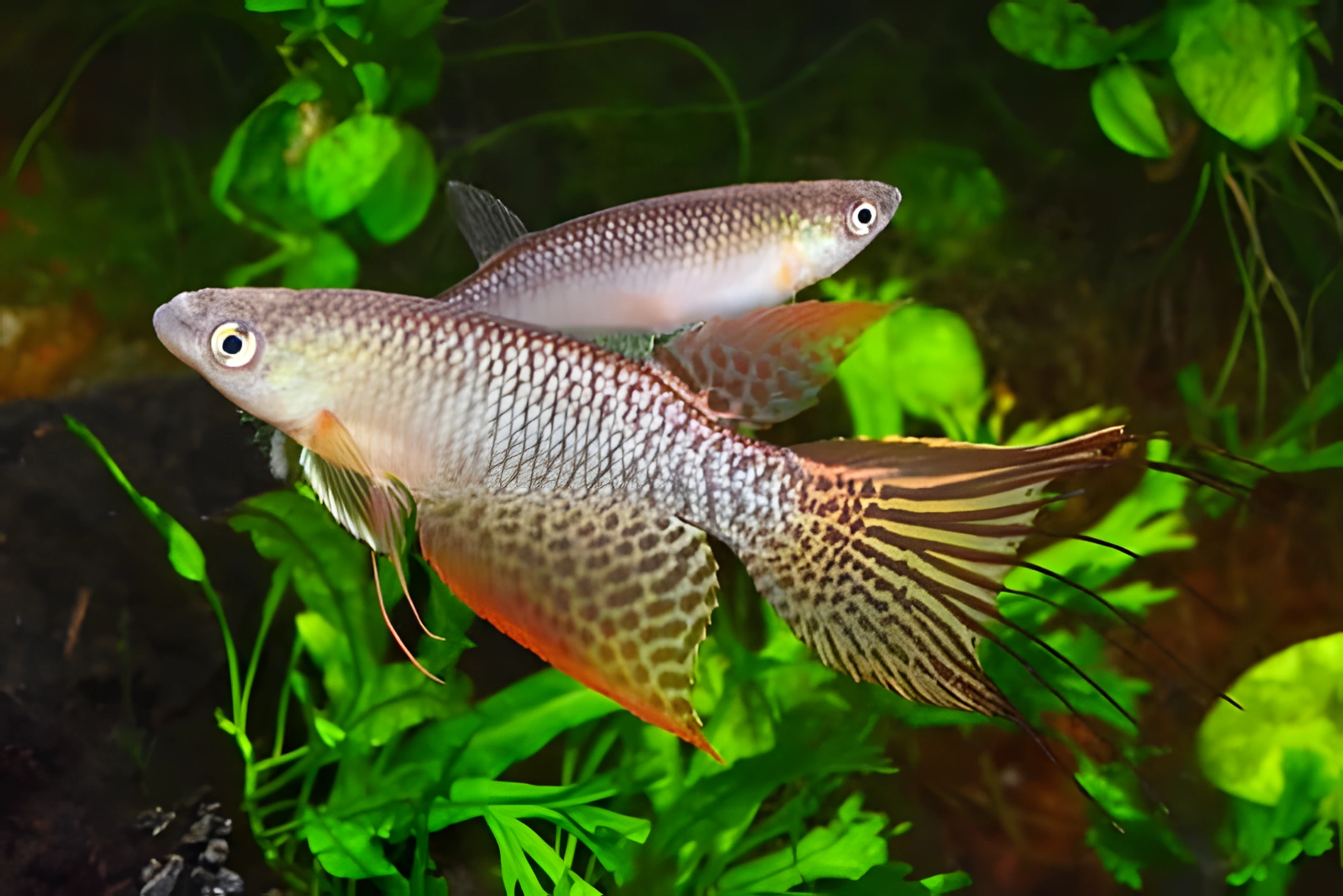
Adults grow up to 10 cm in length. Males are often larger, have more developed fins, and brighter coloration compared to females. Faint vertical stripes can be seen on their bodies, indicating kinship with Pterolebias zonatus. The fins are adorned with a spotted pattern, and the main colors in their coloration are gray, pink, and red. When kept in home aquariums, these fish can live for more than a year.
Habitat
As mentioned, the natural habitat of this fish is the Orinoco River basin, but not in the main channel; rather, it's found in small backwaters and puddles that form in flooded areas during the rainy season. The bottom of these water bodies is a mixture of clay, mud, and decaying plant organic matter. The water in them is typically murky.
Behavior and Compatibility
This species is considered peaceful. In their natural environment, Orinoco Pterolebias often coexist with other annual killifish, competing with them for limited resources. In aquarium conditions, provided there is sufficient food, they behave more calmly. They get along well with many other species of similar size and temperament.
Care and Maintenance
For keeping Pterolebias hoignei, an aquarium of at least 50 L is required. The fish prefer soft and acidic water: pH in the range of 5.5–7.0 and general hardness (GH) of 1–5. The temperature regime can vary from 24 to 30 degrees Celsius, but optimal values are considered to be 25–26 degrees Celsius. In terms of decor, it is recommended to imitate the natural biotope using subdued lighting and plenty of hiding places, as in nature these fish inhabit shady forest water bodies.
Diet
In aquarium conditions, this species is undemanding regarding its diet. The basis of their nutrition should be high-quality live or frozen foods. It is recommended to use:
- brine shrimp
- daphnia
- bloodworms
- tubifex
Breeding and Reproduction
For keeping 3–4 fish, an aquarium of at least 50 L is best suited. The aquarium decor can be arbitrary, chosen by the aquarist based on their preferences or the requirements of other inhabitants. However, given the short lifespan of Pterolebias hoignei, breeding becomes a key task for population preservation. In this case, all decor elements should be selected with spawning requirements in mind. In the wild, these fish lay their eggs in soft substrate layers. When the water body dries out, the eggs remain in the substrate, awaiting the next rainy season. In aquariums, a substrate that can be easily removed from the water is required. Coconut fiber or layers of aquatic moss, as well as ferns, which can then be dried without regret, can serve as such a substrate. Floating plants can also be used for decoration. Rooting species should preferably be planted in separate containers or pots. The minimum equipment set includes a heater, a lighting system, and a simple air-driven filter with a sponge as the filter element. Comfortable keeping conditions imply soft, acidic water with a temperature of 20°C to 24°C. Gradually raising the temperature to 28–33°C stimulates spawning. If breeding is not planned, temperature increases should be avoided, as this accelerates the fish's metabolism and shortens their already brief life cycle. An important aspect of successful breeding is a properly selected diet. Fish need to receive protein-rich food. The daily diet can consist of live or frozen bloodworms, brine shrimp, daphnia, mosquito larvae, and other similar foods. Eggs are laid directly into the substrate. Spawning can last a week or even longer. It is important to constantly monitor for the presence of eggs. The substrate with eggs is carefully removed and thoroughly rinsed of organic residues. Excessive organic matter, such as food particles or excrement, can provoke mold and fungi growth during long-term storage. The substrate is then placed in a container with a perforated lid, ensuring gas exchange. It should remain slightly moist; the degree of humidity is determined empirically, as precise recommendations are difficult to give. The substrate with eggs is stored in a dark place at room temperature for about 6–7 months. After this period, it is placed in water, and after some time, the first fry appear.
Diseases
Specific data on diseases characteristic exclusively of Pterolebias hoignei are insufficient in open sources. Like other members of the Rivulidae family, this species is susceptible to typical aquarium fish infections when keeping conditions are violated.
Main risks are associated with water quality and stress:
- bacterial and fungal lesions of the skin and fins, occurring when environmental parameters are not met or due to injuries;
- ectoparasite infestations from poor-quality live food;
- oodiniosis and other types of ichthyophthiriasis, to which fish may be sensitive due to weakened immunity in unsuitable water parameters.
Prevention involves maintaining stable water parameters consistent with the natural biotope (soft, acidic environment), using high-quality live or frozen foods, and ensuring the absence of sharp fluctuations in temperature and water composition.
How to choose
When selecting individuals, attention should be paid to their activity and fin integrity. Healthy fish should exhibit natural behavior characteristic of their species and show no signs of emaciation or skin damage. It is recommended to acquire fish in groups consisting of one male and several females, as this reduces stress levels in individuals.
Frequently asked questions
The essentials: size, tank volume, water parameters and care
How big does Orinoco Pterolebias get?
An adult reaches 10 cm in length. Plan the tank around the maximum size: the fish quickly outgrows a cramped setup.
What size aquarium does Orinoco Pterolebias need?
The minimum recommended volume is 50 L. A smaller tank speeds up nitrate build-up and raises stress levels.
What water parameters does Orinoco Pterolebias need?
Temperature 20–24 °C, pH 6.5–7.5, hardness 5–8 dGH. Stability matters more than exact values: sudden swings are harder on the fish than a small deviation from the ideal.
How long does Orinoco Pterolebias live?
Around 1 years when kept properly. Lifespan depends directly on tank volume, water quality and a varied diet.
Is Orinoco Pterolebias aggressive?
Temperament: peaceful (regular). Keep this in mind when choosing tank mates.
How many Orinoco Pterolebias should be kept together?
Recommended setup: schooling (usually from 5–6 individuals and more). Ignoring this is a common cause of stress and disease.
What does Orinoco Pterolebias eat?
Diet type: high protein (predominantly meat). Feed small portions that are finished within a couple of minutes — overfeeding does more harm than underfeeding.
What is the scientific name of Orinoco Pterolebias?
The scientific name of the species is Pterolebias hoignei, family Rivulidae. It also appears in the literature as: Gnatholebias hoignei, Gnatholebias hoigneri.