Temperature25 – 30 °C
Natural range
- Gambia area
- Guinea area
- Sierra Leone area
- Ivory Coast area
UnusualConservation status: Least concern LC
Other scientific names: Lepidosiren annectens, Lepidosiren tobal, Protopterus anguilliformis, Protopterus annectans, Protopterus rhinocryptis, Rhinocryptis annectens
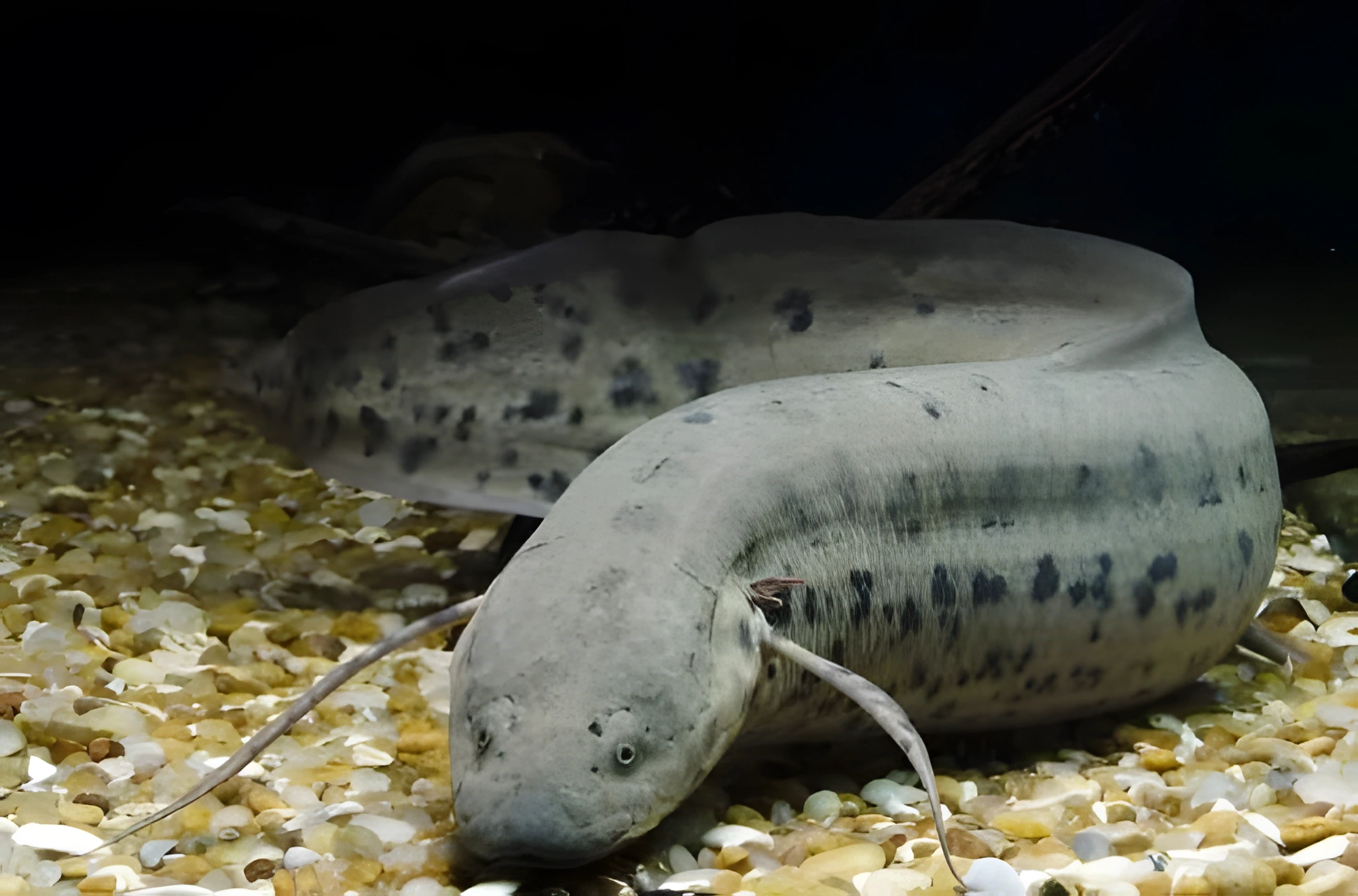
Protopterus, also known as the African lungfish (scientific name Protopterus annectens), belongs to the family Protopteridae. This amazing species has repeatedly been the central topic of popular science programs on BBC and Animal Planet, showcasing the lives of animals in extreme conditions. Although the protopterus is undemanding in terms of care, it is considered a fish for true enthusiasts; not every aquarist is ready to keep such an animal, most often due to its unusual appearance.
- Required aquarium volume
- 1000 L
- Size in aquarium
- 80 – 100 cm
- Temperature
- 25 – 30 °C
- Temperament
- Aggressive / incompatible / unfriendly
Parameters
Water pHSlightly acidic (5) – Neutral (7.5)
Water dHVery soft (1) – Medium hardness (10)
Water salinityno salt (freshwater)
Size in aquarium80 – 100 cm
Lifespan20 years
TemperamentAggressive / incompatible / unfriendly
Toward small fishnot a predator
Required aquarium volume1000 L
Lightingdimmed (dull)
Substratesoft silted
Water flowweak
FeedingAny (universal)
CareSolitary
Description
Adults of this fish can reach about 1 meter in length. The body is elongated and snake-like. Notably, the pectoral and pelvic fins have transformed into thin but powerful muscular appendages. The dorsal fin extends almost the entire length of the body, smoothly connecting with the caudal section. The coloration of these fish is usually gray or light brown, often with dark speckles. A distinctive feature of this species is its ability to breathe not only dissolved oxygen in water but also atmospheric air, which earned it the name “lungfish.”
With the onset of the dry season, the African lungfish seeks out a suitable spot, usually among dense vegetation, and digs a burrow. Upon reaching the necessary depth, it forms a peculiar chamber, positioning itself head-up towards the exit. As the water recedes and air enters the chamber, the fish begins to secrete a special mucus. This mucus hardens, forming an impenetrable cocoon. From this point, significant changes occur in the body: the metabolic rate sharply slows down. A state known as estivation begins. The fish spends the entire dry season in this state. With the first drops of rain, it awakens and emerges from its shelter. Notably, in particularly unfavorable conditions, estivation can last for several years.
Habitat
As the name suggests, this species inhabits the tropical and equatorial regions of Africa. Its natural range covers many countries on the continent. Protopterus can be found in Gambia, Guinea, Sierra Leone, Côte d'Ivoire, Togo, Burkina Faso, Niger, Nigeria, Cameroon, and other states. The fish inhabits floodplain lakes, swamps, and temporary bodies of water that completely dry up annually during the dry season. It is precisely these bodies of water that are the primary habitat for the protopterus, which has developed an astonishing adaptation allowing it to survive without water for several months, as will be discussed further.
Behavior and Compatibility
Protopterus are intolerant of their own kind and pose a danger to other fish, even large ones. They can bite and inflict serious injuries. For this reason, it is recommended to keep them alone.
Care and Maintenance
Due to the sedentary lifestyle of the protopterus, it can be kept in a relatively small aquarium – from 1000 liters. Smooth stones and driftwood are used for aquarium decoration. A soft substrate would be welcome but is not critically important. Live plants are not required, and moreover, they are likely to be eaten very quickly. Lighting should be dim. The filtration system should be chosen to provide high performance but without creating a strong water current. The aquarium must be equipped with a lid, as the fish may escape if given the opportunity. It is important to leave sufficient air space between the lid and the water surface to ensure the protopterus constant access to atmospheric air. Standard care procedures include weekly partial water changes with fresh water and regular cleaning of organic waste.
Diet
This species is omnivorous and completely undemanding in terms of diet. In its natural environment, the protopterus consumes almost everything it can find: this can include mollusks, small fish, amphibians, insects, or even plants. In aquarium conditions, it can be offered a wide variety of foods. The regularity of feeding does not play a key role; breaks between meals can last several days.
Breeding and Reproduction
Cases of successful breeding of this species in home aquariums have not yet been recorded. This is due to the difficulties of simultaneously keeping two adult individuals in one tank, as well as the need to recreate special external conditions for spawning. In nature, fish form temporary pairs for the breeding period. Males build nests where females lay their eggs, and then the male guards the clutch until the fry emerge.
Diseases
This species is remarkably resilient. Most often, diseases in aquarium fish arise due to unsuitable keeping conditions. However, the lungfish is capable of adapting to the harshest conditions, and if they become unbearable, it can enter a state of estivation.
How to choose
When choosing a protopterus, preference should be given to individuals with clean skin, free of visible ulcers, wounds, or areas with unnatural plaque. It is important to assess the fish's activity: a healthy protopterus should show curiosity, react to movement near the glass, and periodically rise to the surface for a gulp of air. Avoid specimens that appear emaciated, have a sunken belly, or constantly lie on their side without apparent reason.
- pay attention to the integrity of the fins, which should show no signs of splitting or erosion;
- ask the seller how the fish accepts food, as healthy individuals usually have a good appetite;
- note that young individuals may have external gills, which is normal, but in adult fish, their presence may indicate developmental or adaptation problems.
Since this species is territorial and aggressive, fish are almost always kept individually in stores. If you see several individuals in one aquarium, carefully inspect them for bite marks or fin damage caused by intraspecific aggression. Given the potentially large size of an adult protopterus, assess in advance your readiness to provide it with a spacious aquarium with a secure lid, as these fish are prone to escaping.
Frequently asked questions
The essentials: size, tank volume, water parameters and care
How big does Protopterus get?
An adult reaches 80–100 cm in length. Plan the tank around the maximum size: the fish quickly outgrows a cramped setup.
What size aquarium does Protopterus need?
The minimum recommended volume is 1000 L. A smaller tank speeds up nitrate build-up and raises stress levels.
What water parameters does Protopterus need?
Temperature 25–30 °C, pH 5–7.5, hardness 1–10 dGH. Stability matters more than exact values: sudden swings are harder on the fish than a small deviation from the ideal.
How long does Protopterus live?
Around 20 years when kept properly. Lifespan depends directly on tank volume, water quality and a varied diet.
Is Protopterus aggressive?
Temperament: aggressive / incompatible / unfriendly. Keep this in mind when choosing tank mates.
How many Protopterus should be kept together?
Recommended setup: solitary. Ignoring this is a common cause of stress and disease.
What does Protopterus eat?
Diet type: any (universal). Feed small portions that are finished within a couple of minutes — overfeeding does more harm than underfeeding.
What is the scientific name of Protopterus?
The scientific name of the species is Protopterus annectens, family Protopteridae. It also appears in the literature as: Lepidosiren annectens, Lepidosiren tobal, Protopterus anguilliformis.