Temperature18 – 24 °C
Natural range
- Sikkim area
- India area
CyprinidsConservation status: Least concern LC
Other scientific names: Chondrostoma wattanah, Cirrhina latia, Corssocheilus latius, Crossocheilus gohama, Crossocheilus sada, Crossochilus latius
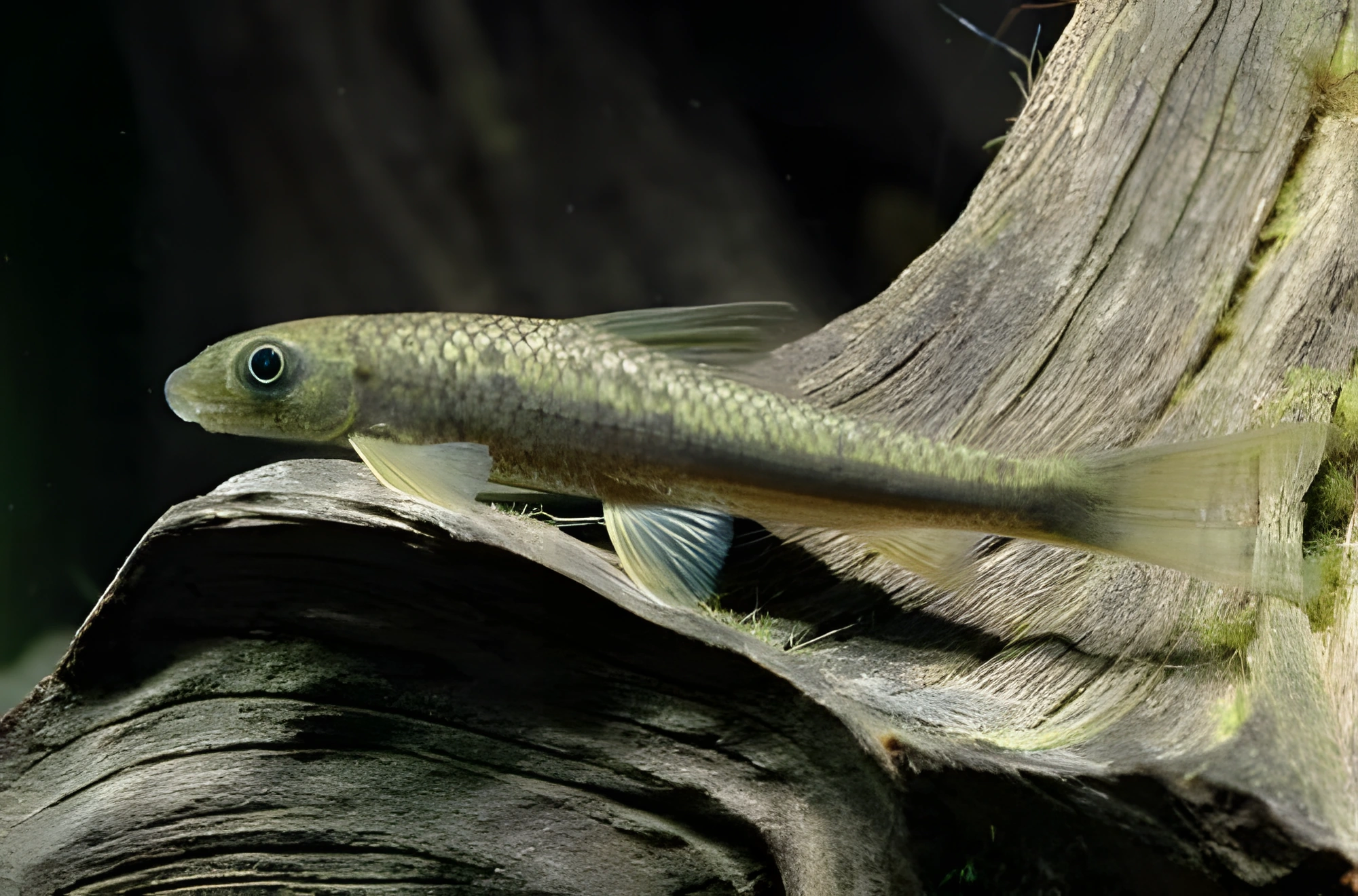
Crossocheilus latius, known as the Simple Algae Eater, belongs to the family Cyprinidae, or carps. This species is a close relative of the widely popular Siamese Algae Eater. Despite its unassuming coloration, it effectively tackles the problem of algae in the aquarium, acting as a natural cleaner.
- Required aquarium volume
- 150 L
- Size in aquarium
- 14 – 15 cm
- Temperature
- 18 – 24 °C
- Temperament
- Peaceful (regular)
Parameters
Water pHSlightly acidic (6) – Slightly alkaline (8)
Water dHVery soft (3) – Very hard (20)
Water salinityno salt (freshwater)
Size in aquarium14 – 15 cm
Lifespan5 years
TemperamentPeaceful (regular)
Toward small fishnot a predator
Required aquarium volume150 L
Lightingbright
Substratecoarse sand / gravel / pebbles
Water flowmoderate or strong
FeedingPlant-based (algae, vegetables)
CareBoth solitary and in group (flexible)
Description
Adults of this species reach a length of 14–15 cm, with the largest recorded specimen measuring 17 cm. The appearance of Crossocheilus latius bears some resemblance to Garra mullya or Garra rufa. The fish's coloration is quite modest, predominantly gray, and its fins are short and translucent.
Habitat
This fish is native to Asia. Crossocheilus latius can be found in a wide variety of biotopes, but for the aquarium trade, the majority of specimens come from the Teesta River basin. This river, a major tributary of the Brahmaputra, originates in the Himalayas and flows through the Indian state of Sikkim, which borders Bhutan, Tibet, and Nepal. Its natural habitat consists of fast-flowing mountain streams with bottoms covered in boulders, pebbles, gravel, and sand. Throughout the year, external conditions in these water bodies can change significantly: the water can be both murky and completely clear, but it always remains cool.
Behavior and Compatibility
This fish is distinguished by its peaceful and friendly disposition. Young individuals usually stay in groups, but as they mature, they begin to prefer a more solitary lifestyle. Crossocheilus latius coexists well with most common aquarium fish, making the Simple Algae Eater an excellent addition to almost any freshwater aquarium.
Care and Maintenance
For keeping a pair of these fish, an aquarium with a volume of 150 liters or more will be optimal. It is recommended to decorate the aquarium to mimic the bottom of a mountain stream. The main decorative elements will be large boulders, pebbles, and river sand. Shelters should be formed from natural snags. For long-term successful keeping, it is desirable to provide internal current. In turbulent conditions and on a rocky substrate, plants that can grow on the surface of stones and snags, such as various aquatic mosses, ferns, and Anubias, thrive best. Bright lighting is preferred. In certain situations, strong light can stimulate algae growth, which in this case is desirable, as algae serve as an additional food source for the Simple Algae Eater. Since these fish inhabit flowing waters, they are sensitive to the accumulation of organic waste and require clean water. A powerful and continuously operating filtration system is important, as it performs two functions: creating the necessary current and ensuring water purification. Nevertheless, one should not rely solely on the filter's operation in a closed aquarium ecosystem. At least 30% of the water volume should be replaced with fresh water every week. In its natural habitat, Crossocheilus latius feeds on various types of algae, including diatoms, as well as phytoplankton. In a home aquarium, specialized plant-based foods, dry spirulina flakes, and other similar products will be an excellent choice. Additionally, fresh vegetables such as blanched peas, as well as pieces of zucchini, cucumbers, and spinach, should be included in the diet. Many vegetables are highly buoyant, so they will need to be anchored to the bottom, for example, by pressing them down with a small stone. Sources: fishbase.se, wikipedia.org
Diet
In natural conditions, these fish feed on various algae, including diatoms, as well as phytoplankton. In a home aquarium, specialized plant-based foods, dry spirulina flakes, and similar products will be suitable for them. Additionally, fresh vegetables such as blanched peas, pieces of zucchini, cucumbers, or spinach should be added to their diet. Many vegetables tend to float, so they will need to be anchored to the bottom, for example, by using a small stone.
Breeding and Reproduction
The breeding of the Simple Algae Eater in aquarium conditions is currently not studied or practiced. In their natural habitat, the fish undertake seasonal migrations for spawning. Due to the lack of reliable stimulation methods and successful breeding experience in captivity, reproduction of the species in home conditions is considered impossible.
Diseases
The species has a strong immune system but is sensitive to water quality and the accumulation of organic waste. Typical problems are most often associated with improper keeping conditions: stress, reduced activity, and susceptibility to parasitic infections due to poor filtration or overcrowding. Prevention includes maintaining cleanliness, regular water changes, and quarantining new specimens.
How to choose
When purchasing, choose active fish with clean scales, clear eyes, and no visible damage or spots on the body. Healthy individuals should show curiosity and constantly explore surfaces in search of food. It is recommended to avoid specimens with signs of emaciation, sluggish behavior, or clamped fins, as this may indicate hidden diseases or stress from improper transportation.
Frequently asked questions
The essentials: size, tank volume, water parameters and care
How big does Simple Algae Eater get?
An adult reaches 14–15 cm in length. Plan the tank around the maximum size: the fish quickly outgrows a cramped setup.
What size aquarium does Simple Algae Eater need?
The minimum recommended volume is 150 L. A smaller tank speeds up nitrate build-up and raises stress levels.
What water parameters does Simple Algae Eater need?
Temperature 18–24 °C, pH 6–8, hardness 3–20 dGH. Stability matters more than exact values: sudden swings are harder on the fish than a small deviation from the ideal.
How long does Simple Algae Eater live?
Around 5 years when kept properly. Lifespan depends directly on tank volume, water quality and a varied diet.
Is Simple Algae Eater aggressive?
Temperament: peaceful (regular). Keep this in mind when choosing tank mates.
How many Simple Algae Eater should be kept together?
Recommended setup: both solitary and in group (flexible). Ignoring this is a common cause of stress and disease.
What does Simple Algae Eater eat?
Diet type: plant-based (algae, vegetables). Feed small portions that are finished within a couple of minutes — overfeeding does more harm than underfeeding.
What is the scientific name of Simple Algae Eater?
The scientific name of the species is Crossocheilus latius, family Cyprinids (Cyprinidae). It also appears in the literature as: Chondrostoma wattanah, Cirrhina latia, Corssocheilus latius.