Temperature22 – 28 °C
Natural range
- Southeastern Mexico area
- Mexico area
LivebearersConservation status: Least concern LC
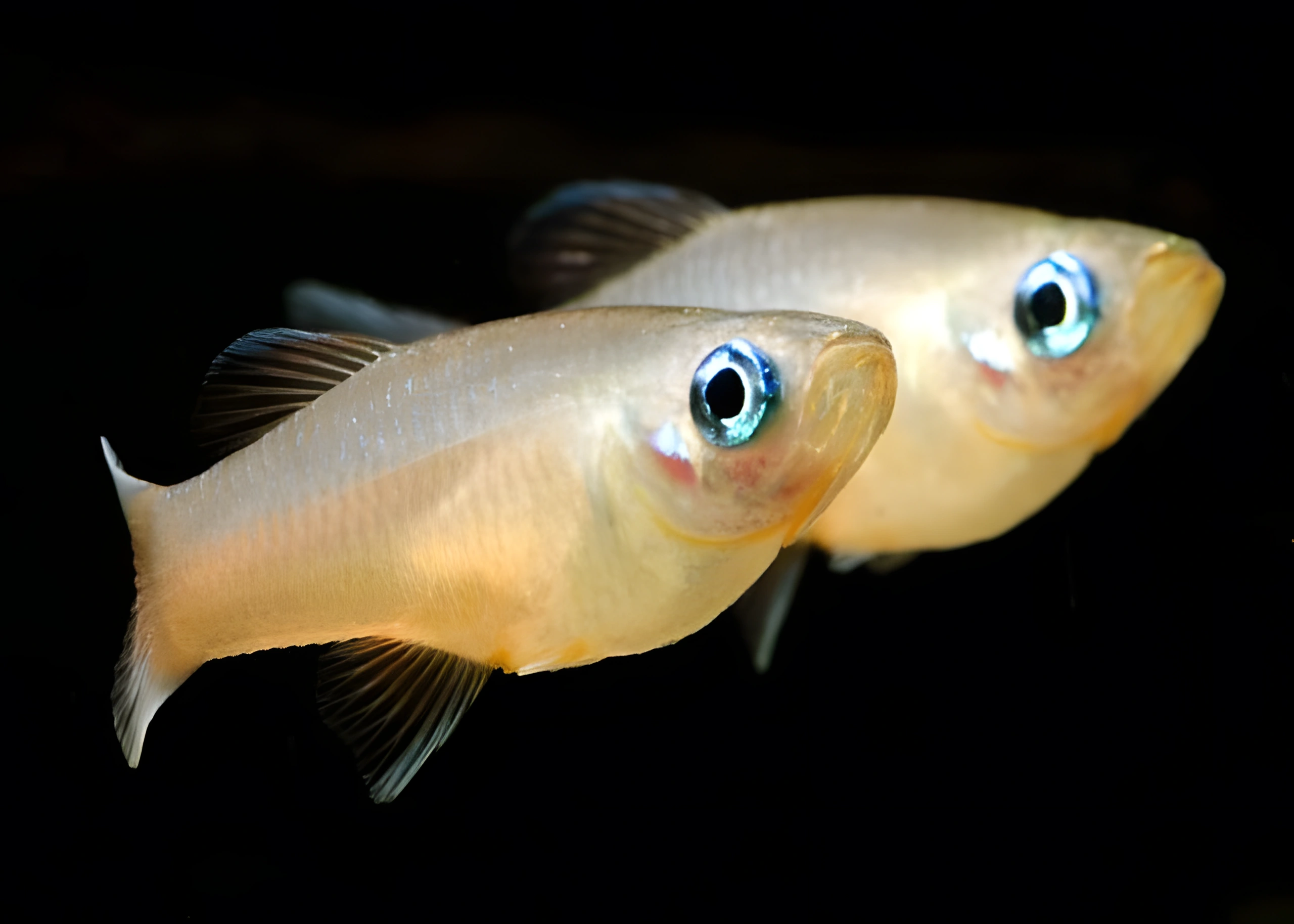
Priapella intermedia, or the Blue-eyed Priapella, belongs to the family Poeciliidae, according to its scientific name. Its unpretentiousness in care and breeding makes this fish an excellent choice for those just starting out in aquaristics.
- Required aquarium volume
- 60 L
- Size in aquarium
- 5 – 7 cm
- Temperature
- 22 – 28 °C
- Temperament
- Peaceful (regular)
Parameters
Water pHNeutral (7) – Slightly alkaline (8)
Water dHMedium hardness (10) – Very hard (20)
Water salinityno salt (freshwater)
Size in aquarium5 – 7 cm
Lifespan5 years
TemperamentPeaceful (regular)
Toward small fishnot a predator
Required aquarium volume60 L
Lightingweak (low)
Substrateany (no restrictions)
Water flowweak or moderate
FeedingFloating (protein)
CareMixed (solitary / pair / group)
Description
Males are distinguished by the presence of a gonopodium – a modified anal fin that serves as a reproductive organ – and grow up to 5 cm in length. Females, especially during spawning, are noticeably larger and plumper. The coloration of the fish varies from gray to yellowish. A characteristic feature, from which the species name originates, is their blue eyes.
Habitat
This fish originates from Central America and is endemic to the Coatzacoalcos and Papaloapan river basins, located in the southeastern regions of Mexico. Both rivers originate in the Sierra Madre mountains, but for most of their course, they flow through tropical forests, forming swampy areas. A typical biotope consists of shallow backwaters where coastal vegetation is very dense, and the substrate is composed of sand, stones, rocks, fallen leaves, and branches. Although the water in swampy areas is usually acidic, here, due to the proximity of the mountains, it is characterized by high hydrochemical parameters.
Behavior and Compatibility
This fish is distinguished by its peaceful and friendly nature. It is compatible with most freshwater fish species of similar size and temperament that can live in conditions with high general hardness (GH) values. They can be kept individually or in groups.
Care and Maintenance
For a group of 4 fish, the optimal aquarium volume starts from 60 liters. In the aquarium design, it is important to provide both open water areas for swimming and zones with dense aquatic vegetation. The latter will serve as an excellent natural refuge for the fish during reproduction. All other decor elements are chosen by the aquarist at their discretion. Successful maintenance of the Blue-eyed Priapella depends on high water quality (absence of any pollution) and maintaining the hydrochemical composition within acceptable limits. For this, it is necessary to install appropriate equipment and regularly perform aquarium maintenance, including the removal of organic waste (food residues, excrement, etc.) and partial water changes with fresh water.
Diet
For the daily diet, foods with a high content of plant components are preferred. Specialized commercial products such as flakes and granules will be an excellent choice. To diversify the diet, Artemia, bloodworms, Daphnia, and other invertebrates can be offered, both frozen and live. Aqvium Flake Food for Aquarium Fish Check out our new product, a bestseller on Ozon with a rating of 4.9. Flake food is suitable for most aquarium fish. The raw material is manufactured according to new European Union standards (EU 2018/848). Contains vitamins A, C, D3, E, and Omega 3-6 Buy on Ozon
Breeding and Reproduction
In an artificial habitat, these fish do not have a distinct breeding season, so spawning can occur year-round. In live-bearing species, to which Priapella belongs, the development of fry occurs inside the female's body, meaning they do not lay eggs. The incubation period is quite long, about 1 month. During this time, the female often seeks solitude in plant thickets, where about a dozen fully formed fry, approximately 7 mm in size, then appear. It is recommended to move the fry to a separate tank to protect them from predation by other fish.
Diseases
The best prevention against diseases is keeping the fish in suitable conditions, providing them with a balanced diet, and avoiding stress caused, for example, by attacks from tank mates. The appearance of signs of illness can be a signal of problems in care. Often, bringing the habitat back to normal contributes to self-recovery, but if the fish's body is severely weakened, medicinal treatment may be required. More detailed information on symptoms and treatment methods is available in the "Diseases of Aquarium Fish" section.
How to choose
When purchasing, choose active fish that stay in the water column and do not show signs of apathy or lying on the bottom. Carefully inspect the skin: there should be no white spots, ulcers, fin damage, or unnatural film on the body. Healthy individuals should have clean and bright eyes, without cloudiness. Since the species is quite timid, fish in the store may appear stressed, but they should react quickly to external stimuli. Avoid purchasing individuals from aquariums where dead fish or signs of infectious diseases in neighbors have been observed. It is recommended to clarify the keeping conditions and diet with the seller, as Priapellas are sensitive to water quality and sudden changes in conditions, which increases the risk of death during transportation and adaptation. When choosing, give preference to individuals with a pronounced blue eye glow, which is a characteristic species trait.
Frequently asked questions
The essentials: size, tank volume, water parameters and care
How big does Blue-eyed Priapella get?
An adult reaches 5–7 cm in length. Plan the tank around the maximum size: the fish quickly outgrows a cramped setup.
What size aquarium does Blue-eyed Priapella need?
The minimum recommended volume is 60 L. A smaller tank speeds up nitrate build-up and raises stress levels.
What water parameters does Blue-eyed Priapella need?
Temperature 22–28 °C, pH 7–8, hardness 10–20 dGH. Stability matters more than exact values: sudden swings are harder on the fish than a small deviation from the ideal.
How long does Blue-eyed Priapella live?
Around 5 years when kept properly. Lifespan depends directly on tank volume, water quality and a varied diet.
Is Blue-eyed Priapella aggressive?
Temperament: peaceful (regular). Keep this in mind when choosing tank mates.
How many Blue-eyed Priapella should be kept together?
Recommended setup: mixed (solitary / pair / group). Ignoring this is a common cause of stress and disease.
What does Blue-eyed Priapella eat?
Diet type: floating (protein). Feed small portions that are finished within a couple of minutes — overfeeding does more harm than underfeeding.
What is the scientific name of Blue-eyed Priapella?
The scientific name of the species is Priapella intermedia, family Poeciliidae.