Temperature22 – 25 °C
Natural range
- Central America area
- South America area
Predators CharacinsConservation status: Least concern LC
Other scientific names: Ctenolucius insculptus, Hydrocynus hujeta, Luciocharax hujeta, Luciocharax insculptus, Xiphostoma hujeta
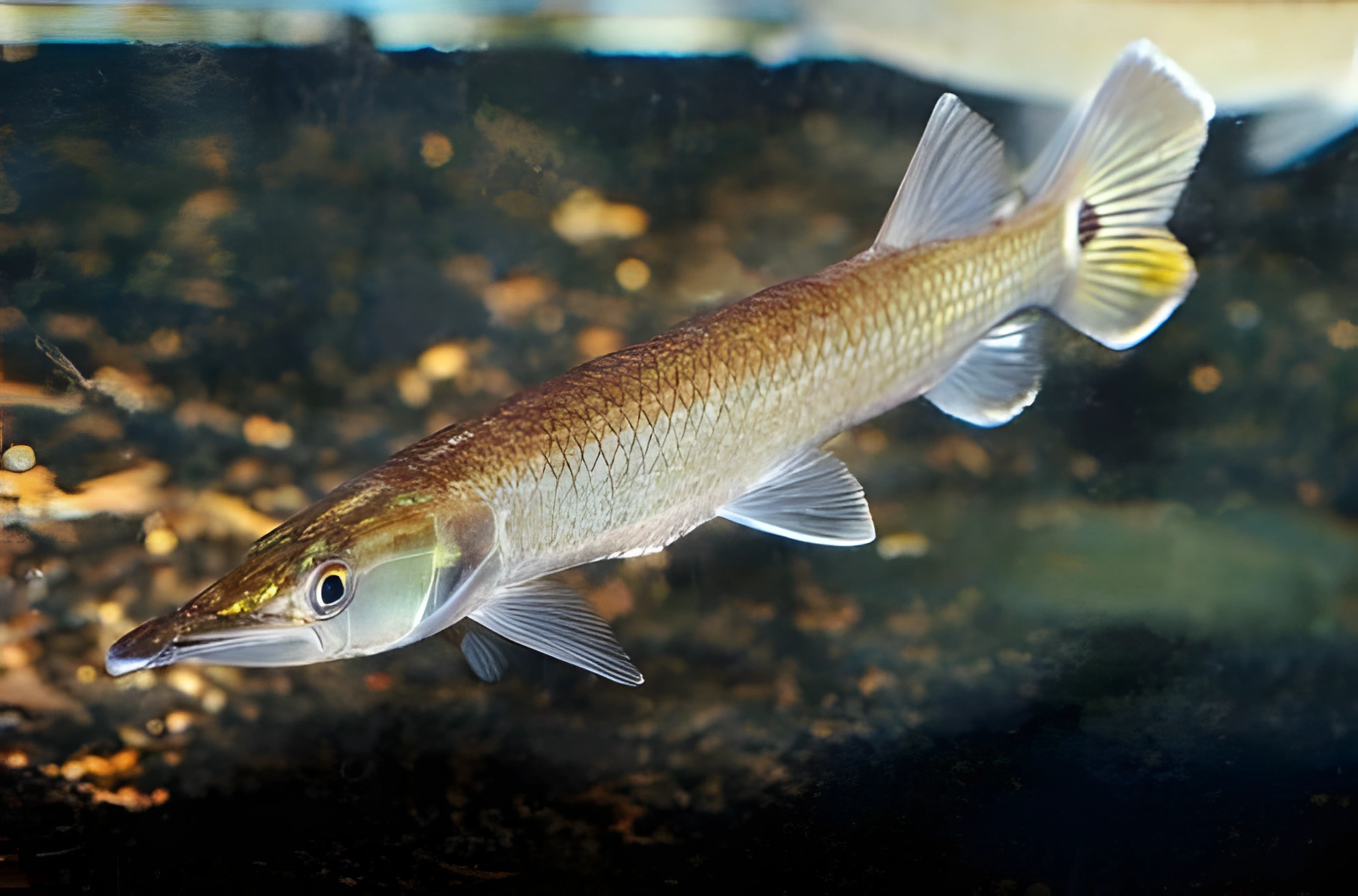
Ctenolucius hujeta, more commonly known as the Freshwater Barracuda or Pike Characin, is a member of the Ctenoluciidae family. This species is a fast and efficient predator. Despite its predatory lifestyle, it is peaceful and even somewhat timid, but this only applies to fish of comparable or larger size. Any other aquarium inhabitants that can fit into the Barracuda's mouth will invariably be considered prey.
- Required aquarium volume
- 200 L
- Size in aquarium
- 22 cm
- Temperature
- 22 – 25 °C
- Temperament
- Semi-peaceful (dangerous to smaller ones)
Parameters
Water pHSlightly acidic (5) – Neutral (7.5)
Water dHSoft (6) – Very hard (22)
Water salinityno salt (freshwater)
Size in aquarium22 cm
Lifespan8 years
TemperamentSemi-peaceful (dangerous to smaller ones)
Toward small fishpredator
Required aquarium volume200 L
Lightingmoderate (regular)
Substrateany (no restrictions)
Water flowweak
FeedingMeat / protein (live, frozen, fresh)
CareSchooling (usually from 5–6 individuals and more)
Description
The Pike Characin is characterized by a slender, elongated body, ending in a forked caudal fin. It has a long, pike-like mouth, with the upper jaw extending beyond the lower. Unique curved 'flaps' can be seen on the jaws, which are part of its respiratory system. The fish's coloration is silvery, but under different angles of light, it can acquire bluish or golden hues. A prominent dark spot is present at the base of the tail, which is a distinctive feature of this species.
Habitat
The scientific description of this species first appeared in 1850, when European researchers documented the fauna of the colonies of Central and South America. The fish prefers calm waters and is often observed in small groups of 4–5 individuals. During rainy seasons, it swims into flooded areas in search of food. In the dry season, it often remains in small bodies of water or backwaters after the water recedes. The Freshwater Barracuda has developed a remarkable adaptation, allowing it to absorb atmospheric air by gulping it, which is especially important in oxygen-depleted aquatic environments. In nature, these fish hunt in groups, making quick attacking lunges from ambush at small fish and insects.
Behavior and Compatibility
The Pike Characin is a predator, which automatically minimizes the number of possible tank mates. The optimal solution is a species-only aquarium or cohabitation with catfishes, thus utilizing different, non-overlapping niches of the aquarium. The Freshwater Barracuda is a peaceful and timid fish. They are kept either singly or in groups of 3–4 individuals; intraspecific conflicts are not observed.
Care and Maintenance
The fish is demanding regarding water quality, while also producing a significant amount of waste. Therefore, in addition to using a powerful filter (a canister filter is recommended), it is necessary to refresh part of the water weekly (30-40% of the total volume) with fresh water. The minimum necessary equipment includes a filter, an aerator, a heater, and a lighting system. The Barracuda stays near the water surface and never descends to the bottom, which should be considered when decorating the aquarium, ensuring it has free space for movement. Floating plants should be avoided completely; only rooted plants, arranged in groups along the side walls, are suitable. Such thickets serve as a reliable refuge. The decoration of the bottom layer can be anything, as it is not of significant importance to the fish.
Diet
A carnivorous species that feeds on live organisms such as fish and insects. It is strictly forbidden to feed the predator mammalian meat products (beef, pork) and poultry. Lipids contained in such meat are not processed by the Freshwater Barracuda and accumulate as fat deposits. It is also not recommended to offer live fish, as they may be carriers of parasites. During the growth stage of young individuals, they can be fed bloodworms, earthworms, and chopped shrimp. As they mature, they should transition to whole shrimp, pieces of fish meat, and mussels. Feeding should occur twice a day, with a portion that the fish can eat within 5 minutes.
Breeding and Reproduction
Cases of successful breeding of this species in home aquariums are quite rare, as they require specific conditions and spacious bodies of water, as close as possible to the natural environment. Spawning is preceded by a courtship process, during which the male and female swim parallel to each other. Then the pair raises the rear part of their bodies above the water, simultaneously releasing eggs and milt with a quick movement. This process is repeated every 3–4 minutes, with a subsequent increase in the interval to 6–8 minutes. In total, spawning lasts about 3 hours, during which up to 1000 eggs are laid. Fry appear within 24 hours and grow very quickly. If they are not fed enough, they begin to cannibalize each other.
Diseases
The Freshwater Barracuda tolerates a drop in temperature below the optimal level poorly, which often provokes the development of various skin diseases. However, otherwise, the fish is quite hardy, and with favorable conditions, health issues usually do not arise. More detailed information on symptoms and treatment methods can be found in the "Aquarium Fish Diseases" section.
How to choose
When choosing a freshwater barracuda, prioritize individuals that actively swim in the upper layers of the water and stay in a tight school. Avoid fish that lie on the bottom, appear emaciated, or are isolated from the group, as this often indicates the presence of internal diseases or stress. Carefully inspect the body for damage, as this species is prone to injuries when startled and hitting the aquarium lid.
Ensure that the fish shows no signs of fungal infections, especially in the fin and mouth areas, which can arise from damage during transportation. Since imported individuals are often weakened, it is advisable to check with the seller in advance whether the fish is accustomed to frozen or dry foods, as transitioning wild-caught individuals to a non-live diet can be difficult. After purchase, quarantine in an aquarium with good aeration is mandatory for adaptation and parasite prevention.
Frequently asked questions
The essentials: size, tank volume, water parameters and care
How big does Freshwater Barracuda get?
An adult reaches 22 cm in length. Plan the tank around the maximum size: the fish quickly outgrows a cramped setup.
What size aquarium does Freshwater Barracuda need?
The minimum recommended volume is 200 L. A smaller tank speeds up nitrate build-up and raises stress levels.
What water parameters does Freshwater Barracuda need?
Temperature 22–25 °C, pH 5–7.5, hardness 6–22 dGH. Stability matters more than exact values: sudden swings are harder on the fish than a small deviation from the ideal.
How long does Freshwater Barracuda live?
Around 8 years when kept properly. Lifespan depends directly on tank volume, water quality and a varied diet.
Is Freshwater Barracuda aggressive?
Temperament: semi-peaceful (dangerous to smaller ones). This is a predatory species — any fish small enough to fit in its mouth will eventually be eaten.
How many Freshwater Barracuda should be kept together?
Recommended setup: schooling (usually from 5–6 individuals and more). Ignoring this is a common cause of stress and disease.
What does Freshwater Barracuda eat?
Diet type: meat / protein (live, frozen, fresh). Feed small portions that are finished within a couple of minutes — overfeeding does more harm than underfeeding.
What is the scientific name of Freshwater Barracuda?
The scientific name of the species is Ctenolucius hujeta, family Ctenoluciidae. It also appears in the literature as: Ctenolucius insculptus, Hydrocynus hujeta, Luciocharax hujeta.