Temperature22 – 28 °C
Natural range
- Sulawesi area
- Maros Highlands area
LivebearersConservation status: Near threatened NT
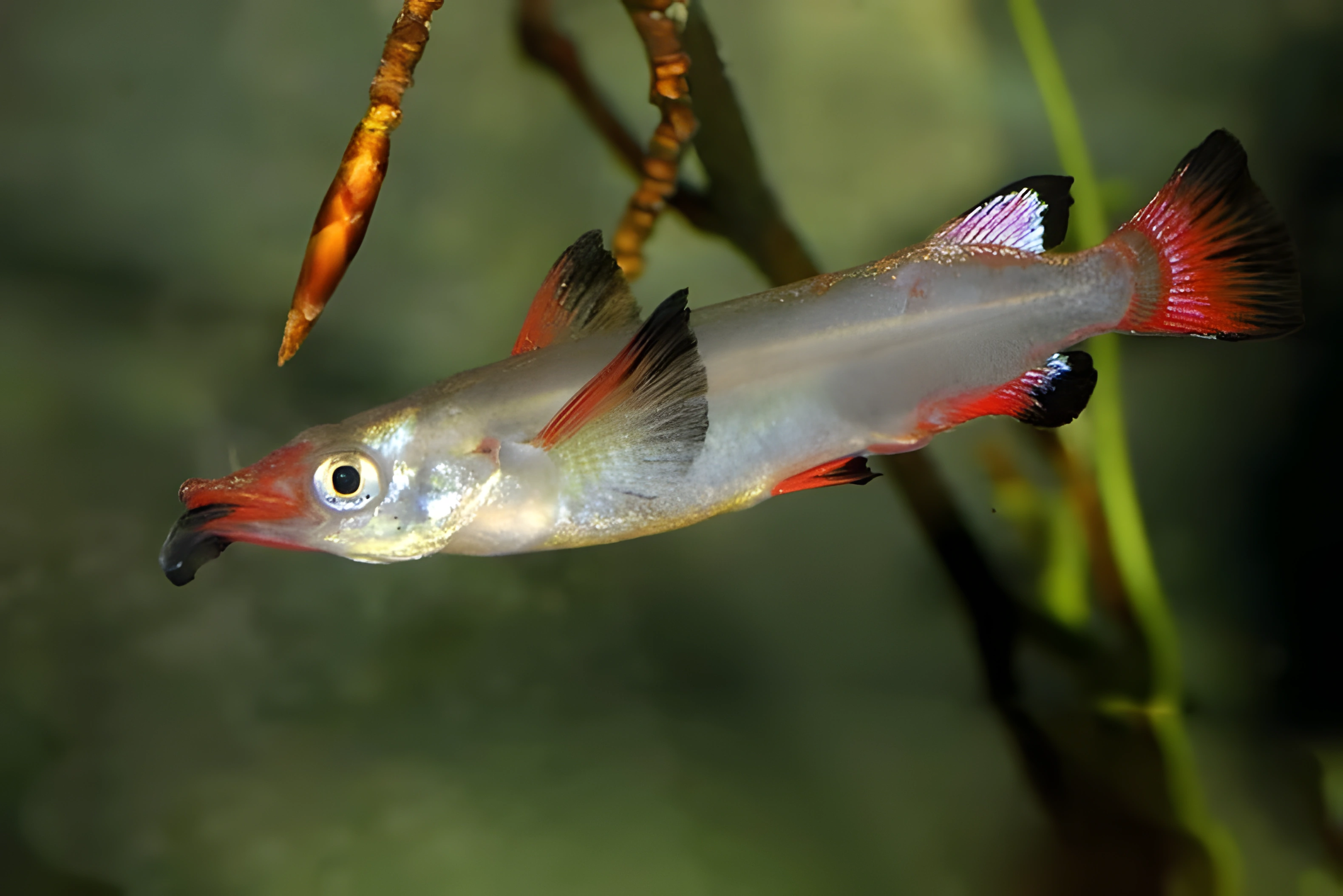
The Red-Black Halfbeak, scientifically known as Nomorhamphus liemi (subspecies snijdersi), belongs to the family Zenarchopteridae, or Halfbeaks. This miniature predatory fish requires a careful approach to keeping and is not recommended for beginner aquarists. Maintaining high water quality, a specialized diet, and complex intraspecific relationships create certain difficulties.
- Required aquarium volume
- 130 L
- Size in aquarium
- 7 – 12 cm
- Temperature
- 22 – 28 °C
- Temperament
- Semi-peaceful (including aggression during spawning / intraspecific conflicts)
Parameters
Water pHNeutral (6.5) – Neutral (7)
Water dHSoft (4) – Very hard (18)
Water salinityno salt (freshwater)
Size in aquarium7 – 12 cm
Lifespan4 years
TemperamentSemi-peaceful (including aggression during spawning / intraspecific conflicts)
Toward small fishnot a predator
Required aquarium volume130 L
Lightingmoderate (regular)
Substrateany (no restrictions)
Water flowmoderate or strong
FeedingMeat / protein (live, frozen, fresh)
CareHarem (1 male and several females)
Description
The Red-Black Halfbeak is a subspecies of Nomorhamphus liemi, its full scientific designation is Nomorhamphus liemi snijdersi. A distinctive feature of this subspecies is the red-black coloration of the unpaired fins, as well as the tail and jaws. There is another subspecies, referred to in the aquarium hobby with the additional prefix “liemi,” which predominantly has black fin coloration. It is important to note that in nature, fish with intermediate variations in fin and tail coloration are found, which makes the division into two subspecies rather conditional. Outwardly, this fish resembles a miniature pike. Its body is elongated, with the dorsal and anal fins shifted towards the caudal part. The head is pointed, with elongated jaws, the upper one being shorter than the lower, which is a characteristic feature of the entire Halfbeak family. A unique feature of the species is a fleshy hook, bent backward on the lower jaw; its function remains a mystery. The main body color is silvery, with delicate pink hues, without a distinct pattern. Males reach a length of 7 cm, while females are significantly larger, growing up to 12 cm.
Habitat
The natural habitat of this species is the Indonesian island of Celebes, also known as Sulawesi, in Southeast Asia. Here, the fish inhabits swift mountain rivers originating in the Maros highlands in the southwestern part of the island.
Behavior and Compatibility
Red-Black Halfbeak males display aggression towards each other, engaging in fierce territorial skirmishes. However, they are peaceful towards females and representatives of other species. In a small aquarium, it is recommended to keep one male with 3–4 females. Suitable tankmates include fish that inhabit the water column or the bottom, such as Sulawesi Rainbowfish, with which the Red-Black Halfbeak shares its natural range, as well as various species of Corydoras catfish.
Care and Maintenance
For a group of 4–5 Red-Black Halfbeaks, the optimal aquarium volume is 130 to 150 liters. The decor is not critical, but it is necessary to provide open areas for swimming in the upper water layers and to include localized shelters in the form of plant thickets. It is important to avoid excessive overgrowth of the aquarium. Being inhabitants of flowing waters, these fish are very sensitive to water quality. To prevent the accumulation of organic waste, it is recommended to siphon off food debris, excrement, fallen plant parts, and other detritus weekly, and to replace 25–30% of the water volume with fresh water. It is also beneficial to install a powerful internal filtration system, which, in addition to purification, will help create a current, mimicking the natural water flows in the mountain rivers of their natural environment.
Diet
This small predatory fish naturally feeds on invertebrates such as insects, worms, small crustaceans, and small fish. In a home aquarium, it should be offered a similar diet. Feeding should occur in the upper water layers. The diet can consist of live or fresh earthworms, mosquito larvae, large bloodworms, flies, and similar foods. If desired, the fish can be accustomed to dry granulated foods with a high protein content.
Breeding and Reproduction
This species is characterized by internal gestation of eggs, so fully formed fry are born, each reaching up to 2.5 cm in length. Females can spawn year-round, with a frequency of every 4–6 weeks. For successful pregnancy and the birth of healthy offspring, it is critically important to provide a balanced diet with daily inclusion of high-protein food. Parental instincts are absent in these fish, and adult individuals may eat their fry. To preserve the young, they should be promptly moved to a separate tank. From birth, the fry can eat adult food, but in a finely crushed form, such as Daphnia, Artemia, or Drosophila fruit flies.
Diseases
Diseases in these fish are extremely rare when favorable conditions are provided. The risk of their occurrence increases in aquariums with unsatisfactory care, poor water quality, insufficient or unsuitable nutrition, and contact with infected fish. More detailed information on symptoms and treatment methods is available in the “Aquarium Fish Diseases” section.
How to choose
When purchasing, choose active individuals that stay in the upper water layers and show interest in food. It is important to carefully inspect the fish for any jaw damage, as any deformities can hinder normal feeding. Avoid specimens with signs of emaciation, sunken bellies, or fin damage. Given the territorial nature of the species, it is recommended to acquire a group with a predominance of females to reduce the risk of intraspecific aggression between males in the aquarium. When selecting individuals with bright coloration, remember that color intensity can vary, and males often have a more pronounced fleshy appendage on the lower jaw.
Frequently asked questions
The essentials: size, tank volume, water parameters and care
How big does Red-Black Halfbeak get?
An adult reaches 7–12 cm in length. Plan the tank around the maximum size: the fish quickly outgrows a cramped setup.
What size aquarium does Red-Black Halfbeak need?
The minimum recommended volume is 130 L. A smaller tank speeds up nitrate build-up and raises stress levels.
What water parameters does Red-Black Halfbeak need?
Temperature 22–28 °C, pH 6.5–7, hardness 4–18 dGH. Stability matters more than exact values: sudden swings are harder on the fish than a small deviation from the ideal.
How long does Red-Black Halfbeak live?
Around 4 years when kept properly. Lifespan depends directly on tank volume, water quality and a varied diet.
Is Red-Black Halfbeak aggressive?
Temperament: semi-peaceful (including aggression during spawning / intraspecific conflicts). Keep this in mind when choosing tank mates.
How many Red-Black Halfbeak should be kept together?
Recommended setup: harem (1 male and several females). Ignoring this is a common cause of stress and disease.
What does Red-Black Halfbeak eat?
Diet type: meat / protein (live, frozen, fresh). Feed small portions that are finished within a couple of minutes — overfeeding does more harm than underfeeding.
What is the scientific name of Red-Black Halfbeak?
The scientific name of the species is Nomorhamphus liemi (подвид snijdersi), family Halfbeaks (Zenarchopteridae).