Temperature22 – 25 °C
Natural range
- Northeastern Peru area
- South America area
CatfishConservation status: Least concern LC
Other scientific names: Auchenipterus thoracatus, Auchenipterus thoracicus
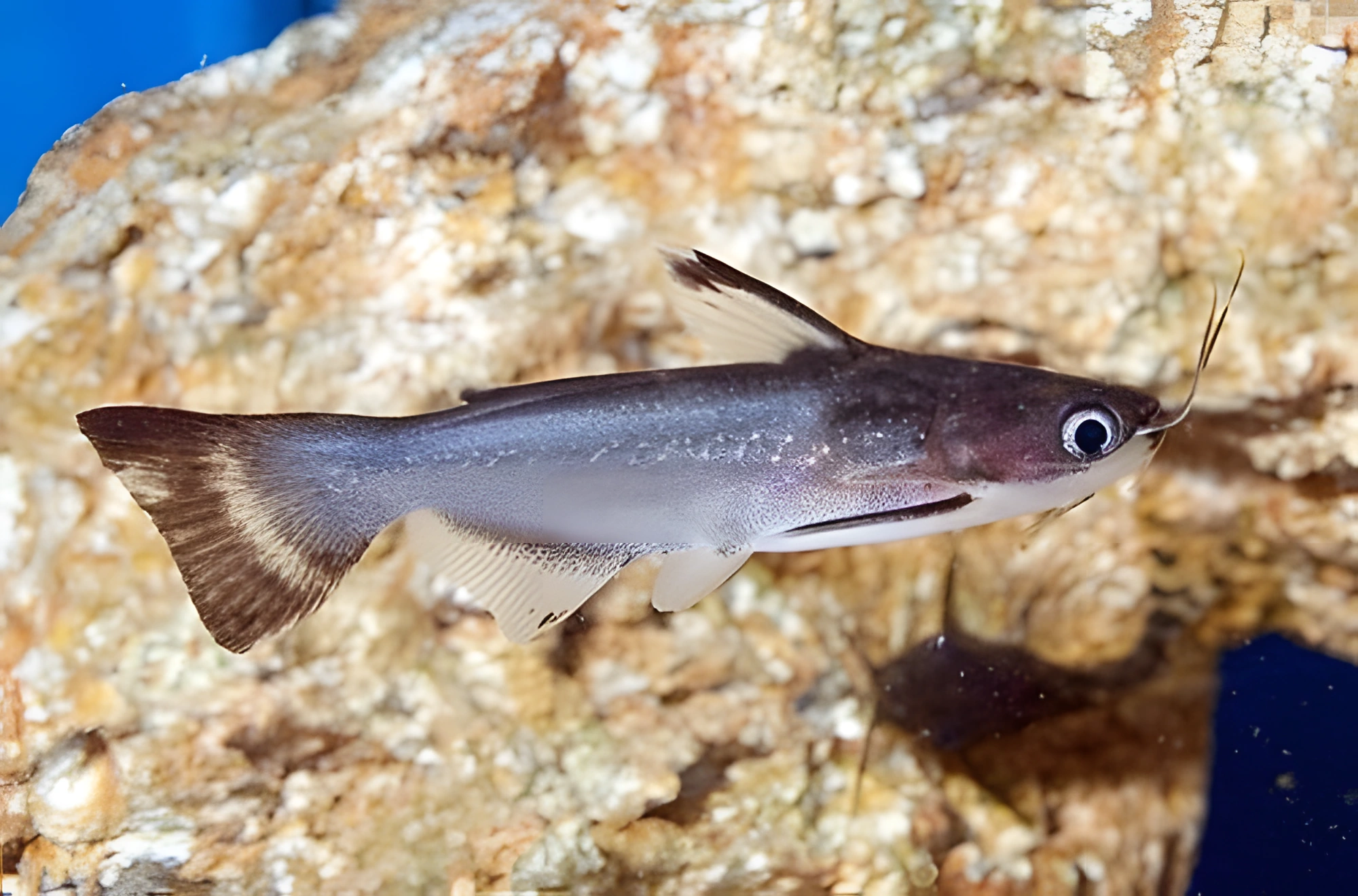
The Midnight Catfish (Auchenipterichthys thoracatus) belongs to the family Auchenipteridae. This species of catfish leads a secretive, predominantly nocturnal lifestyle. Distinguished by its peaceful disposition, it is harmless to tankmates, making it an excellent choice for a community aquarium.
- Required aquarium volume
- 80 L
- Size in aquarium
- 9 – 11 cm
- Temperature
- 22 – 25 °C
- Temperament
- Peaceful (regular)
Parameters
Water pHSlightly acidic (6) – Neutral (7.2)
Water dHVery soft (1) – Medium hardness (10)
Water salinityno salt (freshwater)
Size in aquarium9 – 11 cm
Lifespan7 years
TemperamentPeaceful (regular)
Toward small fishnot a predator
Required aquarium volume80 L
Lightingdimmed
Substratesoft silted
Water flownone or stagnant (no flow)
FeedingSinking (any)
CareBoth solitary and in group (flexible)
Description
These catfish reach a length of about 11 cm. Their coloration is grey, adorned with white speckles all over the body. The tall dorsal fin has a first ray resembling a pointed spine, which serves as protection against potential predators. Sexual dimorphism is weakly expressed. Males have a small hook on their anal fin, used during the mating process.
Habitat
This species is widely distributed throughout South America. It can be found in northeastern Peru, the Brazilian Amazon basin, and also in the Essequibo River and its tributaries. The Midnight Catfish prefers waters with murky conditions and flooded areas of tropical forests, where it finds shelter among tangled underwater roots, in hollow or decaying stumps, and in dense thickets of aquatic vegetation. Fish of this species are nocturnal.
Behavior and Compatibility
This peaceful and shy species coexists well with calm fish of a similar size. The Midnight Catfish feels comfortable both alone and in a small group. Avoid keeping them with large, overly active, or aggressive fish, as danger threatens not only the catfish but also anyone who tries to attack it: the spine of the dorsal fin can inflict serious injuries.
Care and Maintenance
For keeping a single fish, an aquarium of at least 80 liters is recommended. The aquarium setup should focus on creating many reliable shelters, which can be tangled roots, driftwood, and other elements. The substrate should be soft. Dim lighting is desirable; under such conditions, the Midnight Catfish will appear much more frequently. Under normal lighting, it will primarily hide. Water conditions should be characterized by very weak current or its complete absence, and pH and dGH values should correspond to slightly acidic and soft values at a temperature not exceeding 25°C. Regular aquarium maintenance includes cleaning the substrate of organic waste and weekly water changes of 10–15% of the water volume with fresh water.
Diet
In their natural habitat, their diet consists exclusively of insects and their larvae. However, breeders have successfully accustomed these catfish to dry foods, such as sinking tablets, granules, or high-protein flakes. Since they feed during the dark hours, it is optimal to offer food shortly before the lights are turned off. Over time, as they become bolder, the catfish may start feeding during the day along with other aquarium inhabitants.
Breeding and Reproduction
As of the preparation of this article, reliable information on the successful breeding of the Midnight Catfish in home aquariums is unavailable. Only professional breeders in commercial aquariums in Europe and America have successfully achieved this. The reproduction process resembles livebearing: internal fertilization occurs thanks to the male's modified anal fin (the very hook mentioned earlier). After this, the female lays her eggs directly on the substrate and leaves them. There is no parental care, and the future offspring are left unattended.
Diseases
The main cause of most diseases in Leaf Fish is unsuitable keeping conditions and poor-quality nutrition. If initial symptoms are observed, it is first necessary to check water parameters and the concentration of dangerous substances such as ammonia, nitrites, and nitrates. If the indicators deviate from the norm, they should be brought back into order, and only then should treatment begin. More detailed information on symptoms and treatment methods can be found in the "Aquarium Fish Diseases" section.
How to choose
When choosing a Midnight Catfish, carefully inspect the skin for white spots, injuries, or signs of parasites. A healthy fish should show activity during twilight hours, have clean fins, and clear eyes. Avoid individuals with sunken bellies, which may indicate emaciation or internal diseases. Given the sharp spines on their fins, it is important to use thick bags during transport to prevent punctures. It is recommended to acquire a group of fish, as they feel more confident in the company of their kin.
Frequently asked questions
The essentials: size, tank volume, water parameters and care
How big does Midnight Catfish get?
An adult reaches 9–11 cm in length. Plan the tank around the maximum size: the fish quickly outgrows a cramped setup.
What size aquarium does Midnight Catfish need?
The minimum recommended volume is 80 L. A smaller tank speeds up nitrate build-up and raises stress levels.
What water parameters does Midnight Catfish need?
Temperature 22–25 °C, pH 6–7.2, hardness 1–10 dGH. Stability matters more than exact values: sudden swings are harder on the fish than a small deviation from the ideal.
How long does Midnight Catfish live?
Around 7 years when kept properly. Lifespan depends directly on tank volume, water quality and a varied diet.
Is Midnight Catfish aggressive?
Temperament: peaceful (regular). Keep this in mind when choosing tank mates.
How many Midnight Catfish should be kept together?
Recommended setup: both solitary and in group (flexible). Ignoring this is a common cause of stress and disease.
What does Midnight Catfish eat?
Diet type: sinking (any). Feed small portions that are finished within a couple of minutes — overfeeding does more harm than underfeeding.
What is the scientific name of Midnight Catfish?
The scientific name of the species is Auchenipterichthys thoracatus, family Auchenipteridae. It also appears in the literature as: Auchenipterus thoracatus, Auchenipterus thoracicus.