Temperature24 – 28 °C
Natural range
- Congo River Basin
- Guinea area
- Nigeria area
- Equatorial Africa area
CatfishConservation status: Least concern LC
Other scientific names: Eutropiellus buffei, Eutropiellus vandeweyeri, Eutropius buffei
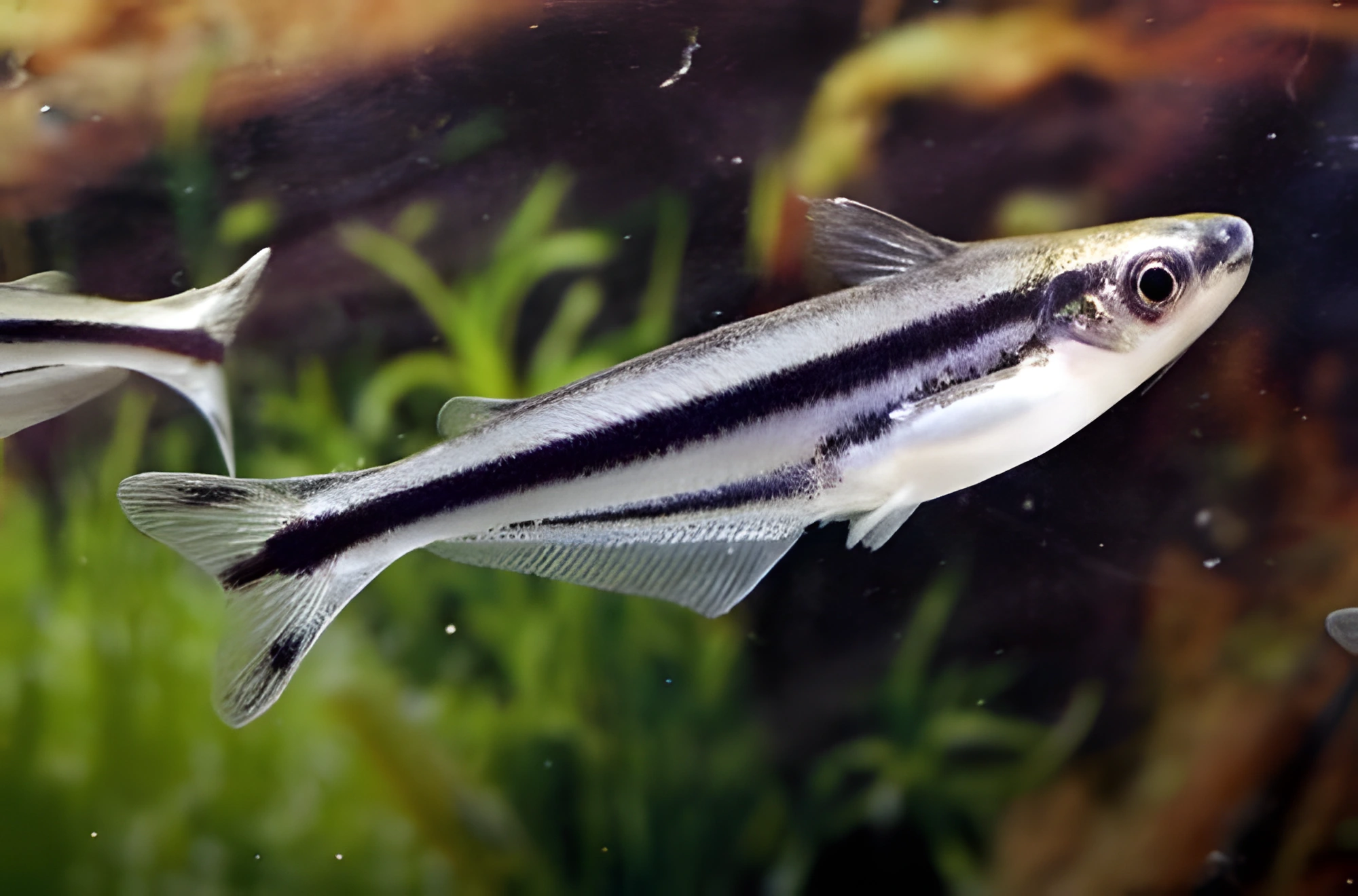
Pareutropius buffei, known as the Striped Glass Catfish, belongs to the family Schilbeidae (Schilbeid Catfishes). Its peaceful and friendly nature allows for successful integration into most types of freshwater aquariums. Keeping this species is not particularly difficult, provided that care recommendations are followed precisely.
- Required aquarium volume
- 70 L
- Size in aquarium
- 8 cm
- Temperature
- 24 – 28 °C
- Temperament
- Peaceful (regular)
Parameters
Water pHSlightly acidic (6) – Neutral (7.5)
Water dHMedium hardness (8) – Hard (15)
Water salinityno salt (freshwater)
Size in aquarium8 cm
Lifespan8 years
TemperamentPeaceful (regular)
Toward small fishnot a predator
Required aquarium volume70 L
Lightingdimmed
Substratecoarse sand / gravel / pebbles
Water flowweak or moderate
FeedingAny (universal)
CareMedium group (6–8 individuals)
Description
Adult Striped Glass Catfish reach a size of 8 to 10 cm in length. Their body shape only remotely resembles typical catfish. However, their belonging to the order Siluriformes can be recognized by a somewhat flattened head with characteristic whisker-like barbels, as well as a long anal fin extending from the caudal peduncle to the middle of the body, and a dorsal fin equipped with a sharp first ray. The fish have a silvery, partially transparent coloration, adorned with several dark horizontal stripes. The tail is decorated with black speckles. Outwardly, these catfish resemble their close relative, the African Glass Catfish, but differ in having multiple stripes, whereas the latter always has a single stripe. Differences between males and females are subtle, making their identification somewhat difficult.
Habitat
The natural habitat of this catfish covers vast territories of the Congo River basin, extending from Guinea to Nigeria in the equatorial regions of Africa. It prefers to inhabit numerous rivers flowing under the dense canopies of humid tropical forests.
Behavior and Compatibility
These are peaceful and calm fish that prefer to stay in small groups, consisting of at least 6 individuals. When kept alone, they become timid and may lose their appetite. They get along well with other peaceful species of similar size and temperament. These catfish are perfectly suited for West African biotope aquariums.
Care and Maintenance
For a school of 6–8 fish, an aquarium of at least 100 liters is required. It is recommended to use dense vegetation, including floating species, as well as driftwood and other decorative elements to create hiding places. It is important to leave enough open swimming space. A dark substrate will help highlight the fish's light coloration. This species has high demands for water purity, so an effective filtration system is a mandatory condition. Aquarium maintenance includes regular cleaning of the substrate from organic debris and weekly replacement of 15–20% of the water with fresh water. Otherwise, this species is quite undemanding and thrives in slightly acidic water of soft to medium hardness.
Diet
Catfish accept all varieties of dry, frozen, and live foods. It is important that the food is sinking and the diet is as varied as possible.
Breeding and Reproduction
Under favorable conditions, the breeding season can begin at any time of the year. The approach of spawning can be identified by a noticeable rounding of the abdomen in some females, which is a sign of readiness to lay eggs. To protect future offspring from other aquarium inhabitants, including the parents, who may eat their eggs, it is recommended to conduct spawning in a separate tank of at least 20 liters. The spawning tank is filled with water from the main aquarium. Mosses, such as Java moss, or artificial plants are used as a substrate for egg-laying. Equipment needed includes a heater and a simple air-driven filter, and the lighting system can be limited to a single light fixture. The largest and roundest individuals are placed in the spawning tank; after white eggs appear in the vegetation, the parents are returned. This process sometimes takes several days, requiring regular cleaning of the aquarium, as water quickly becomes polluted in small volumes.
Diseases
The main cause of most diseases in Leaf Fish is unsuitable keeping conditions and poor-quality nutrition. If initial symptoms are observed, it is first necessary to check water parameters and the concentration of dangerous substances such as ammonia, nitrites, and nitrates. If the indicators deviate from the norm, they should be brought back into order, and only then should treatment begin. More detailed information on symptoms and treatment methods can be found in the "Aquarium Fish Diseases" section.
How to choose
When purchasing a Striped Glass Catfish, it is important to ensure there are no external injuries, such as ulcers, whitish spots, or fin damage. A healthy fish should be active, have a transparent body, and a clear stripe pattern. Avoid individuals that appear emaciated, have sunken bellies, or stay at the water surface, breathing heavily. Since this is a schooling species, it is advisable to acquire a group of 6 or more individuals at once, as solitary fish in a store are often under severe stress, refuse food, and may be susceptible to diseases.
Frequently asked questions
The essentials: size, tank volume, water parameters and care
How big does Striped Glass Catfish get?
An adult reaches 8 cm in length. Plan the tank around the maximum size: the fish quickly outgrows a cramped setup.
What size aquarium does Striped Glass Catfish need?
The minimum recommended volume is 70 L. A smaller tank speeds up nitrate build-up and raises stress levels.
What water parameters does Striped Glass Catfish need?
Temperature 24–28 °C, pH 6–7.5, hardness 8–15 dGH. Stability matters more than exact values: sudden swings are harder on the fish than a small deviation from the ideal.
How long does Striped Glass Catfish live?
Around 8 years when kept properly. Lifespan depends directly on tank volume, water quality and a varied diet.
Is Striped Glass Catfish aggressive?
Temperament: peaceful (regular). Keep this in mind when choosing tank mates.
How many Striped Glass Catfish should be kept together?
Recommended setup: medium group (6–8 individuals). Ignoring this is a common cause of stress and disease.
What does Striped Glass Catfish eat?
Diet type: any (universal). Feed small portions that are finished within a couple of minutes — overfeeding does more harm than underfeeding.
What is the scientific name of Striped Glass Catfish?
The scientific name of the species is Pareutropius buffei, family Schilbeid Catfishes (Schilbeidae). It also appears in the literature as: Eutropiellus buffei, Eutropiellus vandeweyeri, Eutropius buffei.