Temperature23 – 28 °C
Natural range
- Pool Malebo area
- Congo River
- Democratic Republic of the Congo area
- Republic of the Congo area
CatfishConservation status: Least concern LC
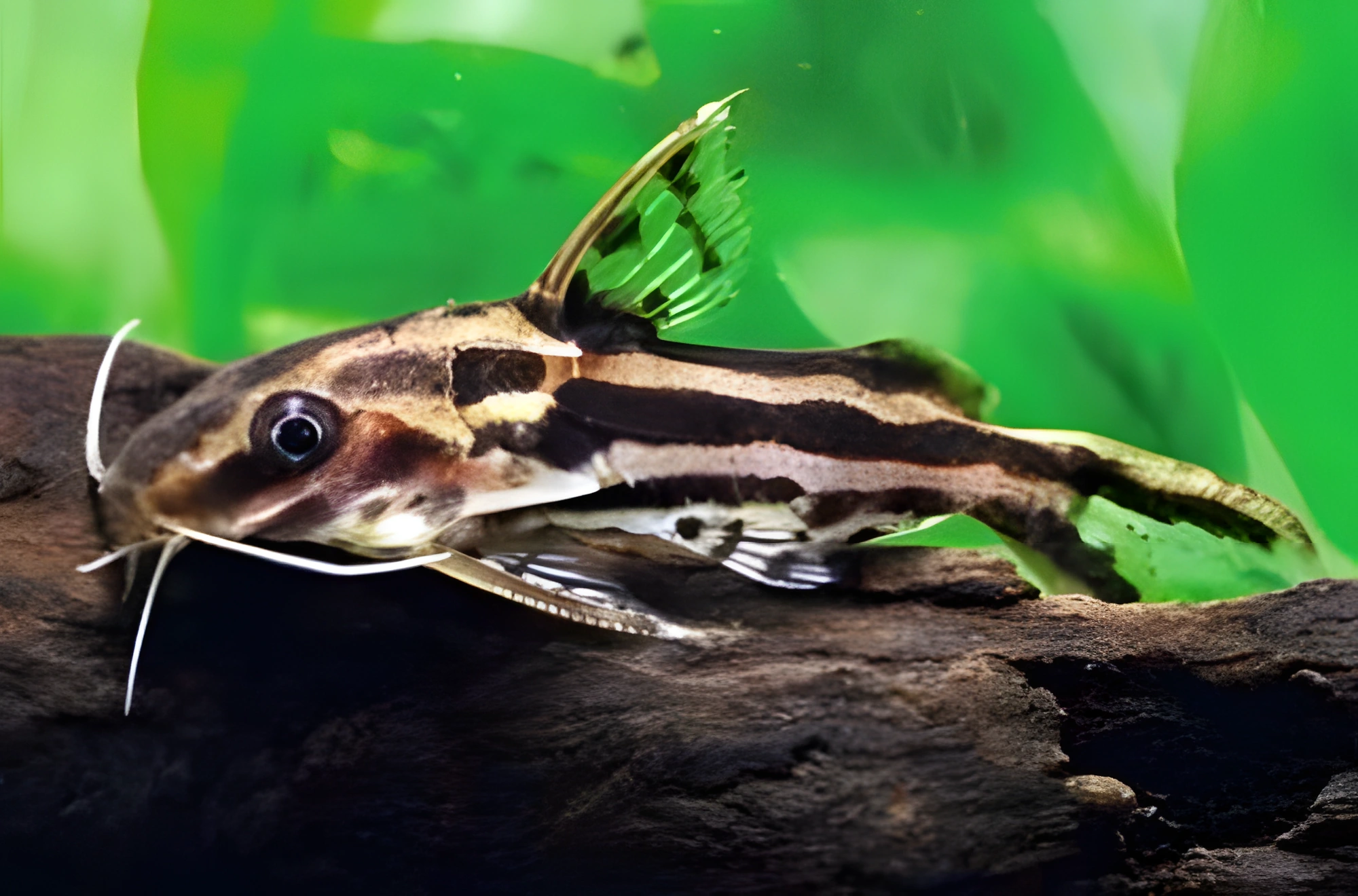
Belonging to the Mochokidae family, the Striped Synodontis, also known as the Orange Synodontis (Synodontis flavitaeniatus), easily adapts to various water conditions. This peaceful and undemanding species makes an excellent addition to a community tank, successfully coexisting with most other aquarium inhabitants.
- Required aquarium volume
- 80 L
- Size in aquarium
- 20 cm
- Temperature
- 23 – 28 °C
- Temperament
- Peaceful (regular)
Parameters
Water pHNeutral (6.5) – Slightly alkaline (8)
Water dHVery soft (3) – Very hard (25)
Water salinityno salt (freshwater)
Size in aquarium20 cm
Lifespan10 years
TemperamentPeaceful (regular)
Toward small fishnot a predator
Required aquarium volume80 L
Lightingdimmed or moderate
Substratesoft peat-based
Water flowweak or moderate
FeedingSinking (any)
CareBoth solitary and in group (flexible)
Description
Adults of this catfish can reach a length of up to 20 cm. Their bodies are adorned with broad horizontal yellow stripes and large brownish spots or bands. The shades of coloration can vary from darker to lighter. Sexual dimorphism is insignificant, making it difficult to distinguish males from females.
Habitat
The natural habitat of this species is limited to Lake Malebo, located in the lower reaches of the Congo River in Africa. Two capitals are situated on the shores of this lake: Brazzaville in the Republic of the Congo and Kinshasa in the Democratic Republic of the Congo. The body of water where this catfish lives is currently experiencing significant anthropogenic impact, as more than 2 million people reside on its banks.
Behavior and Compatibility
Thanks to its ability to adapt to various water conditions and its peaceful nature, the Striped Synodontis coexists well with most other aquarium inhabitants, provided they do not exhibit aggression or excessive activity. It should be remembered that it is undesirable to house them with very small fish (less than 4 cm), as an adult catfish might accidentally swallow them. This is not a sign of predatory behavior, but rather a conditioned reflex of most catfishes – to consume what fits into their mouth. Coexistence with conspecifics is possible, but only with a sufficient number of hiding places to avoid territorial conflicts.
Care and Maintenance
For a single fish, the optimal aquarium volume starts from 80 liters. The decor should be based on a soft substrate with many hiding places, which can be created from rock fragments, large stones, or driftwood. Dim lighting is recommended, and floating plants will help to further shade the water surface. The choice of other vegetation is at the discretion of the aquarist. Water parameters such as pH and dGH have a wide acceptable range. It is important to maintain water purity and minimize pollution levels. In addition to an effective filtration system, regular cleaning of the substrate from organic detritus and partial water changes (15–20% of the total volume) with fresh water are necessary.
Diet
The diet of the Striped Synodontis can include almost all common types of food: both dry and frozen or live. It is important to supplement them with plant components, such as peeled peas or cucumber. The food should be sinking.
Breeding and Reproduction
This species does not breed in home aquariums. Fish are primarily supplied to the market from commercial fish farms. Previously, wild-caught specimens could be found, but in recent years, they are practically not found in trade networks.
Diseases
The main cause of most diseases in Leaf Fish is unsuitable keeping conditions and poor-quality nutrition. If initial symptoms are observed, it is first necessary to check water parameters and the concentration of dangerous substances such as ammonia, nitrites, and nitrates. If the indicators deviate from the norm, they should be brought back into order, and only then should treatment begin. More detailed information on symptoms and treatment methods can be found in the "Aquarium Fish Diseases" section.
How to choose
When choosing a Striped Synodontis, attention should be paid to the fish's activity and the condition of its skin. A healthy specimen should have a clear, contrasting pattern without whitish growths, ulcers, or fin damage. Avoid specimens with sunken bellies or signs of emaciation, as this may indicate internal parasites or problems with adapting to food.
- Check the integrity of all fins and the absence of redness at their base.
- Ensure that the fish shows natural caution but does not appear overly timid or apathetic.
- Observe their behavior in the store: healthy catfish often stay in hiding, but when feeding, they should show interest in food.
Frequently asked questions
The essentials: size, tank volume, water parameters and care
How big does Striped Synodontis get?
An adult reaches 20 cm in length. Plan the tank around the maximum size: the fish quickly outgrows a cramped setup.
What size aquarium does Striped Synodontis need?
The minimum recommended volume is 80 L. A smaller tank speeds up nitrate build-up and raises stress levels.
What water parameters does Striped Synodontis need?
Temperature 23–28 °C, pH 6.5–8, hardness 3–25 dGH. Stability matters more than exact values: sudden swings are harder on the fish than a small deviation from the ideal.
How long does Striped Synodontis live?
Around 10 years when kept properly. Lifespan depends directly on tank volume, water quality and a varied diet.
Is Striped Synodontis aggressive?
Temperament: peaceful (regular). Keep this in mind when choosing tank mates.
How many Striped Synodontis should be kept together?
Recommended setup: both solitary and in group (flexible). Ignoring this is a common cause of stress and disease.
What does Striped Synodontis eat?
Diet type: sinking (any). Feed small portions that are finished within a couple of minutes — overfeeding does more harm than underfeeding.
What is the scientific name of Striped Synodontis?
The scientific name of the species is Synodontis flavitaeniatus, family Mochokidae.