Temperature22 – 26 °C
Natural range
- India area
CyprinidsConservation status: Least concern LC
Other scientific names: Cirrhinus fasciatus, Dravidia fasciata, Puntius fasciatus, Puntius grayi, Puntius melanampyx
Haludaria fasciata, known as the striped barb, is a member of the carp family (Cyprinidae). The fish received its scientific name in honor of the Bengali artist Haludar, who created illustrations in 1797 for Francis Hamilton's book on the fish of the Ganges, published in 1822. The second part of the Latin name, "fasciata," translates to "striped."
- Required aquarium volume
- 80 L
- Size in aquarium
- 6 – 7 cm
- Temperature
- 22 – 26 °C
- Temperament
- Semi-peaceful (including aggression during spawning / intraspecific conflicts)
Parameters
Water pHSlightly acidic (6) – Neutral (7.5)
Water dHSoft (5) – Medium hardness (10)
Water salinityno salt (freshwater)
Size in aquarium6 – 7 cm
Lifespan6 years
TemperamentSemi-peaceful (including aggression during spawning / intraspecific conflicts)
Toward small fishnot a predator
Required aquarium volume80 L
Lightingdimmed
Substrateany (no restrictions)
Water flowweak or moderate
FeedingSmall / appropriate size / pieces
CareGroup (8–10 individuals)
Description
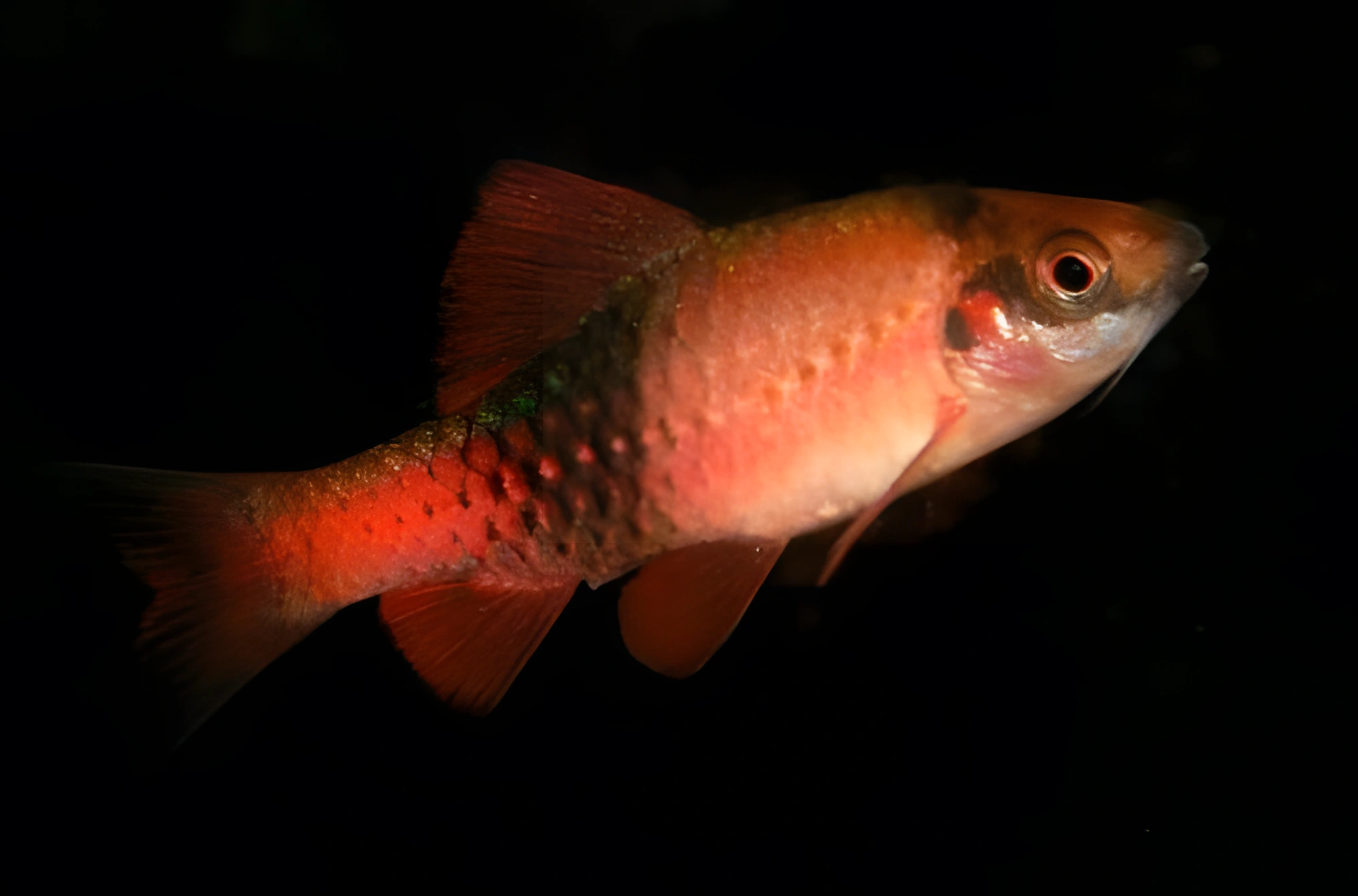
Adults reach a size of 6 to 7 cm in length. Their coloration and body pattern can vary significantly depending on their region of origin. Fish inhabiting mountain rivers often have orange hues, while barbs from lowland waters display purple or red tones. The number of dark stripes on the body also varies; sometimes they are faintly expressed or entirely absent. The fish have noticeable sensitive barbels around their mouth, which help them search for food on the bottom. Currently, hybrids derived from populations from various habitats are commonly available on the market, leading to a blending of characteristic traits. Due to these features, the aquarium striped barb can now be considered a separate variety not found in nature.
Habitat
This species originates from India, inhabiting a vast area of the Ganges River basin. Depending on the specific locality, the natural habitat of this barb species can differ significantly. These fish inhabit diverse biotopes: they can be found in swift mountain streams as well as in calmer, even swampy, lowland waters.
Behavior and Compatibility
This is a peaceful, yet very active schooling fish, which might make it a less suitable choice for cohabitation with slow and inactive species. The striped barb is compatible with many popular aquarium fish of comparable size, including livebearers, rainbowfish, other cyprinids, characins, and loaches. It is recommended to keep these fish in groups of at least 8–10 individuals.
Care and Maintenance
For a small school of these fish, an aquarium of 80 liters or more will be optimal. The aquarium setup can be chosen at your discretion or based on the needs of other species kept with the striped barb. The key to successful keeping is maintaining stable water parameters. Aquarium care includes a series of standard procedures: weekly partial water changes, regular removal of organic waste (such as excrement and uneaten food), prophylactic inspection of equipment, and monitoring of key water parameters (pH, dGH, oxidizability).
Diet
This species is omnivorous and readily eats most common aquarium foods, whether dry, live, or frozen. A diet enriched with proteins and plant components helps maintain brighter and more vibrant coloration.
Breeding and Reproduction
It belongs to the egg-laying species. When the breeding period arrives and environmental conditions are favorable, females scatter hundreds of eggs, which are then fertilized by males. It is quite normal for not all eggs to be fertilized. The eggs, once dropped to the bottom, are left without parental care. The incubation period is 24–48 hours, and within a day after its completion, the fry begin to swim actively. Parental instincts are absent in these fish, so adults may readily feast on their own offspring. This explains the extremely low survival rate of fry in a community tank, where only a few reach sexual maturity. If the goal is to save the entire brood, it is necessary to prepare a separate tank for the eggs in advance. A breeding tank typically has a volume of about 10 liters and is equipped with a simple air-driven sponge filter and a heater. An additional light source is not required, as ambient light is sufficient. Artificial plants or shade-loving mosses and ferns are suitable for decorating such a breeding tank.
Diseases
In a balanced aquarium ecosystem, closely matching the requirements of this species, diseases are extremely rare. Illnesses often arise due to deteriorating habitat quality, contact with already sick fish, or physical injuries. If these factors could not be avoided, the “Aquarium Fish Diseases” section will provide detailed information on symptoms and treatment methods.
How to choose
When purchasing, choose active, mobile individuals with clean fins and scales, free from visible damage, sores, or white film. Avoid fish that keep to themselves, appear emaciated, have sunken bellies, or an uncharacteristically bloated abdomen. It is important to ensure that the fish in the store show interest in food and do not exhibit signs of timidity or apathy. Since hybrids are often found in the pet trade, inquire with the seller about the origin of the batch if the purity of the species is important to you.
Frequently asked questions
The essentials: size, tank volume, water parameters and care
How big does Striped barb get?
An adult reaches 6–7 cm in length. Plan the tank around the maximum size: the fish quickly outgrows a cramped setup.
What size aquarium does Striped barb need?
The minimum recommended volume is 80 L. A smaller tank speeds up nitrate build-up and raises stress levels.
What water parameters does Striped barb need?
Temperature 22–26 °C, pH 6–7.5, hardness 5–10 dGH. Stability matters more than exact values: sudden swings are harder on the fish than a small deviation from the ideal.
How long does Striped barb live?
Around 6 years when kept properly. Lifespan depends directly on tank volume, water quality and a varied diet.
Is Striped barb aggressive?
Temperament: semi-peaceful (including aggression during spawning / intraspecific conflicts). Keep this in mind when choosing tank mates.
How many Striped barb should be kept together?
Recommended setup: group (8–10 individuals). Ignoring this is a common cause of stress and disease.
What does Striped barb eat?
Diet type: small / appropriate size / pieces. Feed small portions that are finished within a couple of minutes — overfeeding does more harm than underfeeding.
What is the scientific name of Striped barb?
The scientific name of the species is Haludaria fasciata, family Cyprinids (Cyprinidae). It also appears in the literature as: Cirrhinus fasciatus, Dravidia fasciata, Puntius fasciatus.