Temperature22 – 28 °C
Natural range
- Southeastern Brazil area
- Uruguay area
CatfishConservation status: Least concern LC
Other scientific names: Plecostomus punctatus
The scientific name for the Spotted Fin Hypostomus, also known as the Spotted Pleco, is Hypostomus punctatus; this member of the Loricariidae family (Armored Catfish) originates from South America. It inhabits the river systems of the southeastern regions of Brazil. These fish are widely distributed in both fast-flowing rivers and calmer, swampy waters.
- Required aquarium volume
- 350 L
- Size in aquarium
- 30 cm
- Temperature
- 22 – 28 °C
- Temperament
- Aggressive / incompatible / unfriendly
Parameters
Water pHSlightly acidic (5) – Slightly alkaline (8)
Water dHVery soft (2) – Soft (5)
Water salinityno salt (freshwater)
Size in aquarium30 cm
Lifespan18 years
TemperamentAggressive / incompatible / unfriendly
Toward small fishnot a predator
Required aquarium volume350 L
Lightingdimmed
Substrateany (no restrictions)
Water flowany
FeedingSinking (plant-based)
CareSolitary
Description
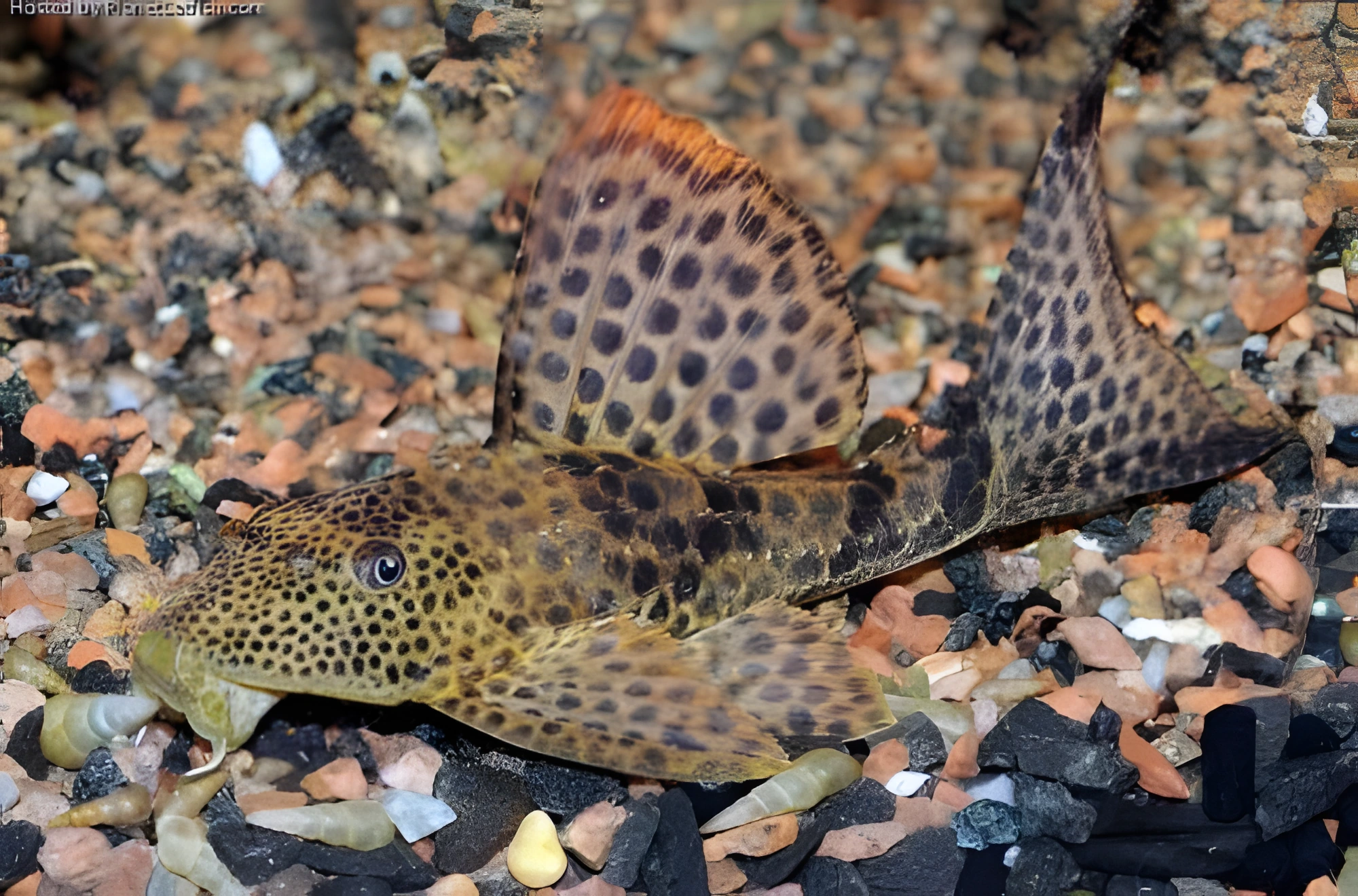
Adults of this catfish can reach a length of up to 30 cm. Its body is characterized by a flattened shape and a large, rounded head when viewed from above. The body surface is covered with hard bony plates, which are studded with small spines, as well as several rows of larger thorns. Its fins are large and fan-shaped. The first rays of the fins are significantly thickened and modified into sharp spines. There are several geographical forms that differ in body coloration. Most often, individuals of a light brown hue with a characteristic pattern of dark spots are encountered.
Habitat
The species inhabits the river systems of southeastern Brazil and Uruguay. In nature, it is found in various conditions: from fast-flowing rivers to calm, swampy areas and flooded sections. It prefers places with snags and substrates suitable for foraging. Typical habitat parameters: water temperature 22–28 °C, pH range from 5.0 to 8.0.
Behavior and Compatibility
Young catfish exhibit a peaceful nature and often form groups. However, with age, they become territorial and do not tolerate the presence of their kin or other bottom-dwelling fish nearby. In a small aquarium, only one Spotted Fin Hypostomus should be kept; it is often placed in the company of several species of similar size that inhabit the water column or surface. In more spacious tanks, cohabitation of two or more adult catfish is permissible.
Care and Maintenance
For a single catfish, the optimal aquarium size starts from 350–400 liters. The decor must include a sufficient number of shelters appropriate to the fish's size, such as large natural snags or dense thickets of robust plants. The Spotted Pleco is safe for aquarium plants, but it should be remembered that it can uproot young shoots with weak root systems. Since this catfish inhabits various bodies of water in its natural environment, it does not impose strict requirements on keeping conditions. The fish can live in a wide range of hydrochemical parameters, which significantly simplifies the water preparation process during aquarium maintenance.
Diet
The diet of these fish includes anything that reaches the bottom, but they prefer plant-based foods. The diet can include flakes, granules, algae-based tablets, as well as lettuce, peas, frozen spinach, pieces of cucumber, zucchini, and similar products. As a supplement, it is recommended to use regular sinking foods, as well as live or frozen products such as bloodworms or pieces of shrimp.
Breeding and Reproduction
Breeding in aquarium conditions is difficult and requires a significant tank volume. Spawning occurs in shelters, which can be vertically installed pipes or burrows. The eggs develop over 10–15 days. Larvae begin active feeding immediately after hatching; small zooplankton are used as initial food.
Diseases
The fish have a strong immune system but are sensitive to water quality and the accumulation of organic waste. Poor filtration or overpopulation can lead to bacterial infections of the skin and fins. Prevention includes regular water changes of up to 30% of the volume weekly, maintaining powerful aeration, and ensuring quality filtration in the aquarium.
How to choose
When choosing, attention should be paid to the fish's activity and the absence of external damage. A healthy individual should have clean skin without whitish plaque, ulcers, or hemorrhages. The eyes should be clear, and the fins should be spread. Avoid purchasing specimens with sunken bellies, which may indicate emaciation or internal parasitic diseases.
Frequently asked questions
The essentials: size, tank volume, water parameters and care
How big does Spotted Pleco get?
An adult reaches 30 cm in length. Plan the tank around the maximum size: the fish quickly outgrows a cramped setup.
What size aquarium does Spotted Pleco need?
The minimum recommended volume is 350 L. A smaller tank speeds up nitrate build-up and raises stress levels.
What water parameters does Spotted Pleco need?
Temperature 22–28 °C, pH 5–8, hardness 2–5 dGH. Stability matters more than exact values: sudden swings are harder on the fish than a small deviation from the ideal.
How long does Spotted Pleco live?
Around 18 years when kept properly. Lifespan depends directly on tank volume, water quality and a varied diet.
Is Spotted Pleco aggressive?
Temperament: aggressive / incompatible / unfriendly. Keep this in mind when choosing tank mates.
How many Spotted Pleco should be kept together?
Recommended setup: solitary. Ignoring this is a common cause of stress and disease.
What does Spotted Pleco eat?
Diet type: sinking (plant-based). Feed small portions that are finished within a couple of minutes — overfeeding does more harm than underfeeding.
What is the scientific name of Spotted Pleco?
The scientific name of the species is Hypostomus punctatus, family Armored Catfishes (Loricariidae). It also appears in the literature as: Plecostomus punctatus.