Temperature25 – 29 °C
Natural range
- Venezuela area
CatfishConservation status: Near threatened NT
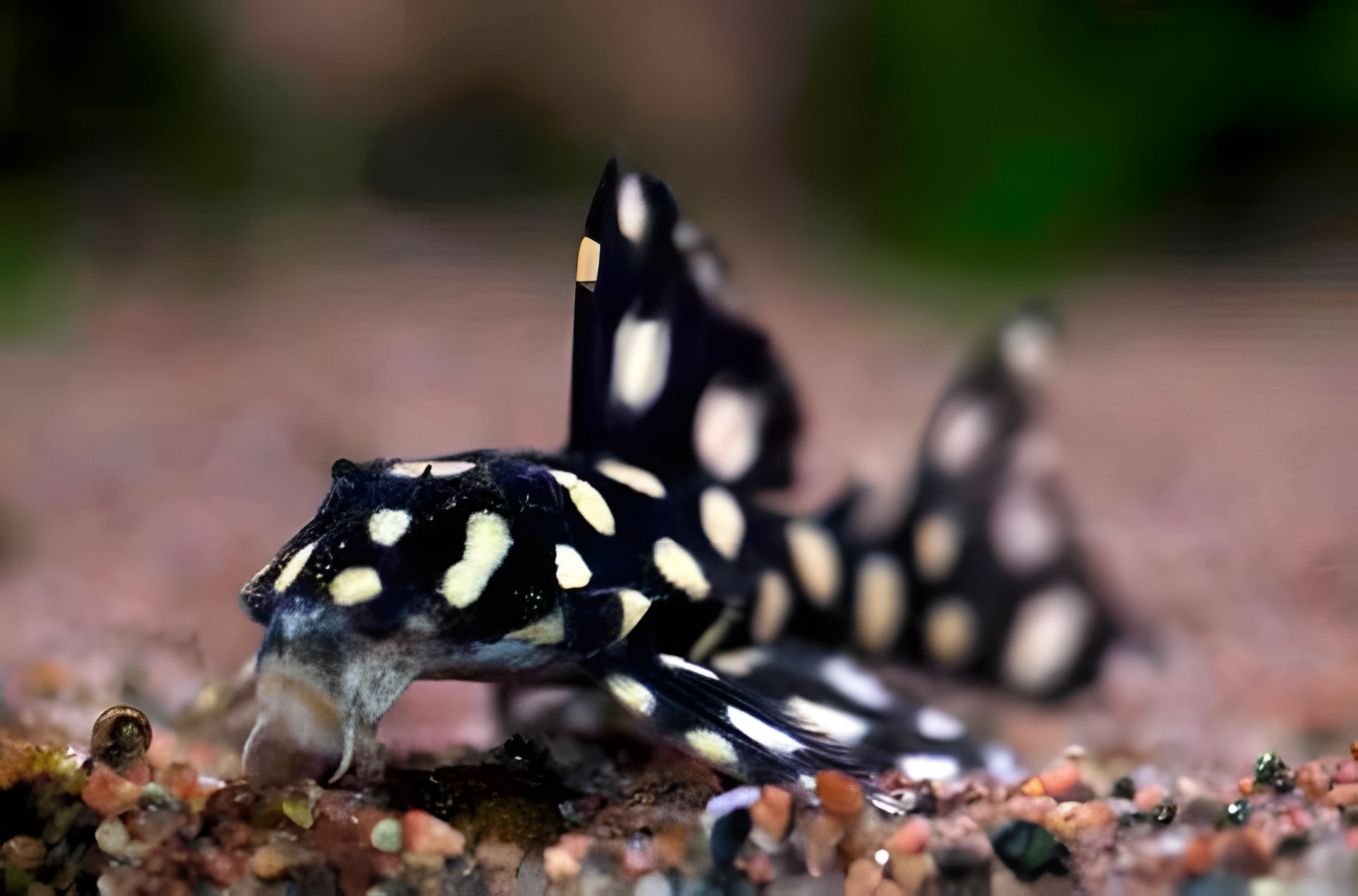
The Orinoco Pleco, scientifically known as Hypancistrus contradens, is a member of the armored catfish family (Loricariidae). It is often called the "Polka Dot Pleco" due to the distinctive pattern on its body.
- Required aquarium volume
- 200 L
- Size in aquarium
- 12 cm
- Temperature
- 25 – 29 °C
- Temperament
- Peaceful (regular)
Parameters
Water pHSlightly acidic (5) – Neutral (7.5)
Water dHVery soft (1) – Hard (15)
Water salinityno salt (freshwater)
Size in aquarium12 cm
Lifespan10 years
TemperamentPeaceful (regular)
Toward small fishnot a predator
Required aquarium volume200 L
Lightingdimmed or moderate
Substratefine sand
Water flowweak or moderate
FeedingSinking (any)
CareBoth solitary and in group (flexible)
Description
Adults can reach approximately 12 cm (4.7 inches) in length. The fish's body is flattened, with a rather large, triangular head when viewed from above. The eyes are set high on the top of the head, and the mouth is located on the underside. Their coloration is dark, adorned with a pattern of light, large, rounded spots. Due to similarities in coloration, this species is often mistaken for Hypancistrus inspector, whose distinguishing feature is the black edging on its unpaired fins.
Habitat
Its natural habitat is in South America: this species is considered endemic to the Venezuelan part of the Orinoco River basin, where it is widely distributed. These fish prefer the bottom layers of water bodies with an abundance of natural shelters, such as snags, dense thickets of aquatic plants, and similar places.
Behavior and Compatibility
This fish has a calm and peaceful disposition. It will seek to find and occupy a specific area on the aquarium bottom where suitable shelter is located. Due to its size, the Orinoco Pleco will not be able to successfully compete for food with larger bottom-dwelling tankmates. Tetras, Rasboras, Corydoras, and other small fish are good companions for the aquarium.
Care and Maintenance
Since each adult Orinoco Pleco tends to occupy its own small territory on the aquarium bottom, a tank of at least 200 liters (53 US gallons) will be required for comfortable keeping of a group of 2–3 fish. In this case, the aquarium's bottom area is more important than its height. The aquascape should include many hiding places. Grottoes and caves formed by intertwined driftwood or rock piles will look most natural. As an alternative, decorative ceramic elements can be used. Some aquarists even use PVC pipe fragments. Shade-loving aquatic plants, as well as floating plants that provide additional shading, will be a good addition. It is recommended to maintain water parameters in the range of slightly acidic pH values and low hardness (GH). Aquarium care is standard and includes several essential procedures: weekly partial water changes, removal of organic waste, and regular equipment checks. Unlike many related species, the Orinoco Pleco prefers a more varied diet, so its diet should not be limited exclusively to plant-based food. The basis of the diet can be common flakes, granules, and tablets containing protein components.
Diet
Unlike many related species, the Orinoco Pleco shows a preference for a more varied diet, so it is not recommended to feed it exclusively plant-based foods. The main components of its diet can be common flake, granule, or tablet foods that contain protein.
Breeding and Reproduction
Breeding occurs in caves, which serve as a substrate for egg-laying. The male chooses a suitable shelter and entices the female into it. After spawning, which usually consists of 20 to 50 eggs, the female leaves the cave, and the male remains to guard the clutch, actively fanning it with his fins to ensure oxygen flow. Fry appear after a few days and initially feed on their yolk sac, after which they begin to accept finely crushed foods.
Diseases
The species is sensitive to water quality and dissolved oxygen levels. If husbandry conditions are not met, especially with the accumulation of organic waste, the fish are prone to bacterial infections and skin lesions. To prevent diseases, it is necessary to maintain stable environmental parameters, ensure good filtration, regular water changes, and avoid overfeeding, which leads to substrate contamination.
How to choose
When purchasing, choose active fish with clean skin without signs of damage, ulcers, or unnatural spots. Healthy individuals should have rounded forms, without a sunken belly, and show interest in food. It is recommended to avoid specimens that appear emaciated, apathetic, or have damaged fins, as this may indicate stress, improper transport conditions, or hidden diseases.
Frequently asked questions
The essentials: size, tank volume, water parameters and care
How big does Orinoco Pleco get?
An adult reaches 12 cm in length. Plan the tank around the maximum size: the fish quickly outgrows a cramped setup.
What size aquarium does Orinoco Pleco need?
The minimum recommended volume is 200 L. A smaller tank speeds up nitrate build-up and raises stress levels.
What water parameters does Orinoco Pleco need?
Temperature 25–29 °C, pH 5–7.5, hardness 1–15 dGH. Stability matters more than exact values: sudden swings are harder on the fish than a small deviation from the ideal.
How long does Orinoco Pleco live?
Around 10 years when kept properly. Lifespan depends directly on tank volume, water quality and a varied diet.
Is Orinoco Pleco aggressive?
Temperament: peaceful (regular). Keep this in mind when choosing tank mates.
How many Orinoco Pleco should be kept together?
Recommended setup: both solitary and in group (flexible). Ignoring this is a common cause of stress and disease.
What does Orinoco Pleco eat?
Diet type: sinking (any). Feed small portions that are finished within a couple of minutes — overfeeding does more harm than underfeeding.
What is the scientific name of Orinoco Pleco?
The scientific name of the species is Hypancistrus contradens, family Armored Catfishes (Loricariidae).