Temperature21 – 24 °C
Natural range
- Paraguay River Basin
- Paraná River (middle course)
- Argentina area
- Brazil area
CatfishConservation status: Least concern LC
Other scientific names: Cochliodon cochliodon, Cochliodon hypostomus, Loricaria melanoptera
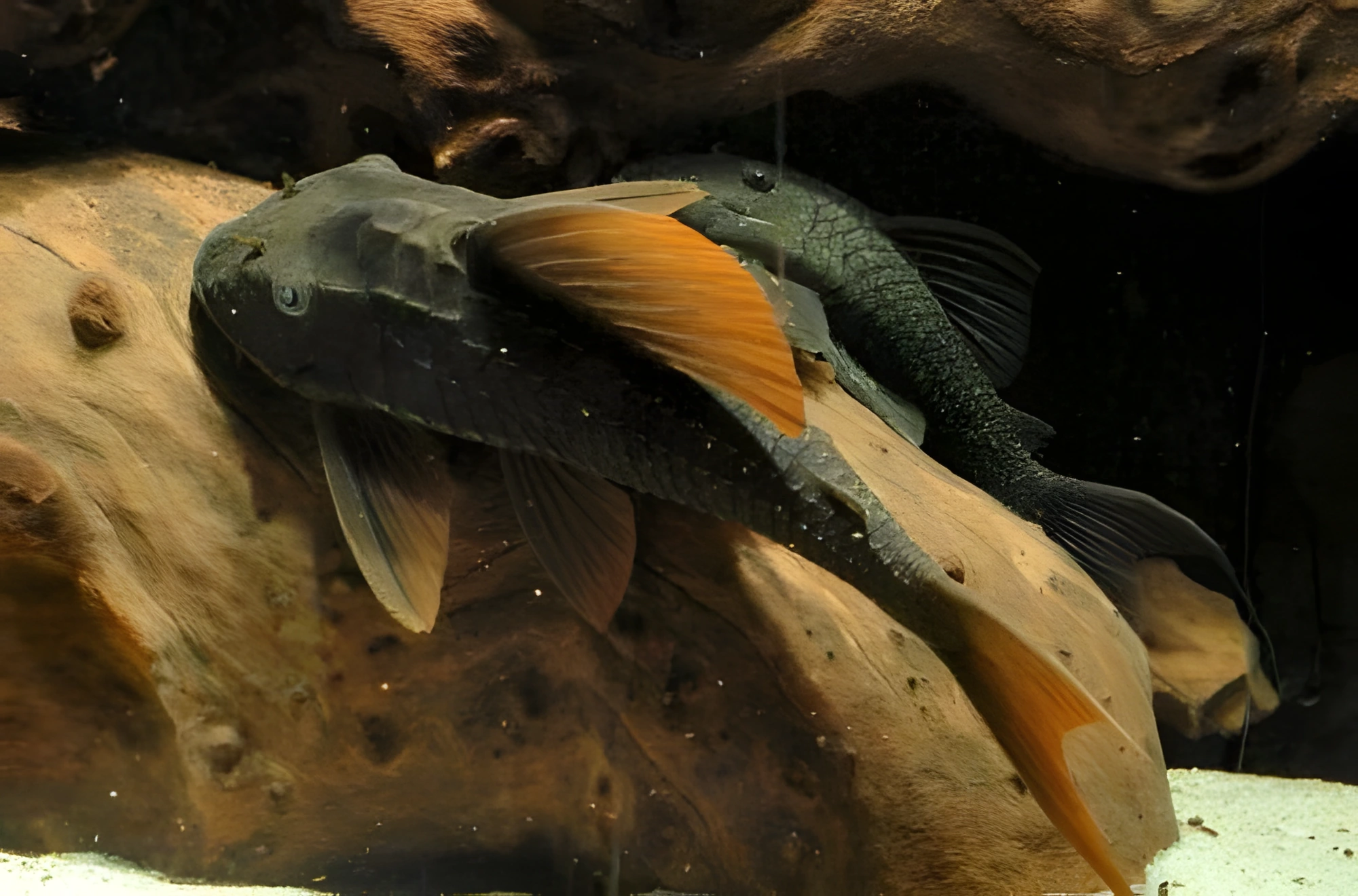
Hypostomus cochliodon, known as the Cochliodon Pleco, is a member of the family Loricariidae, or armored catfish. This catfish originates from the waters of South America, specifically found in the large river basins of Paraguay and Paraná, in their middle reaches. It inhabits the southern regions of Brazil and the northern part of Argentina.
- Required aquarium volume
- 240 L
- Size in aquarium
- 23 cm
- Temperature
- 21 – 24 °C
- Temperament
- Peaceful (regular)
Parameters
Water pHSlightly acidic (6.3) – Neutral (7.2)
Water dHMedium hardness (10) – Very hard (18)
Water salinityno salt (freshwater)
Size in aquarium23 cm
Lifespan10 years
TemperamentPeaceful (regular)
Toward small fishnot a predator
Required aquarium volume240 L
Lightingdimmed
Substratesandy (regular, light)
Water flowmoderate
FeedingHigh protein (predominantly meat)
CareBoth solitary and in group (flexible)
Description
Adult specimens of these fish can reach approximately 23 cm in length. The body of the Cochliodon Pleco has a flattened shape, yet its back is significantly higher than that of many other species from the same family. The catfish's body is protected by rows of bony plates, and along the lateral line are sharp spines that serve as an additional defense mechanism. The fins are large and fan-like. The fish's coloration changes with age: young catfish display a combination of dark, light, and golden hues, while adults become uniformly dark gray, and their fins acquire a reddish tone.
Habitat
The species inhabits the Paraguay River basin and the middle reaches of the Paraná River in Argentina, Brazil, and Paraguay. In nature, these fish prefer bodies of water with flowing currents, where they stay in the bottom layers. Their biotopes are characterized by rocky or sandy substrate and an abundance of snags, which serve not only as shelter but also as an important source of cellulose for their diet.
Behavior and Compatibility
This species of catfish is relatively peaceful and can coexist with various fish, such as cyprinids, some South American cichlids, and non-territorial catfish of comparable size. However, it is important to remember that such harmonious behavior is observed only in a sufficiently spacious aquarium. If there is not enough space, competition for territory is inevitable, especially among conspecifics.
Care and Maintenance
To ensure a comfortable existence for one adult catfish, an aquarium of at least 240–250 liters will be required. Since Hypostomus cochliodon feeds almost exclusively on algae and wood particles, the aquarium decor must include natural snags. With sufficient lighting, the surface of the snags will grow algae, which serves as an additional food source. Large snags will also provide the catfish with reliable hiding places. Rooted aquatic plants are not essential decorative elements, as they can be eaten or damaged by the fish. Nevertheless, floating plants will be a useful addition, creating necessary shade. For long-term keeping, it is necessary to maintain a high oxygen level and provide clean, flowing water. Since these fish originate from subtropical regions, the water temperature should not be excessively high. An optimal temperature range is considered to be 21–24°C with a pH level close to neutral.
Diet
Scientific research has shown that Hypostomus cochliodon and its related species feed not so much on algae as on wood. The intestines of these fish harbor special bacteria capable of breaking down wood chips, which makes the presence of snags an essential element of their environment. In addition to wood, in a home aquarium, dry sinking foods based on algae and plant components should be offered, as well as pieces of fresh vegetables such as cucumbers, zucchini, blanched spinach, or peas.
Breeding and Reproduction
Based on available sources, a separate block cannot be compiled: the data is insufficient or contradictory. The entry can be updated later when verified information becomes available.
Diseases
Based on available sources, a separate block cannot be compiled: the data is insufficient or contradictory. The entry can be updated later when verified information becomes available.
How to choose
When purchasing, choose active individuals with tightly pressed fins and clean skin without whitish film, ulcers, or visible damage. Avoid acquiring fish with sunken bellies, as this often indicates emaciation or internal parasitic infections. In the store, it is important to assess the fish's reaction to food: a healthy specimen should show interest in food and actively explore surfaces in search of organic remains.
Frequently asked questions
The essentials: size, tank volume, water parameters and care
How big does Cochliodon Pleco get?
An adult reaches 23 cm in length. Plan the tank around the maximum size: the fish quickly outgrows a cramped setup.
What size aquarium does Cochliodon Pleco need?
The minimum recommended volume is 240 L. A smaller tank speeds up nitrate build-up and raises stress levels.
What water parameters does Cochliodon Pleco need?
Temperature 21–24 °C, pH 6.3–7.2, hardness 10–18 dGH. Stability matters more than exact values: sudden swings are harder on the fish than a small deviation from the ideal.
How long does Cochliodon Pleco live?
Around 10 years when kept properly. Lifespan depends directly on tank volume, water quality and a varied diet.
Is Cochliodon Pleco aggressive?
Temperament: peaceful (regular). Keep this in mind when choosing tank mates.
How many Cochliodon Pleco should be kept together?
Recommended setup: both solitary and in group (flexible). Ignoring this is a common cause of stress and disease.
What does Cochliodon Pleco eat?
Diet type: high protein (predominantly meat). Feed small portions that are finished within a couple of minutes — overfeeding does more harm than underfeeding.
What is the scientific name of Cochliodon Pleco?
The scientific name of the species is Hypostomus cochliodon, family Armored Catfishes (Loricariidae). It also appears in the literature as: Cochliodon cochliodon, Cochliodon hypostomus, Loricaria melanoptera.