Temperature24 – 30 °C
Natural range
- South America area
CatfishConservation status: Least concern LC
Other scientific names: Doras armatulus
Platydoras (Platydoras armatulus), a representative of the family Doradidae, exhibits enviable unpretentiousness and high endurance. It can become an excellent helper in the aquarium, picking up food scraps left by other inhabitants. This catfish gets along well with most peaceful species, thanks to its amicable nature and ability to adapt to various water parameters.
- Required aquarium volume
- 120 L
- Size in aquarium
- 15 cm
- Temperature
- 24 – 30 °C
- Temperament
- Peaceful (regular)
Parameters
Water pHSlightly acidic (5.8) – Neutral (7.5)
Water dHVery soft (2) – Very hard (20)
Water salinityno salt (freshwater)
Size in aquarium15 cm
Lifespan15 years
TemperamentPeaceful (regular)
Toward small fishnot a predator
Required aquarium volume120 L
Lightingdimmed
Substrateany (no restrictions)
Water flowweak or moderate
FeedingAny (universal)
CareBoth solitary and in group (flexible)
Description
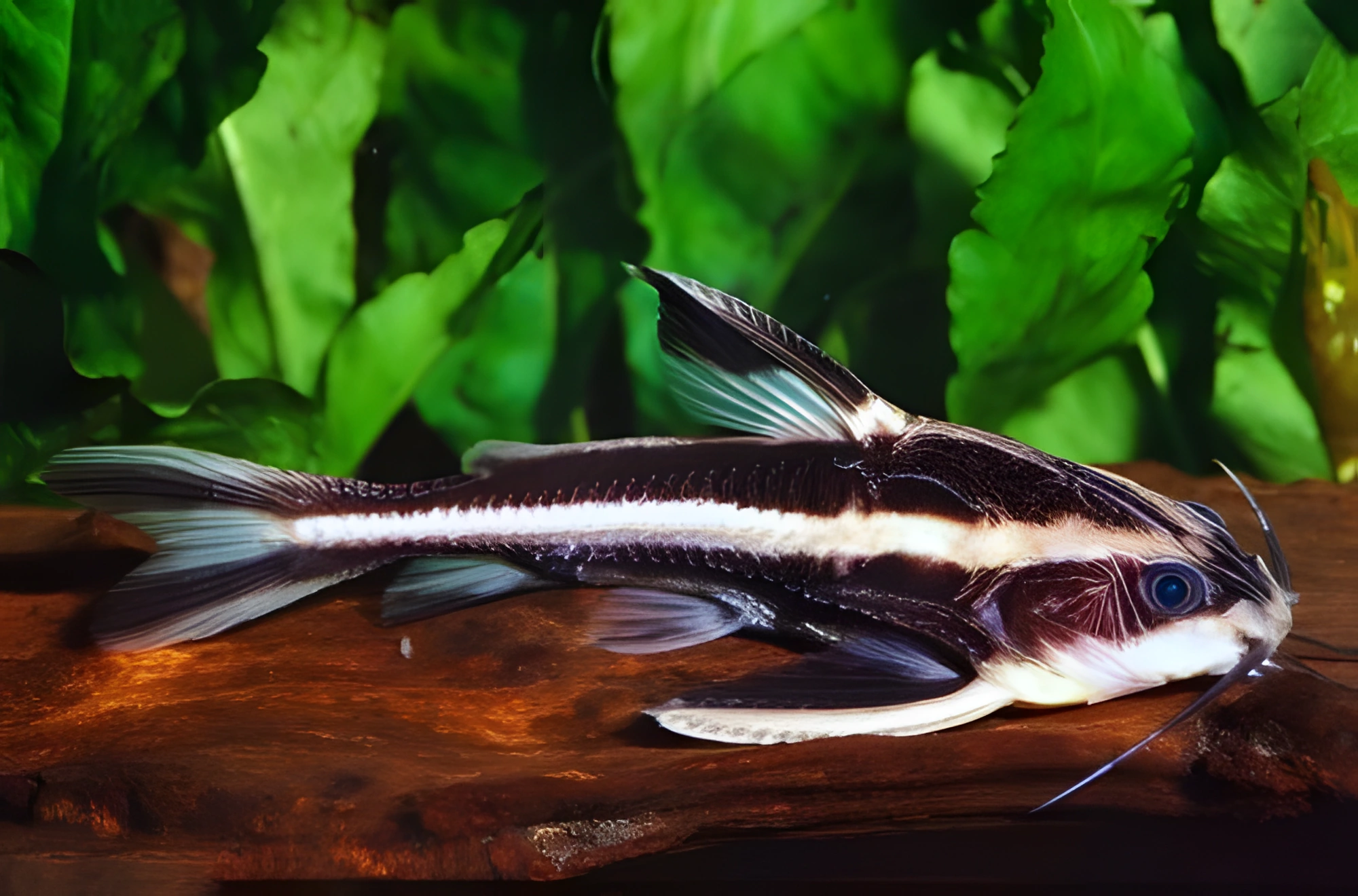
Although in nature adult specimens can reach a length of 24 cm, in aquarium conditions they usually grow up to 15 cm. The fish's coloration is predominantly dark, with a characteristic white stripe running along the body and adorned with pointed bony plates. The pectoral and dorsal fins are distinguished by a massive first ray, equipped with sharp but small spines. Sexual dimorphism in Platydoras is weakly expressed, making sex determination difficult.
Habitat
The natural habitats of this catfish span almost the entire tropical part of South America. It can be found in rivers, tributaries, swamps, and lakes, where it prefers areas with calm currents and an abundance of shelters, such as snags and dense riparian vegetation.
Behavior and Compatibility
Despite its non-aggressive nature, Platydoras can pose a danger to very small fish species that could become its prey. However, it coexists perfectly with most other fish of similar size and temperament. These catfish can live either alone or in a group, and do not exhibit intraspecific conflicts.
Care and Maintenance
For one or two Platydoras specimens, an aquarium of at least 120 liters is required. Hiding places are key to its setup, which can include natural or artificial snags, roots, branches, or even ceramic pots laid on their side, and hollow tubes of suitable diameter. Other decor elements can be chosen to your taste. Plants are not mandatory, but floating surface species will help create shade, which will encourage the catfish to leave its shelters more often. Special lamps with night lighting can be installed for nocturnal observations. A wide range of permissible water parameters means that strict control of pH and dGH is not required. It is important to regularly clean the substrate of organic waste and perform weekly 10–15% water changes with fresh water to maintain its quality at the proper level.
Diet
Platydoras is omnivorous and readily accepts any food – dry pellets, frozen, or live. It is important that the food is sinking, as this catfish feeds exclusively from the bottom. When kept in a community tank, especially with other fish species, it is recommended to feed it in the evening, shortly before the night lighting is turned off.
Breeding and Reproduction
Successful breeding of Platydoras in home aquariums is extremely rare, and at the time of writing, no reliable confirmations could be found. Most Platydoras available for sale are raised on commercial fish farms, and only occasionally are they caught from the wild.
Diseases
The main cause of most diseases in Leaf Fish is unsuitable keeping conditions and poor-quality nutrition. If initial symptoms are observed, it is first necessary to check water parameters and the concentration of dangerous substances such as ammonia, nitrites, and nitrates. If the indicators deviate from the norm, they should be brought back into order, and only then should treatment begin. More detailed information on symptoms and treatment methods can be found in the "Aquarium Fish Diseases" section.
How to choose
When choosing fish in a store, pay attention to the activity and integrity of the specimen's skin. A healthy Platydoras should have a bright, clear coloration without spots, ulcers, or signs of mucous membrane damage. Avoid specimens with sunken bellies, lethargic behavior, or damaged barbels, as this may indicate emaciation or bacterial infections. Inspect the fins for the absence of torn edges and inflammation.
Keep in mind that this species has sharp spines, so when transporting the fish, it should be placed in a thick bag or rigid container to prevent it from puncturing the material. In stores, Platydoras often hide, so do not be alarmed if a specimen behaves secretively — this is natural behavior. Avoid purchasing fish that appear unnaturally pale or show signs of severe stress, manifested by erratic darting around the aquarium.
Frequently asked questions
The essentials: size, tank volume, water parameters and care
How big does Platydoras get?
An adult reaches 15 cm in length. Plan the tank around the maximum size: the fish quickly outgrows a cramped setup.
What size aquarium does Platydoras need?
The minimum recommended volume is 120 L. A smaller tank speeds up nitrate build-up and raises stress levels.
What water parameters does Platydoras need?
Temperature 24–30 °C, pH 5.8–7.5, hardness 2–20 dGH. Stability matters more than exact values: sudden swings are harder on the fish than a small deviation from the ideal.
How long does Platydoras live?
Around 15 years when kept properly. Lifespan depends directly on tank volume, water quality and a varied diet.
Is Platydoras aggressive?
Temperament: peaceful (regular). Keep this in mind when choosing tank mates.
How many Platydoras should be kept together?
Recommended setup: both solitary and in group (flexible). Ignoring this is a common cause of stress and disease.
What does Platydoras eat?
Diet type: any (universal). Feed small portions that are finished within a couple of minutes — overfeeding does more harm than underfeeding.
What is the scientific name of Platydoras?
The scientific name of the species is Platydoras armatulus, family Doradidae (Thorny Catfishes). It also appears in the literature as: Doras armatulus.