Temperature16 – 24 °C
Natural range
- Rio de Janeiro State
- Santa Catarina State
CorydorasConservation status: Least concern LC
Other scientific names: Callichthys barbatus, Corydoras barbatus, Corydoras eigenmanni, Corydoras kronei
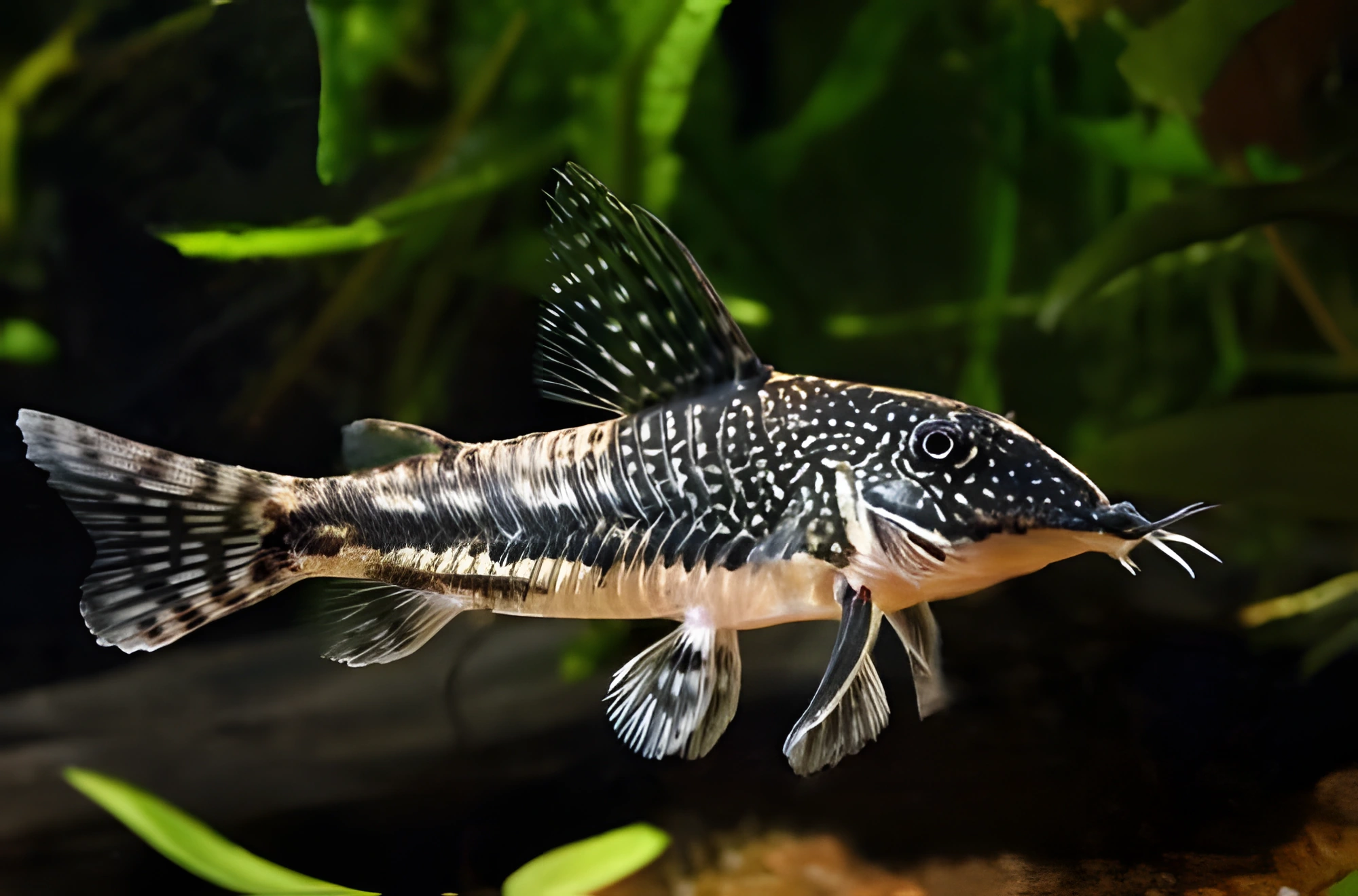
Scleromystax barbatus, known as the Plated Cory or Bearded Cory, belongs to the Callichthyidae family. This species is considered the largest among the Corydoras genus, reaching approximately 10 cm in length. Otherwise, it exhibits the same qualities as its more modest-sized relatives: unpretentiousness, ease of keeping, and good compatibility with other species, making it an excellent choice for a community tank.
- Required aquarium volume
- 200 L
- Size in aquarium
- 5 cm
- Temperature
- 16 – 24 °C
- Temperament
- Peaceful (regular)
Parameters
Water pHSlightly acidic (5.5) – Neutral (7)
Water dHVery soft (1) – Hard (12)
Water salinityno salt (freshwater)
Size in aquarium5 cm
Lifespan8 years
TemperamentPeaceful (regular)
Toward small fishnot a predator
Required aquarium volume200 L
Lightingdimmed or moderate
Substratesandy (regular, light)
Water flowweak or moderate
FeedingSinking (any)
CareHarem (1 male and several females)
Description
Adults of this species reach 10–12 cm. Their coloration is a picturesque combination of black and yellow, forming an intricate mottled pattern. A yellow stripe runs from the head to the dorsal fin. The intensity and prevalence of one color over another can vary depending on the specific region of origin. The pattern also continues onto the fins and tail, while the belly remains light. Sexual dimorphism is not pronounced; females are distinguished by more rounded body shapes, which become especially noticeable during the breeding period.
Habitat
The natural habitat of this species is limited to Southeastern Brazil, extending between Rio de Janeiro and Santa Catarina. Here, the catfish inhabits coastal lakes and river deltas flowing into the Atlantic Ocean, occurring exclusively in freshwater biotopes.
Behavior and Compatibility
Members of this species coexist well with other calm and peaceful fish. As for intraspecific relationships, competition is observed among males. In conditions of insufficient space, this can lead to skirmishes, although they very rarely result in injuries.
Care and Maintenance
For a small group of these fish, the optimal aquarium volume starts from 200 liters. It is important to use a soft substrate — sand or fine gravel — in the setup. Other decorative elements, such as snags, roots, and tree branches (both artificial and natural), are not crucial and can be chosen according to the needs of other aquarium inhabitants. However, if more than one male is kept in the aquarium, sufficient hiding places should be provided. Special attention must be paid to maintaining cleanliness: not only an efficient filtration system but also regular cleaning of the substrate from organic waste, as well as weekly water changes of 15–20% of the volume with fresh water, contribute to maintaining high water quality.
Diet
The Bearded Cory is completely undemanding in terms of diet. It readily accepts most popular sinking dry foods, such as granules, flakes, and tablets, and also gladly consumes live and frozen foods.
Breeding and Reproduction
Breeding in a community tank is quite difficult. There is a high probability that the eggs will be eaten by other inhabitants. In addition, changes in water conditions, which may be undesirable for other fish, serve as a trigger for spawning. The breeding period falls during the winter months, which in the Southern Hemisphere coincides with the beginning of the rainy season. If you plan to breed them, it is recommended to transfer the catfish to a separate tank of about 40 liters by early December, filling it with water from the main aquarium. Sandy substrate and dense plantings of plants such as Java moss or artificial spawning mops are suitable for decoration. Equipment should include an air-driven filter with a “matured” sponge media, a heater, and lighting. Success will be more likely if there are at least two females per male. The diet should include live or frozen foods. A few weeks after transfer, begin daily water changes with fresh water, gradually lowering its temperature by a couple of degrees, bringing it down to 16–18°C, with a pH of 7.0 and hardness not exceeding 8 dH. The heater should be turned off during this time. The eggs are laid either on plants or attached to the glass. After spawning, the adults are returned to the community tank; acclimatization may be necessary if water parameters differ significantly. Fry hatch after 3–4 days, and after another couple of days, they begin to swim independently in search of food. They can be fed specialized micro-food for aquarium fish fry, Artemia nauplii, or infusoria – as preferred.
Diseases
The main cause of most diseases in Leaf Fish is unsuitable keeping conditions and poor-quality nutrition. If initial symptoms are observed, it is first necessary to check water parameters and the concentration of dangerous substances such as ammonia, nitrites, and nitrates. If the indicators deviate from the norm, they should be brought back into order, and only then should treatment begin. More detailed information on symptoms and treatment methods can be found in the "Aquarium Fish Diseases" section.
How to choose
When selecting individuals, attention should be paid to the fish's activity and the condition of its integument. A healthy Corydoras should be swimming in the water column or exploring the substrate, showing no signs of apathy or refusal to eat. It is important to inspect the fins for integrity and the absence of white film or redness, and also to rule out the presence of visible ulcers and damage on the body. Avoid purchasing fish with sunken bellies, which may indicate emaciation or internal parasitic diseases. Given the territoriality of the species, it is advisable to acquire juveniles or a formed group, paying attention to the absence of signs of fights between individuals in the grow-out tank.
Frequently asked questions
The essentials: size, tank volume, water parameters and care
How big does Plated Cory get?
An adult reaches 5 cm in length. Plan the tank around the maximum size: the fish quickly outgrows a cramped setup.
What size aquarium does Plated Cory need?
The minimum recommended volume is 200 L. A smaller tank speeds up nitrate build-up and raises stress levels.
What water parameters does Plated Cory need?
Temperature 16–24 °C, pH 5.5–7, hardness 1–12 dGH. Stability matters more than exact values: sudden swings are harder on the fish than a small deviation from the ideal.
How long does Plated Cory live?
Around 8 years when kept properly. Lifespan depends directly on tank volume, water quality and a varied diet.
Is Plated Cory aggressive?
Temperament: peaceful (regular). Keep this in mind when choosing tank mates.
How many Plated Cory should be kept together?
Recommended setup: harem (1 male and several females). Ignoring this is a common cause of stress and disease.
What does Plated Cory eat?
Diet type: sinking (any). Feed small portions that are finished within a couple of minutes — overfeeding does more harm than underfeeding.
What is the scientific name of Plated Cory?
The scientific name of the species is Scleromystax barbatus, family Armored Catfish (Callichthyidae). It also appears in the literature as: Callichthys barbatus, Corydoras barbatus, Corydoras eigenmanni.