Temperature24 – 28 °C
Natural range
- Guyana area
- Suriname area
- Venezuela area
- Coastal rivers between Amazon and Orinoco mouths
CharacinsConservation status: Least concern LC
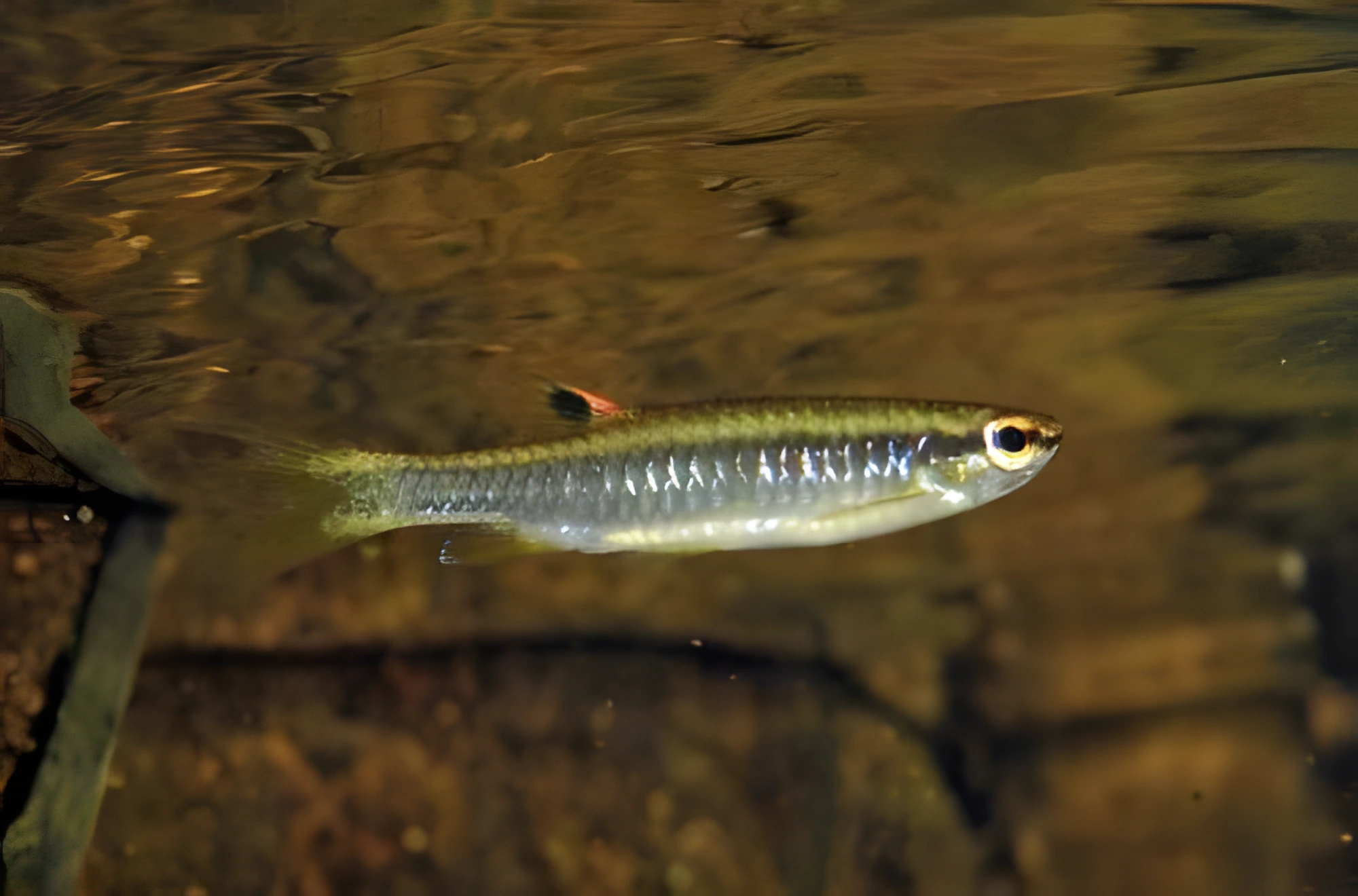
Pyrrhulina filamentosa, also known as the Filamentous Pyrrhulina, is a representative of the family Lebiasinidae. This fish originates from the equatorial region of South America, where it inhabits numerous streams and rivers winding through lush, humid tropical forests.
- Required aquarium volume
- 100 L
- Size in aquarium
- 8 – 10 cm
- Temperature
- 24 – 28 °C
- Temperament
- Peaceful (regular)
Parameters
Water pHSlightly acidic (6) – Neutral (7)
Water dHSoft (5) – Very hard (18)
Water salinityno salt (freshwater)
Size in aquarium8 – 10 cm
Lifespan5 years
TemperamentPeaceful (regular)
Toward small fishnot a predator
Required aquarium volume100 L
Lightingdimmed
Substrateany (no restrictions)
Water flowweak
FeedingFloating (protein)
CareSmall group (3–4 individuals)
Description
Adults can reach approximately 10 cm in length. A distinctive feature of this fish is its elongated, streamlined body and a large caudal fin, where the upper lobe is significantly longer than the lower. The main body coloration ranges from gray to silvery, with a darker back. Sometimes, delicate pinkish hues may appear on the body. A barely noticeable dark stripe extends along the entire body, starting from the head. Males are distinguished from females by the presence of a reddish-black dorsal fin.
Habitat
Pyrrhulina filamentosa inhabits tropical freshwater bodies in South America. Its range covers coastal rivers in the region between the Amazon and Orinoco estuaries, including territories of Guyana, Suriname, and Venezuela. The fish prefer areas with slow currents and dense aquatic vegetation, where they use their elongated fins for camouflage among the leaves.
Behavior and Compatibility
These fish are distinguished by their peaceful and calm disposition. They coexist perfectly well with their own kind and with other non-aggressive species of similar size. However, it is advisable to avoid housing them with overly active tank mates.
Care and Maintenance
The Filamentous Pyrrhulina prefers to stay in the upper layers of the water, finding shelter among dense plant thickets. For a group of 4–5 individuals, a tank volume of 100–150 liters is considered optimal; the surface area of the water is more important than the depth of the aquarium. Dim lighting is desirable, and floating plants will help create additional shading. For successful long-term keeping, it is critically important to maintain stable water parameters with low pH and dH values. In regions with hard water, the use of filtration systems with acidifying filter media is recommended. Due to their tendency to jump out of the aquarium, a reliable lid is essential. In their natural environment, these fish feed on small insects caught from the water surface, as well as crustaceans and other zooplankton organisms. In a home aquarium, their diet should consist of high-protein floating foods.
Diet
In natural conditions, these fish prefer to feed on small insects caught from the water surface, as well as crustaceans and other zooplankton. For keeping in a home aquarium, it is important to provide them with protein-enriched floating foods. Pyrrhulinas, like their relatives Copeinas, have developed an amazing protective mechanism for their offspring. Instead of laying eggs in the water, the fish use leaves hanging low over its surface. The process occurs as follows: the male and female make joint jumps, during which they attach the eggs to the leaf and fertilize them simultaneously. The female then leaves, but the male remains nearby to care for the clutch. He actively splashes water onto the eggs with his tail, preventing them from drying out. This care lasts for about 3 days until the fry hatch and fall into the water. In an aquarium, it is possible to recreate similar conditions for breeding. If there is no low-hanging vegetation, the fish will attach the eggs to wide floating leaves or directly to the side walls of the aquarium, near the water surface.
Breeding and Reproduction
Pyrrhulinas, like their relatives Copeinas, have developed a remarkable way of caring for their offspring. Their eggs are not placed in the water column, but on a leaf hanging above the surface. This happens as follows: the male and female, making synchronized jumps, first attach the eggs to the leaf and then fertilize them simultaneously. After this, the female leaves the spawning site, while the male remains nearby. He then splashes water onto the clutch with his tail, thereby protecting it from drying out. This parental care continues for approximately 3 days – until the fry emerge from the eggs and descend into the water with the drops. In aquarium conditions, it is quite feasible to reproduce these conditions for breeding. In the absence of low-hanging leaves, the fish may attach the eggs to wide floating leaves or directly to the side wall of the aquarium, close to the water level.
Diseases
The species has moderate sensitivity to water quality and requires stable keeping conditions. If environmental parameters are disturbed, organic pollutants accumulate, or the fish are stressed, they become susceptible to bacterial infections and skin parasites. Prevention includes regular water changes, maintaining substrate cleanliness, and avoiding sudden temperature fluctuations. Signs of distress include reduced activity, refusal to feed, the appearance of film on the body, or fin erosion.
How to choose
When selecting individuals, attention should be paid to the cleanliness of the skin and the absence of visible fin damage. A healthy fish should be active and have a robust physique. Avoid purchasing specimens with signs of emaciation, sunken bellies, or unnatural behavior, such as constantly staying at the water surface without apparent reason. It is recommended to inquire about the keeping conditions at the store, as transport stress can provoke the development of latent diseases.
Frequently asked questions
The essentials: size, tank volume, water parameters and care
How big does Pyrrhulina filamentosa get?
An adult reaches 8–10 cm in length. Plan the tank around the maximum size: the fish quickly outgrows a cramped setup.
What size aquarium does Pyrrhulina filamentosa need?
The minimum recommended volume is 100 L. A smaller tank speeds up nitrate build-up and raises stress levels.
What water parameters does Pyrrhulina filamentosa need?
Temperature 24–28 °C, pH 6–7, hardness 5–18 dGH. Stability matters more than exact values: sudden swings are harder on the fish than a small deviation from the ideal.
How long does Pyrrhulina filamentosa live?
Around 5 years when kept properly. Lifespan depends directly on tank volume, water quality and a varied diet.
Is Pyrrhulina filamentosa aggressive?
Temperament: peaceful (regular). Keep this in mind when choosing tank mates.
How many Pyrrhulina filamentosa should be kept together?
Recommended setup: small group (3–4 individuals). Ignoring this is a common cause of stress and disease.
What does Pyrrhulina filamentosa eat?
Diet type: floating (protein). Feed small portions that are finished within a couple of minutes — overfeeding does more harm than underfeeding.
What is the scientific name of Pyrrhulina filamentosa?
The scientific name of the species is Pyrrhulina filamentosa, family Lebiasinidae.