Temperature22 – 25 °C
Natural range
- Colombia area
CatfishConservation status: Least concern LC
Other scientific names: Pimelodella picta
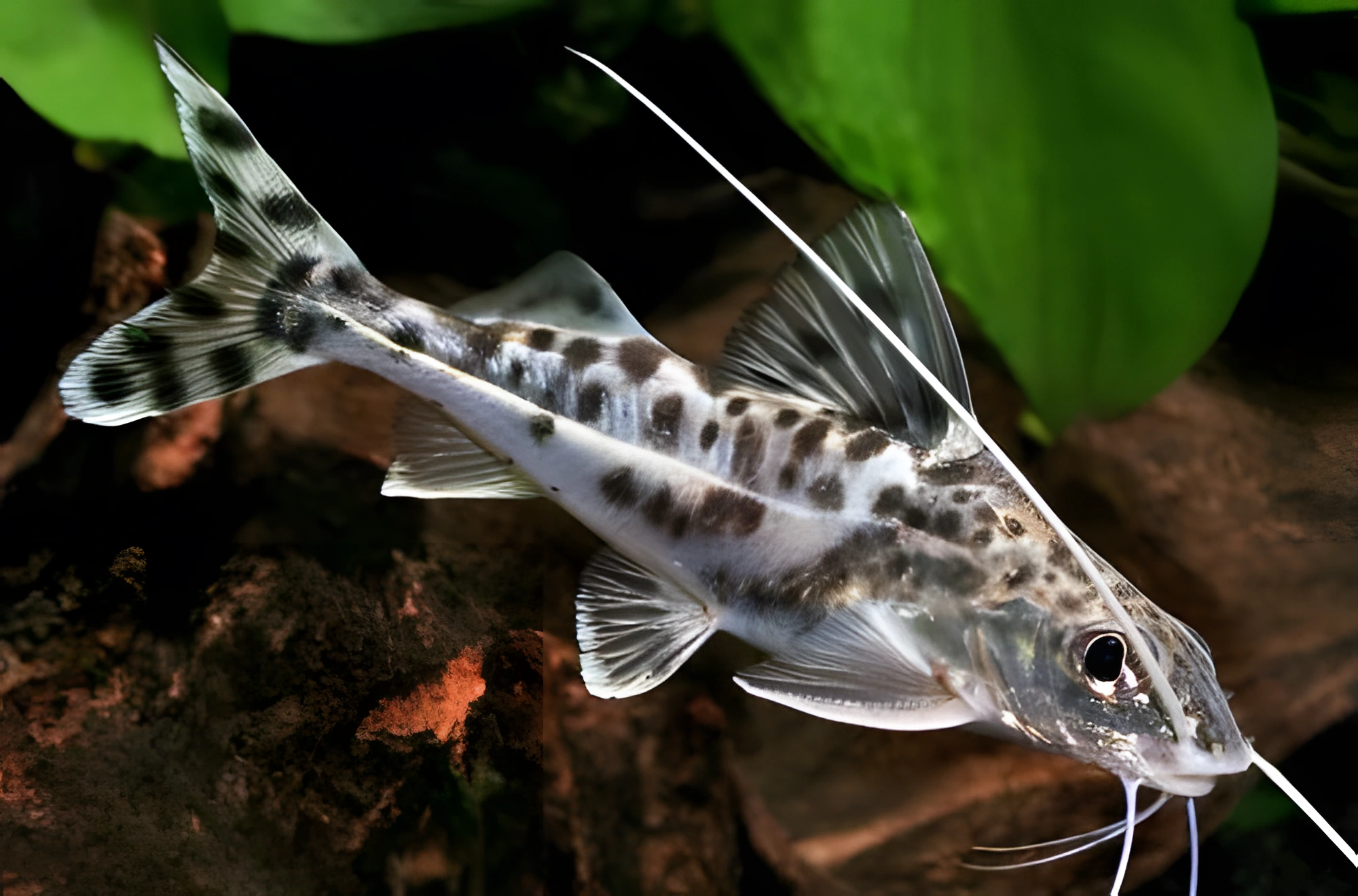
Pimelodus pictus, known as the Ornate Pimelodus, Angel Pimelodus, or Pictus Catfish, belongs to the family Pimelodidae. This catfish attracts attention with its unusual and beautiful coloration. It is often positioned as a very peaceful and calm species, but it is important to consider one significant aspect of its behavior: it is a predator that will not hesitate to swallow any fish that can fit into its mouth.
- Required aquarium volume
- 240 L
- Size in aquarium
- 12 cm
- Temperature
- 22 – 25 °C
- Temperament
- Semi-peaceful (including aggression during spawning / intraspecific conflicts)
Parameters
Water pHSlightly acidic (5.8) – Neutral (6.8)
Water dHVery soft (1) – Hard (15)
Water salinityno salt (freshwater)
Size in aquarium12 cm
Lifespan8 years
TemperamentSemi-peaceful (including aggression during spawning / intraspecific conflicts)
Toward small fishnot a predator
Required aquarium volume240 L
Lightingdimmed
Substratesandy (regular, light)
Water flowmoderate
FeedingPlant-based (algae, vegetables)
CareBoth solitary and in group (flexible)
Description
Adult specimens of this catfish can reach a length of about 12 cm. Their body has a silvery hue, adorned with contrasting black spots that extend onto the fins and tail. One of their characteristic features is very long barbels, which can be up to three-quarters of the fish's total length. Sexual dimorphism in the species is weakly expressed, making external differentiation between males and females quite difficult.
Habitat
Its natural habitat is in the equatorial part of South America, with the greatest distribution in modern-day Colombia. It prefers numerous small rivers with sandy or silty bottoms, and is also found in the main channels of large rivers such as the Vaupés, Querari, Isana, and others.
Behavior and Compatibility
This is a rather peaceful and calm species, but it should not be forgotten that the Pictus Catfish is a carnivorous predator. Given the opportunity, it will readily eat small fish such as neon tetras, guppies, and others, so cohabitation is only possible with species of similar size. The Ornate Pimelodus feels comfortable both alone and in a group; intraspecific conflicts are not observed among them.
Care and Maintenance
For comfortable keeping of a single fish, the minimum aquarium volume should be from 240 liters. For decor, it is recommended to use a sandy substrate, supplemented with several smooth boulders and various snags, which will serve as shelters for the catfish. Live plants are not mandatory, but clusters of floating vegetation will be very useful as they create additional shading in the aquarium. Pimelodus prefer subdued lighting and will spend more time in hiding under bright light. To recreate water conditions as close as possible to their natural habitat, in addition to maintaining the necessary hydrochemical stability of the water, a moderate horizontal current should be provided. The filtration system usually handles this task well, but in very large tanks, additional equipment may be required to create artificial current. Aquarium maintenance is standard: regular cleaning of the substrate from organic deposits and weekly water changes of 20–25% of the volume with fresh water. It is important to remember that contaminated substrate with stagnant water can lead to problems with the fish's barbels, increasing the risk of infection.
Diet
In the wild, the diet of the Ornate Pimelodus includes aquatic insects and their larvae, small worms, crustaceans, and small fish. Despite their predatory feeding habits, these fish are quite unpretentious in aquarium conditions and readily accept various types of food: dry, frozen, and live, provided they sink. It is important to note that the Ornate Pimelodus does not control its satiety and will continue to eat as long as there is food. To avoid overeating and associated digestive problems, it is recommended to feed the fish no more than once a day, offering an amount of food they can consume within 5 minutes.
Breeding and Reproduction
Breeding this species of catfish in home aquariums is associated with significant difficulties and is almost impossible in an artificial aquarium environment.
Diseases
The main cause of most diseases is unsuitable living conditions and poor-quality food. If you notice the first symptoms, you should immediately check the water parameters and ensure there are no high concentrations of dangerous substances (ammonia, nitrites, nitrates, etc.). The parameters must be brought back to normal, and only then can treatment measures begin. Detailed information on symptoms and treatment methods is provided in the "Aquarium Fish Diseases" section.
How to choose
When purchasing, pay attention to the fish's activity and the condition of its skin. A healthy Ornate Pimelodus should be active, without visible damage, ulcers, or film on the body and fins. Pay special attention to the condition of the long barbels: they should be intact, without signs of splitting or necrosis, as damage to these organs often indicates poor water quality in the store.
- Avoid individuals with clamped fins or signs of emaciation
- Check for the absence of spots or white film, characteristic of fungal diseases
- Keep in mind that this species has sharp spines in its fins, so use thick bags for transport to avoid punctures
When inspecting in the store, it is important to remember that this is a predatory species. If the fish appear sluggish or are kept in severely crowded conditions, the risk of infectious diseases significantly increases. Sharp spines on the pectoral and dorsal fins pose a danger during capture, so it is best to use a special container or a thick net to move the fish, to avoid injuring the catfish and damaging the net.
Frequently asked questions
The essentials: size, tank volume, water parameters and care
How big does Ornate Pimelodus get?
An adult reaches 12 cm in length. Plan the tank around the maximum size: the fish quickly outgrows a cramped setup.
What size aquarium does Ornate Pimelodus need?
The minimum recommended volume is 240 L. A smaller tank speeds up nitrate build-up and raises stress levels.
What water parameters does Ornate Pimelodus need?
Temperature 22–25 °C, pH 5.8–6.8, hardness 1–15 dGH. Stability matters more than exact values: sudden swings are harder on the fish than a small deviation from the ideal.
How long does Ornate Pimelodus live?
Around 8 years when kept properly. Lifespan depends directly on tank volume, water quality and a varied diet.
Is Ornate Pimelodus aggressive?
Temperament: semi-peaceful (including aggression during spawning / intraspecific conflicts). Keep this in mind when choosing tank mates.
How many Ornate Pimelodus should be kept together?
Recommended setup: both solitary and in group (flexible). Ignoring this is a common cause of stress and disease.
What does Ornate Pimelodus eat?
Diet type: plant-based (algae, vegetables). Feed small portions that are finished within a couple of minutes — overfeeding does more harm than underfeeding.
What is the scientific name of Ornate Pimelodus?
The scientific name of the species is Pimelodus pictus, family Pimelodidae (Long-whiskered Catfishes). It also appears in the literature as: Pimelodella picta.