Temperature20 – 24 °C
Natural range
- Paraná River Basin
- São Francisco River Basin
- Brazil area
- Paraguay area
CatfishConservation status: Least concern LC
Other scientific names: Pimelodus clarias, Silurus lima
Pimelodus maculatus, or the spotted pimelodus, belongs to the family Pimelodidae. This catfish species is native to the waters of South America; specifically, its natural range is limited to the Paraná and São Francisco river basins in Brazil. It most often inhabits shallow rivers and floodplain lakes, but is also found in the main river channels.
- Required aquarium volume
- 350 L
- Size in aquarium
- 15 – 18 cm
- Temperature
- 20 – 24 °C
- Temperament
- Peaceful (regular)
Parameters
Water pHNeutral (6.8) – Slightly alkaline (7.8)
Water dHSoft (5) – Very hard (20)
Water salinityno salt (freshwater)
Size in aquarium15 – 18 cm
Lifespan10 years
TemperamentPeaceful (regular)
Toward small fishnot a predator
Required aquarium volume350 L
Lightingdimmed
Substratesandy (regular, light)
Water flowmoderate
FeedingSinking (any)
CareBoth solitary and in group (flexible)
Description
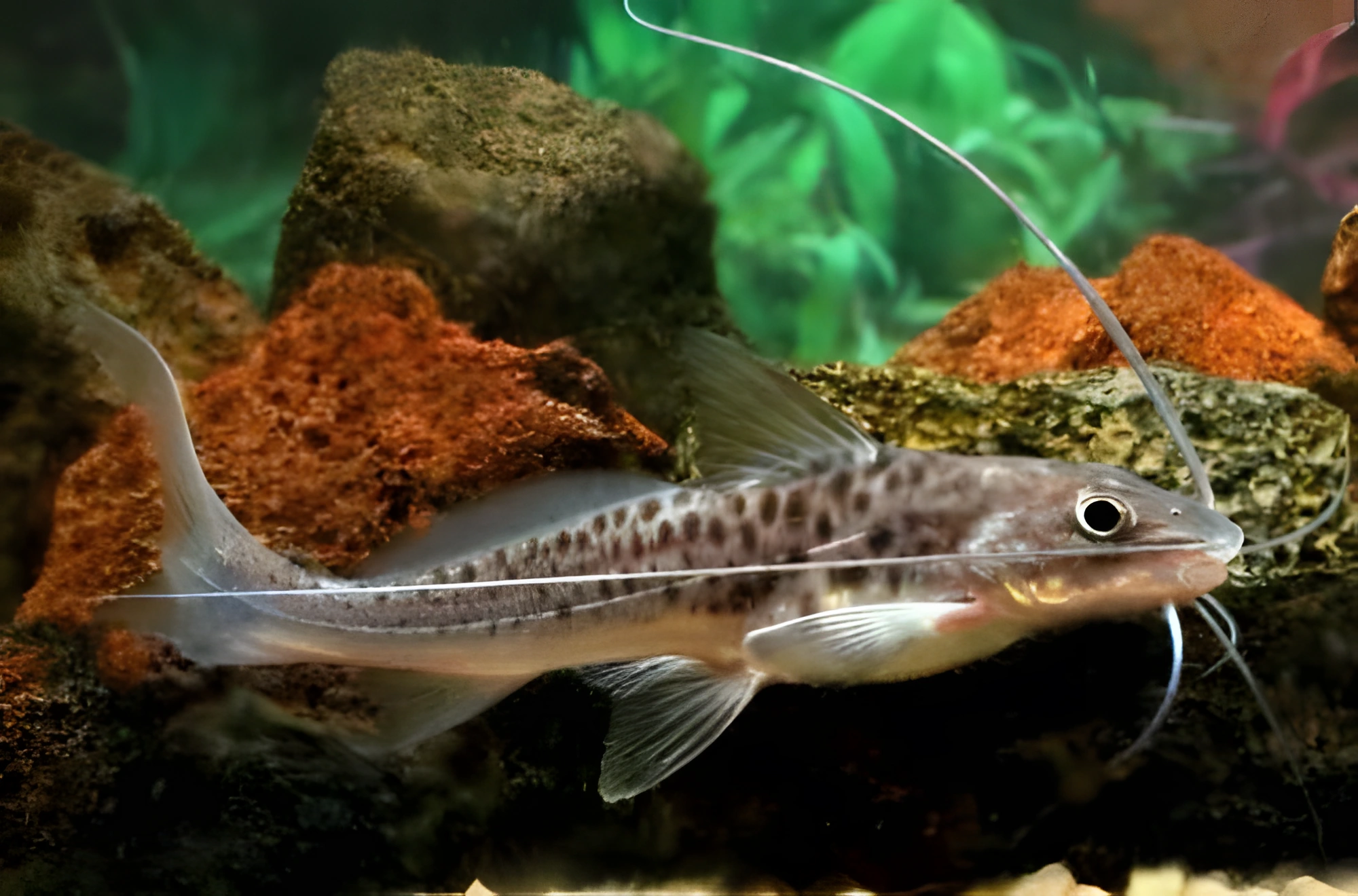
Adults typically reach a length of 15–18 cm. Under optimal conditions, they can grow significantly larger; the largest officially recorded size for a spotted pimelodus was 51 cm with a weight of 2.4 kg. The species name accurately reflects its characteristic coloration: a light silvery or light gray body adorned with rows of large, regular, rounded spots. Caution should be exercised when handling these catfish, for example, during aquarium maintenance or capture. The first rays of the pectoral and dorsal fins are sharp spines capable of causing injury. The mucus covering the fish's body contains toxins that enter the wound upon puncture. For this reason, a sting from such a spine is quite painful, comparable to a bee or wasp sting, causing acute pain, swelling, and a throbbing sensation. Visually, the spotted pimelodus is similar to a closely related species – the marbled pimelodus, however, the latter is distinguished by its smaller size and less regular, unevenly shaped spots on its body.
Habitat
The species is widespread in South America, primarily in the Paraná and São Francisco river basins in Brazil, Paraguay, and Argentina [fishbase.org]. In nature, it inhabits waters with slow to moderate currents, including rivers and ponds [fishbase.org]. It prefers areas with abundant submerged structures, snags, and dense vegetation, where it finds shelter during the day [aqua-fish.net].
Behavior and Compatibility
This fish is distinguished by its peaceful and active nature, coexisting well with most species of comparable size. It is important to note that any smaller fish capable of fitting into the mouth of a spotted pimelodus will be eaten. It can also be a source of disturbance for slower aquarium inhabitants. This catfish can be kept alone or in a group, with group keeping being preferable, as they live in small shoals in their natural habitat. It coexists excellently with rainbowfish, large cyprinids, armored catfishes, and other species.
Care and Maintenance
For a group of 3–4 catfish, an aquarium of 350–400 liters will be optimal. Dim lighting is preferred; in bright light, these catfish will seek shelter. When decorating, it is advisable to use a soft sandy substrate, supplemented with snags, branches, and fallen tree leaves. Plants should be selected from hardy and undemanding species, such as Anubias or Java fern. For successful long-term keeping of the spotted pimelodus, it is extremely important to maintain water purity and stability of pH and dGH parameters within the permissible range. These catfish are sensitive to the accumulation of organic waste, so regular aquarium maintenance and uninterrupted filtration are essential conditions.
Diet
In their natural environment, their diet consists mainly of aquatic invertebrates. In a home aquarium, they readily accept both dry sinking foods (granules, flakes) and fresh or frozen products, such as bloodworms, earthworms, or pieces of shrimp and mussel meat. Occasionally, the catfish may eat small fish or fry. It should be remembered that their satiety instinct is poorly developed, so they should be fed in moderation to avoid overfeeding.
Breeding and Reproduction
Currently, reliable information on the successful breeding of this species in a home aquarium is unavailable. In their natural habitat, these fish are egg-layers, and reproduction occurs through spawning with external fertilization of the eggs.
Diseases
No specific species-specific diseases have been recorded, however, the fish is sensitive to water quality and sudden changes in its parameters [aqua-fish.net]. Like other members of the family, it can be susceptible to typical bacterial and parasitic infections if husbandry conditions are violated, such as the accumulation of organic waste or insufficient filtration. Prevention includes maintaining a stable environment, regular water changes, and providing quality nutrition without overfeeding.
How to choose
When purchasing, choose individuals with clean skin without damage, ulcers, or white film. A healthy fish should show activity during twilight hours and have a normal physique without signs of severe emaciation or unnatural abdominal bloating. It should be noted that the species is a predator, so it is not recommended to acquire it for keeping with small fish species that may become food [aqua-fish.net].
Frequently asked questions
The essentials: size, tank volume, water parameters and care
How big does Spotted Pimelodus get?
An adult reaches 15–18 cm in length. Plan the tank around the maximum size: the fish quickly outgrows a cramped setup.
What size aquarium does Spotted Pimelodus need?
The minimum recommended volume is 350 L. A smaller tank speeds up nitrate build-up and raises stress levels.
What water parameters does Spotted Pimelodus need?
Temperature 20–24 °C, pH 6.8–7.8, hardness 5–20 dGH. Stability matters more than exact values: sudden swings are harder on the fish than a small deviation from the ideal.
How long does Spotted Pimelodus live?
Around 10 years when kept properly. Lifespan depends directly on tank volume, water quality and a varied diet.
Is Spotted Pimelodus aggressive?
Temperament: peaceful (regular). Keep this in mind when choosing tank mates.
How many Spotted Pimelodus should be kept together?
Recommended setup: both solitary and in group (flexible). Ignoring this is a common cause of stress and disease.
What does Spotted Pimelodus eat?
Diet type: sinking (any). Feed small portions that are finished within a couple of minutes — overfeeding does more harm than underfeeding.
What is the scientific name of Spotted Pimelodus?
The scientific name of the species is Pimelodus maculatus, family Pimelodidae (Long-whiskered Catfishes). It also appears in the literature as: Pimelodus clarias, Silurus lima.