Temperature22 – 30 °C
Natural range
- Sumatra area
- Indonesia area
Labyrinth fishConservation status: Vulnerable VU
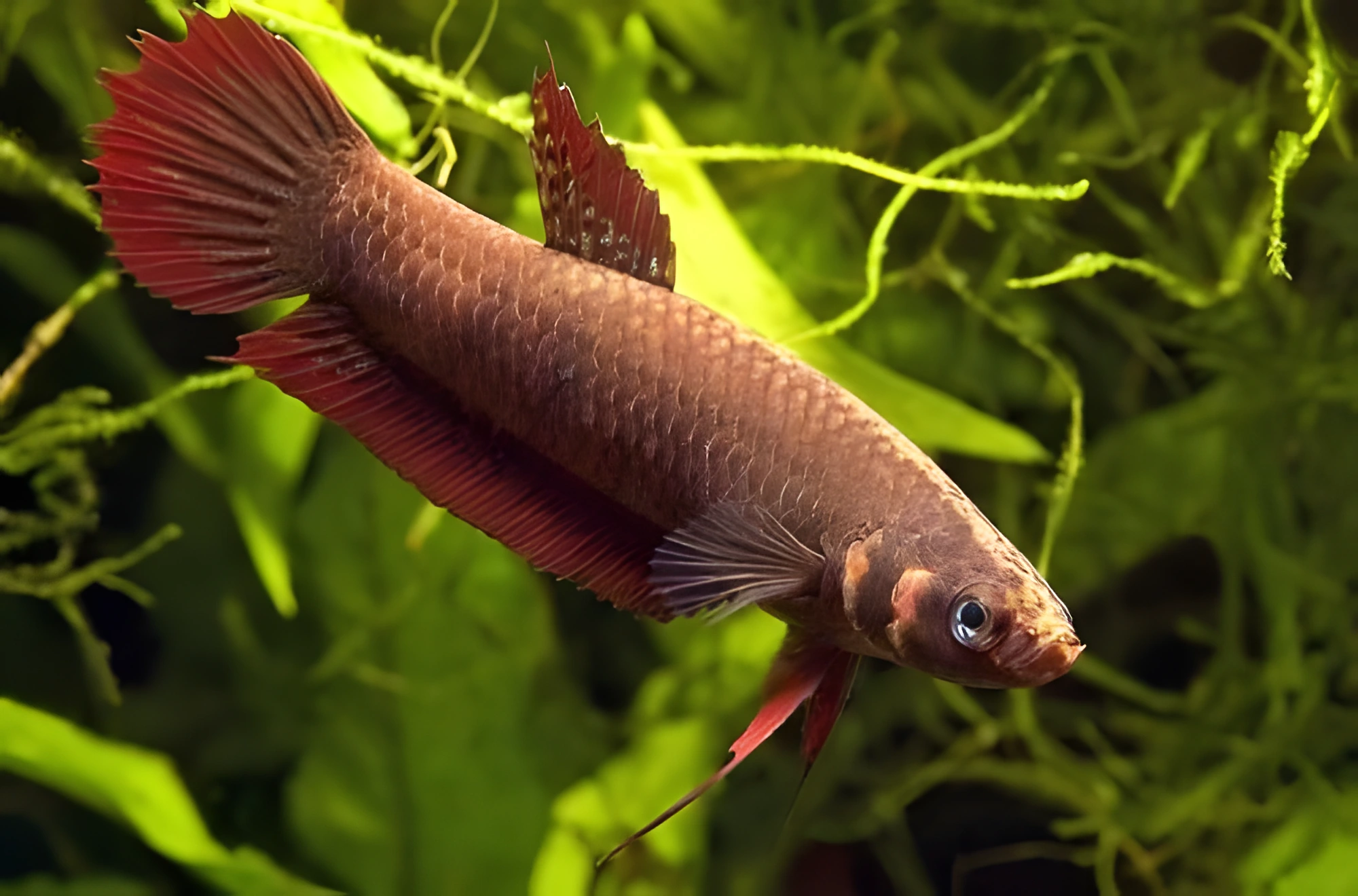
Betta coccina, known as the Wine Red Betta, belongs to the family Osphronemidae. This beautiful fighting fish is distinguished by its rich crimson hue. If the necessary keeping conditions are met, it is quite easy to care for and is well-suited for aquarists taking their first steps.
- Required aquarium volume
- 40 L
- Size in aquarium
- 6 cm
- Temperature
- 22 – 30 °C
- Temperament
- Semi-peaceful (including aggression during spawning / intraspecific conflicts)
Parameters
Water pHAcidic (4) – Slightly acidic (6)
Water dHVery soft (1) – Medium hardness (8)
Water salinityno salt (freshwater)
Size in aquarium6 cm
Lifespan4 years
TemperamentSemi-peaceful (including aggression during spawning / intraspecific conflicts)
Toward small fishnot a predator
Required aquarium volume40 L
Lightingdimmed
Substrateany (no restrictions)
Water flownone or stagnant (no flow)
FeedingAny (universal)
CarePair (male/female)
Description
Adult specimens of this fish reach approximately 6 cm in length. Their coloration is a rich crimson or wine-red hue, which gave the species its name. Differences between the sexes are not pronounced; males differ from females by having longer and wider fins. How to determine the age of Bettas (Siamese Fighting Fish)
Habitat
Its natural habitat is on the island of Sumatra in Southeast Asia, where the fish inhabits peat swamps and adjacent streams. These bodies of water are located under a dense canopy of tropical forest, so direct sunlight rarely reaches the water's surface. Due to the abundance of organic matter, such as fallen leaves, branches, and tree fruits, the water acquires a rich brown color, and its pH in natural conditions often fluctuates around 3.0-4.0, indicating very high acidity. The water level in these areas is unstable and can significantly decrease, turning swamps into small puddles. Nevertheless, the fish are able to survive in such conditions for several weeks until the rainy season arrives.
Behavior and Compatibility
Betta fish are known for their combative nature, especially males, who often engage in fierce battles for territory and females. Therefore, only one male should be kept in a single aquarium. Females and/or other peaceful fish species of similar size and temperament can accompany him. Despite its reputation, Betta unimaculata is quite shy (unless it's a rival) and can easily be frightened by larger or overly active neighbors.
Care and Maintenance
For one or two individuals, a tank of 40 liters or more will be required. Large snags or other objects can be used in the aquarium decor: these can be decorative castles, sunken ships, or ceramic pots lying on their side. A sandy substrate is recommended, preferably covered with a layer of fallen leaves. For example, oak leaves are suitable; they should be pre-dried and then soaked so that they sink, otherwise, they will float on the surface. Shade-loving plants, including floating ones, can be placed everywhere. Betta unimaculata has been successfully bred in aquaculture for a long time and is not caught from the wild for sale. Therefore, the decor described above is desirable but not strictly mandatory. The fish will feel perfectly fine even in an almost empty tank, provided that requirements such as subdued lighting, the absence of strong internal currents, and the maintenance of appropriate water parameters are met. Water conditions, in turn, should have acidic pH values with low carbonate hardness (dGH). It is advisable to use a filter with a peat filler, capable of acidifying the water during its operation. The leaves used in the decoration also contribute to creating conditions characteristic of the natural habitat: they color the water light brown and saturate it with tannins as they decompose. It is important to provide a lid for the aquarium: under it, a warm, humid air layer forms above the water surface, which is of great importance for the respiration of labyrinth fish. Aquarium maintenance includes weekly replacement of 10–15% of the water volume with fresh water, regular cleaning of the substrate from organic waste (excrement and uneaten food residues), and periodic replacement of leaves, if they are used.
Diet
In their natural habitat, these fish feed on small insects and their larvae. In aquarium conditions, they readily accept high-quality dry foods, which should be supplemented with live foods such as Artemia, Daphnia, or bloodworms. Alternatively, specialized foods for fighting fish, which include the Wine Betta, can be used; these contain essential vitamins and trace elements to support growth and vibrant coloration. When choosing foods, prioritize products from reputable manufacturers.
Breeding and Reproduction
During the breeding season, males begin to build a bubble nest. It is usually located under broad leaves, among dense floating vegetation, or in cave-like shelters on the bottom used in aquascaping. During construction, the male behaves quite aggressively towards the female, not allowing her to approach the nest until it is ready. Shortly before spawning, the female's coloration becomes paler, and dark horizontal stripes appear on her sides. Spawning itself occurs in the form of peculiar “embraces,” when the fish seem to entwine each other. At the climax, milt and several eggs are released, which are then placed in the nest. This process is repeated several times until all the eggs are laid—there can be about 60 in total. The female then leaves, allowing the male to protect and care for the future offspring. Fry emerge after 24–48 hours and remain in the nest for another 3–4 days; during this time, the male diligently returns any that accidentally fall out or swim away. Once the fry begin to swim freely, the male loses interest in them. Adults do not exhibit cannibalism and usually do not eat their offspring. However, this does not apply to other aquarium inhabitants, so it is advisable to transfer the fry to a separate tank with similar water conditions. Fry should be fed specialized fry food for aquarium fish.
Diseases
One of the main causes of most fish diseases is inadequate living conditions and a low-quality diet. If the first signs of illness are noticed, it is first necessary to check the water parameters to rule out elevated levels of dangerous compounds (ammonia, nitrites, nitrates, and others). If deviations are found, the indicators should be stabilized to normal, and only then should targeted treatment begin. More detailed information on the symptoms of various diseases and methods of their therapy is available in the section "Diseases of Aquarium Fish."
How to choose
When purchasing, choose active individuals with clean fins free of signs of damage, film, or spots. It is important to assess their overall condition: the fish should not be excessively emaciated, and its coloration should be rich and uniform. Avoid specimens that constantly hide or appear lethargic, as this may indicate stress or hidden diseases. Since the species is quite sensitive to water parameters, it is recommended to ask the seller about the conditions in which the fish were kept in the store.
Frequently asked questions
The essentials: size, tank volume, water parameters and care
How big does Wine Red Betta get?
An adult reaches 6 cm in length. Plan the tank around the maximum size: the fish quickly outgrows a cramped setup.
What size aquarium does Wine Red Betta need?
The minimum recommended volume is 40 L. A smaller tank speeds up nitrate build-up and raises stress levels.
What water parameters does Wine Red Betta need?
Temperature 22–30 °C, pH 4–6, hardness 1–8 dGH. Stability matters more than exact values: sudden swings are harder on the fish than a small deviation from the ideal.
How long does Wine Red Betta live?
Around 4 years when kept properly. Lifespan depends directly on tank volume, water quality and a varied diet.
Is Wine Red Betta aggressive?
Temperament: semi-peaceful (including aggression during spawning / intraspecific conflicts). Keep this in mind when choosing tank mates.
How many Wine Red Betta should be kept together?
Recommended setup: pair (male/female). Ignoring this is a common cause of stress and disease.
What does Wine Red Betta eat?
Diet type: any (universal). Feed small portions that are finished within a couple of minutes — overfeeding does more harm than underfeeding.
What is the scientific name of Wine Red Betta?
The scientific name of the species is Betta coccina, family Labyrinth fish (Osphronemidae).