Temperature23 – 27 °C
Natural range
- Mekong River Basin
- Cambodia area
- Vietnam area
- Laos area
Labyrinth fishConservation status: Least concern LC
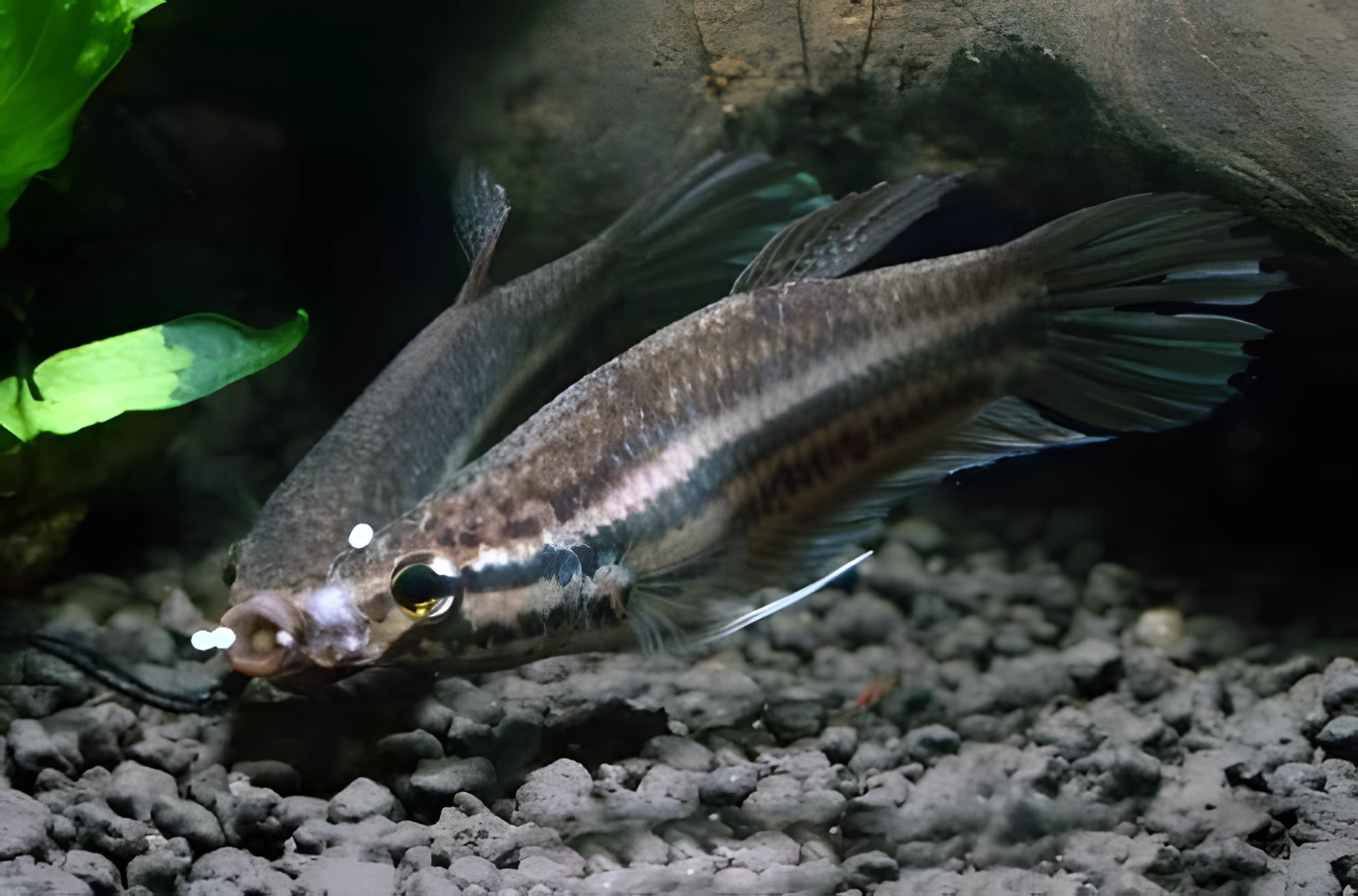
Betta prima, also known as Betta prima, is a member of the family Osphronemidae. This peaceful and calm fish coexists well with other similarly sized species. Its care and breeding do not present any particular difficulties. Perhaps its only drawback is its rather modest coloration.
- Required aquarium volume
- 50 L
- Size in aquarium
- 4 – 5 cm
- Temperature
- 23 – 27 °C
- Temperament
- Peaceful (regular)
Parameters
Water pHAcidic (4) – Neutral (7)
Water dHVery soft (1) – Medium hardness (10)
Water salinityno salt (freshwater)
Size in aquarium4 – 5 cm
Lifespan3 years
TemperamentPeaceful (regular)
Toward small fishnot a predator
Required aquarium volume50 L
Lightingdimmed
Substrateany, but dark
Water flownone or stagnant (no flow)
FeedingAny (universal)
CareMixed (solitary / pair / group)
Description
Adult specimens of this fish reach a length of 4 to 5 cm. Males are generally larger than females and have a broader head shape. Their coloration is predominantly gray, with a barely perceptible turquoise sheen, mainly noticeable on the fins and tail. Females also have a characteristic pattern: dark horizontal stripes running from head to tail.
Habitat
Its origin is linked to Southeast Asia, where its natural range extends across vast territories of the Mekong basin. It can be found in the lands of modern Cambodia, Vietnam, as well as southeastern Thailand and Laos. Betta prima primarily inhabits forest swamps and streams, not penetrating the main river channels. The typical biotope is a slow-flowing body of water, the bottom of which is covered with stones, boulders, and plant material: fallen leaves, twigs, and snags. Dense tree canopies create dim light, so the aquatic flora is mainly represented by mosses and ferns. The water here has a rich dark brown hue due to the high concentration of humic acids and other products of organic matter decomposition.
Behavior and Compatibility
These fish belong to the fighting fish group, which is usually associated with certain behavioral characteristics, but in this case, Betta prima exhibits a peaceful disposition both towards other species and among its own kind. Although there may be competition between females for hierarchical position, this rivalry usually manifests as peaceful displays. It is perfectly compatible with non-aggressive fish of comparable size.
Care and Maintenance
For a single pair or a small group of Betta prima, an optimal aquarium volume is 50 liters or more. The choice of decor is not critical and is at the discretion of the aquarist or depends on the needs of other inhabitants. Nevertheless, it is recommended to consider several important points: providing subdued lighting and creating a sufficient number of shelters. For example, shading can be easily arranged with floating plants, and driftwood and other decorative elements will serve as reliable hiding places. The success of long-term keeping of Betta prima largely depends on maintaining stable water parameters within acceptable temperature and hydrochemical ranges. High water quality is ensured by regular aquarium maintenance, including partial water changes and waste removal, as well as the uninterrupted operation of equipment, especially the filtration system.
Diet
In the wild, the fish's diet consists of insects and various small invertebrates, as well as zooplankton. However, fish acclimated to an artificial environment have successfully adapted to other types of food. Daily feeding can include dry, frozen, and live foods commonly used in aquariums.
Breeding and Reproduction
Breeding does not present any particular difficulties, provided that the fish are kept in suitable conditions and receive a complete diet. During the breeding period, the male and female form a pair. After prolonged courtship, spawning occurs, accompanied by a peculiar "embracing dance," when the fish press closely against each other, intertwining their bodies. Unlike many other species, they show parental care. Betta prima have developed a unique strategy for protecting their eggs: they do not lay them on the substrate or among plants. During spawning, the male collects the fertilized eggs in his mouth, where they remain until the fry hatch, which takes 7 to 12 days. The fry can stay with their parents, and it has been observed that they grow faster under such conditions. Young fish should be fed specialized fry food, and if available, paramecium, with a subsequent transition to Artemia nauplii.
Diseases
Most health problems in fish often arise from unsuitable keeping conditions. Maintaining a stable and comfortable habitat is a key factor for successful keeping. If symptoms of illness appear, the first step is to check the water quality. If deviations are found, it is important to take immediate measures to eliminate them. If the symptoms do not disappear or worsen, medicinal treatment may be required. More detailed information on symptoms and treatment methods can be found in the "Diseases of Aquarium Fish" section.
How to choose
When choosing Betta prima, preference should be given to individuals with clean fins, free from signs of erosion, white film, or ulcers. A healthy fish should be active, attentive to its surroundings, and have clear eyes without cloudiness. Avoid purchasing fish that appear emaciated, have sunken bellies, or constantly stay at the water's surface, unless this is caused by stress from relocation.
- Inspect the scales for any damage or parasites.
- Ensure there are no signs of apathy or unnatural stillness at the bottom.
- Ask the seller about the keeping conditions, as this species is sensitive to sudden changes in water parameters.
Frequently asked questions
The essentials: size, tank volume, water parameters and care
How big does Betta prima get?
An adult reaches 4–5 cm in length. Plan the tank around the maximum size: the fish quickly outgrows a cramped setup.
What size aquarium does Betta prima need?
The minimum recommended volume is 50 L. A smaller tank speeds up nitrate build-up and raises stress levels.
What water parameters does Betta prima need?
Temperature 23–27 °C, pH 4–7, hardness 1–10 dGH. Stability matters more than exact values: sudden swings are harder on the fish than a small deviation from the ideal.
How long does Betta prima live?
Around 3 years when kept properly. Lifespan depends directly on tank volume, water quality and a varied diet.
Is Betta prima aggressive?
Temperament: peaceful (regular). Keep this in mind when choosing tank mates.
How many Betta prima should be kept together?
Recommended setup: mixed (solitary / pair / group). Ignoring this is a common cause of stress and disease.
What does Betta prima eat?
Diet type: any (universal). Feed small portions that are finished within a couple of minutes — overfeeding does more harm than underfeeding.
What is the scientific name of Betta prima?
The scientific name of the species is Betta prima, family Osphronemidae.