Temperature22 – 27 °C
Natural range
- Sumatra area
- Jambi Province area
Labyrinth fishConservation status: Least concern LC
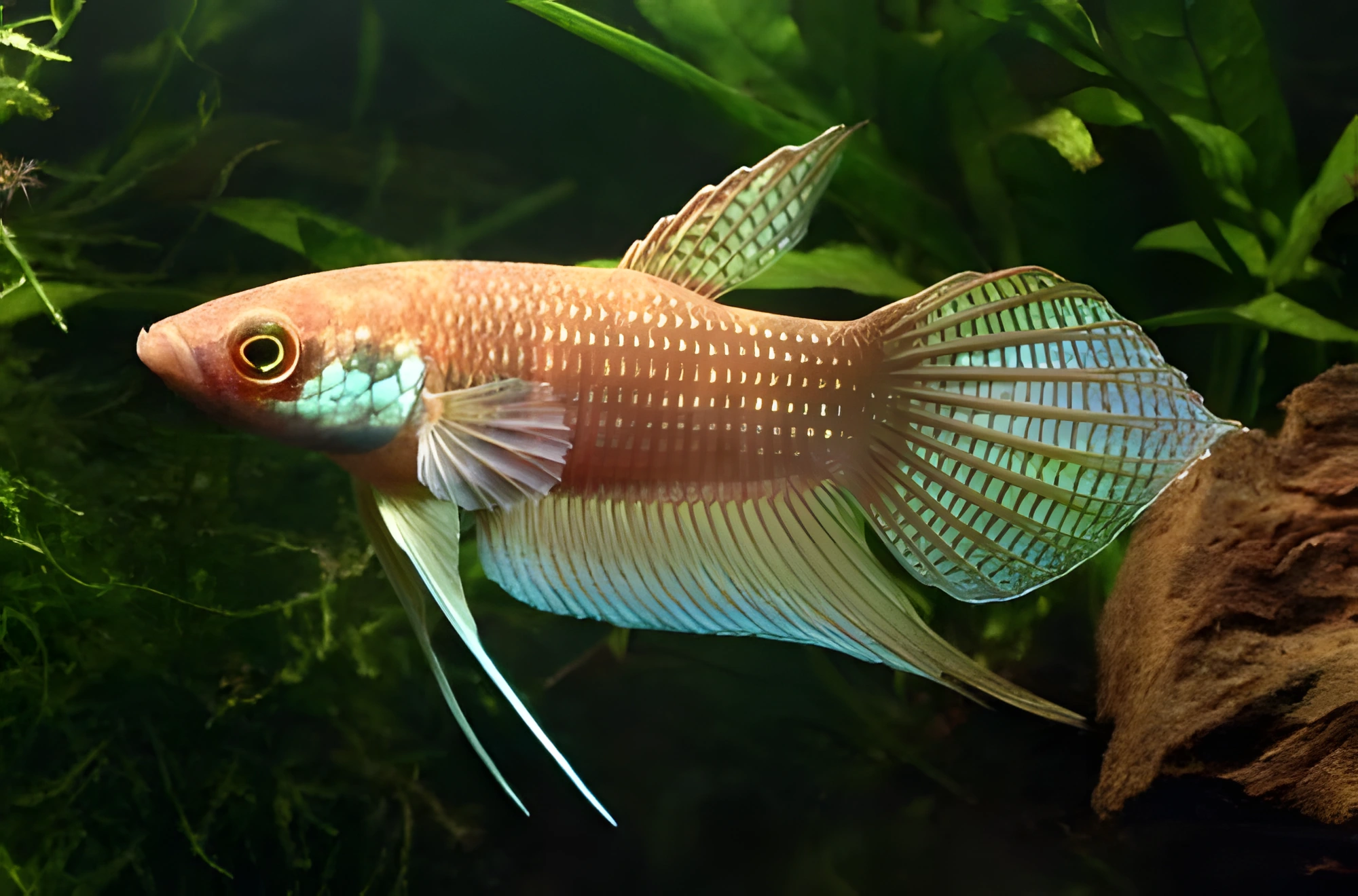
The Masked Betta, also known as Betta raja, belongs to the family Osphronemidae. Although this species is part of the fighting fish group, it is characterized by a peaceful and calm disposition, showing no aggression. It is undemanding and quite easy to keep, but its modest coloration means it is not often encountered in amateur aquariums.
- Required aquarium volume
- 80 L
- Size in aquarium
- 6 – 7 cm
- Temperature
- 22 – 27 °C
- Temperament
- Peaceful (regular)
Parameters
Water pHAcidic (4) – Neutral (7)
Water dHVery soft (0) – Medium hardness (10)
Water salinityno salt (freshwater)
Size in aquarium6 – 7 cm
Lifespan3 years
TemperamentPeaceful (regular)
Toward small fishnot a predator
Required aquarium volume80 L
Lightingdimmed
Substrateany, but dark
Water flownone or stagnant (no flow)
FeedingAny (universal)
CareMixed (solitary / pair / group)
Description
Adults reach a length of 6–7 cm. Males and females are difficult to distinguish externally, but males have elongated fin tips, and their coloration more often features turquoise hues. Overall, the main body color is gray, but under certain lighting, it can acquire a reddish tint.
Habitat
The natural habitats of this fish are located in Southeast Asia, on the Indonesian island of Sumatra. The range covers the central provinces of Jambi and Riau, where the Masked Betta inhabits forest rivers, small streams, backwaters, and peat swamps. The typical environment is a shallow body of water located in a tropical forest. Due to the dense tree foliage, light barely penetrates the water surface, so even during the day, it is dimly lit. The bottom is usually covered with a thick layer of fallen leaves, branches, and other plant debris. The decomposition of organic material releases a large amount of tannins, giving the water a rich, dark hue. Vegetation is mainly represented by riparian species such as mosses and ferns.
Behavior and Compatibility
Males compete for the attention of females, but, unlike other fighting fish, clashes between them are extremely rare. Nevertheless, for a confined space, it is advisable to form a community of one male and several females, avoiding the addition of other potential rivals. Towards other species, these fish are peaceful and get along well with non-aggressive tankmates of comparable size. However, overly active fish can cause the Betta to stay on the periphery of the aquarium.
Care and Maintenance
For keeping two or three Masked Bettas, the optimal aquarium volume starts from 70–80 liters. Over several generations, fish living in artificial conditions usually adapt to environments somewhat different from those where their wild relatives live. For example, many breeders and pet stores keep these fish in minimalistic tanks with almost nothing but equipment. Of course, such an arrangement (or rather, its absence) can hardly be called ideal. Therefore, if possible, it is desirable to recreate conditions close to the natural habitat. Key decorative elements will be dark sandy substrate, a layer of fallen leaves, driftwood, and shade-loving plants. The presence of leaves is not a strict requirement, but their addition is welcome, as they not only decorate the aquarium but also affect the water's chemical composition. More detailed information on this topic can be found in the article “Which tree leaves can be used in an aquarium.” Successful and long-term keeping of the Masked Betta requires maintaining stable water parameters within acceptable temperature and hydrochemical ranges. For this, the aquarium must be equipped with everything necessary and regularly maintained, including weekly partial water changes and timely removal of organic waste such as uneaten food and excrement. The filtration system is usually the main source of water movement. Since these fish prefer stagnant, swampy waters, it is important to choose a filter that will not create excessive flow. For small aquariums with few inhabitants, a simple air-driven sponge filter will be excellent.
Diet
This species is undemanding in its diet and readily accepts most traditional aquarium fish foods. Live or frozen foods such as Artemia, Daphnia, bloodworms, mosquito larvae, and other small invertebrates, as well as Drosophila flies, will be a good addition to dry flakes and pellets.
Breeding and Reproduction
A species-specific aquarium, free from other species that could negatively affect the spawning and fry incubation processes, is considered the best environment for breeding. With the onset of the breeding season, the dominant male, if there are several, begins courtship. Spawning proceeds in the form of peculiar “embraces,” where the fish wrap around each other. The male collects the fertilized eggs in his mouth, where they remain throughout the incubation period, which lasts 9–16 days. This unique mechanism of offspring protection, formed during evolution, ensures high survival rates for the young. The hatched fry can safely stay near their parents, as instances of them being eaten are extremely rare.
Diseases
Most health problems in fish often arise from unsuitable keeping conditions. Maintaining a stable and comfortable habitat is a key factor for successful keeping. If symptoms of illness appear, the first step is to check the water quality. If deviations are found, it is important to take immediate measures to eliminate them. If the symptoms do not disappear or worsen, medicinal treatment may be required. More detailed information on symptoms and treatment methods can be found in the "Diseases of Aquarium Fish" section.
How to choose
When choosing Betta raja, preference should be given to individuals with clean, undamaged fins and no signs of film or sores on the body. A healthy fish should be curious, active, and show no signs of emaciation or sunken belly. Since the species is rarely available for sale and is often confused with close relatives, it is important to ensure correct identification, paying attention to the characteristic long filamentous pelvic fins of males and the masked coloration of the head. Avoid purchasing fish that appear lethargic, stay at the water surface, or show signs of scale damage, as this may indicate chronic stress or hidden infections.
Frequently asked questions
The essentials: size, tank volume, water parameters and care
How big does Masked Betta get?
An adult reaches 6–7 cm in length. Plan the tank around the maximum size: the fish quickly outgrows a cramped setup.
What size aquarium does Masked Betta need?
The minimum recommended volume is 80 L. A smaller tank speeds up nitrate build-up and raises stress levels.
What water parameters does Masked Betta need?
Temperature 22–27 °C, pH 4–7, hardness 0–10 dGH. Stability matters more than exact values: sudden swings are harder on the fish than a small deviation from the ideal.
How long does Masked Betta live?
Around 3 years when kept properly. Lifespan depends directly on tank volume, water quality and a varied diet.
Is Masked Betta aggressive?
Temperament: peaceful (regular). Keep this in mind when choosing tank mates.
How many Masked Betta should be kept together?
Recommended setup: mixed (solitary / pair / group). Ignoring this is a common cause of stress and disease.
What does Masked Betta eat?
Diet type: any (universal). Feed small portions that are finished within a couple of minutes — overfeeding does more harm than underfeeding.
What is the scientific name of Masked Betta?
The scientific name of the species is Betta raja, family Labyrinth fish (Osphronemidae).