Temperature24 – 28 °C
Natural range
- Sarawak area
- Borneo area
Labyrinth fishConservation status: Vulnerable VU
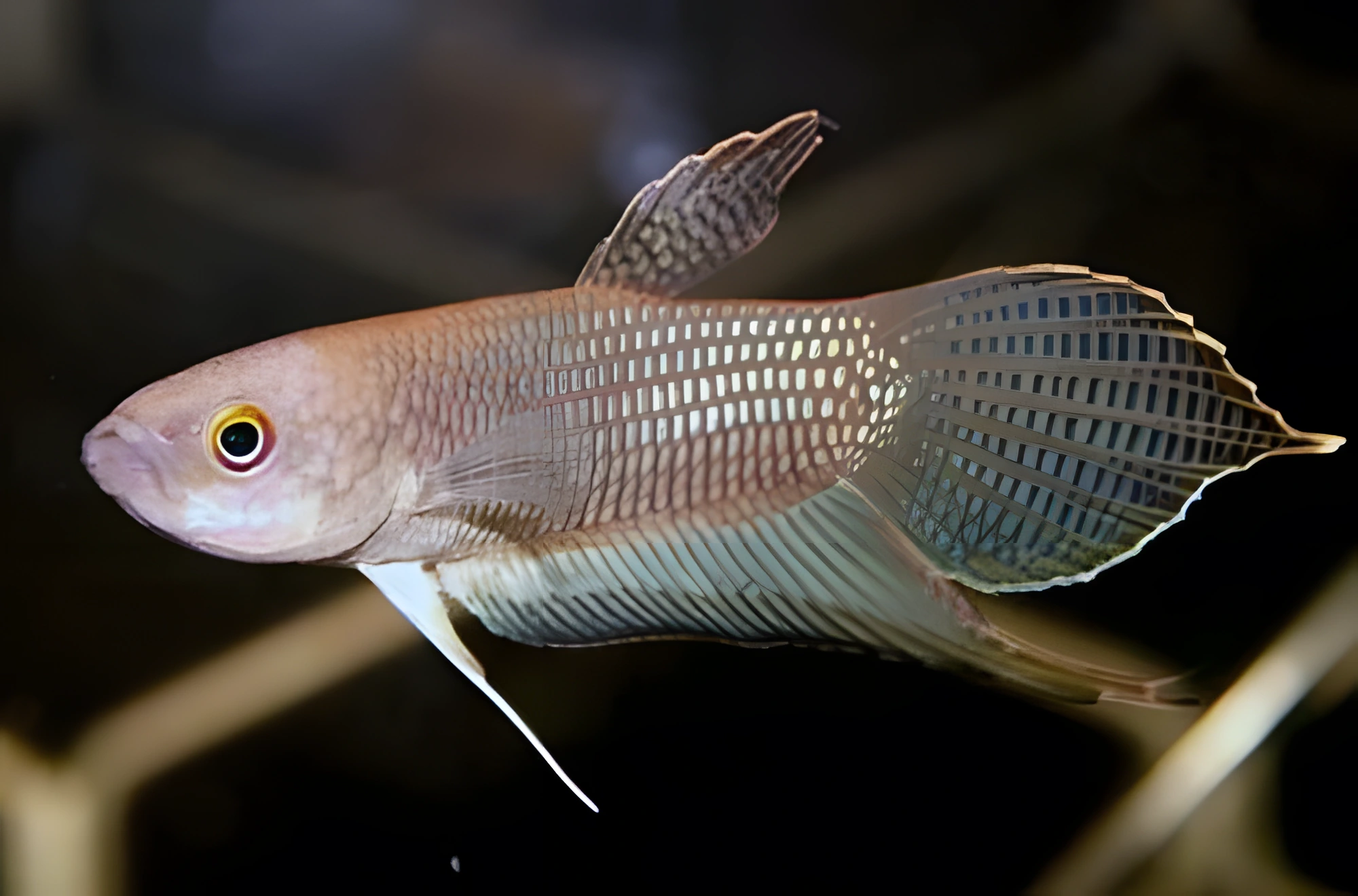
The scientific name Betta ibanorum was given to this fish from the family Osphronemidae in honor of the inhabitants of northwestern Borneo, known as the Ibans. Known as the Iban Betta, it is characterized by its unpretentiousness and ease of keeping, which allows it to be successfully bred at home. This fish coexists well with other species of similar temperament.
- Required aquarium volume
- 80 L
- Size in aquarium
- 7 – 8 cm
- Temperature
- 24 – 28 °C
- Temperament
- Peaceful (regular)
Parameters
Water pHAcidic (4) – Neutral (6.8)
Water dHVery soft (1) – Soft (5)
Water salinityno salt (freshwater)
Size in aquarium7 – 8 cm
Lifespan4 years
TemperamentPeaceful (regular)
Toward small fishnot a predator
Required aquarium volume80 L
Lightingdimmed
Substrateany (no restrictions)
Water flownone or stagnant (no flow)
FeedingAny (universal)
CareMixed (solitary / pair / group)
Description
Adults of this fish typically reach a length of 7 to 8 cm. Males are generally slightly larger than females and have more elongated fin tips. Their body has a beige tint, and their scales and fins shimmer with a turquoise color. This fish outwardly resembles other related species, such as Betta kuehnei. However, there is one distinguishing feature that allows for accurate identification of this species — an orange pigment in the iris of the eye.
Habitat
The origin of this fish traces back to the island of Borneo, specifically to the Malaysian state of Sarawak in Southeast Asia. Despite its relatively compact natural range, it has adapted to various biotopes: from swampy areas with dark, peaty water to crystal-clear flowing streams. One population has even been observed in pools at the tops of waterfalls. All these habitats share several key features: low light levels created by dense tree canopies, an abundance of aquatic vegetation along the banks, and low hydrochemical water parameters.
Behavior and Compatibility
Although this species belongs to the fighting fish group, its character is peaceful. Internal relations among individuals involve males competing for the attention of females, especially during the breeding season, but this does not lead to serious clashes or injuries. This fish coexists well with other non-aggressive and peaceful species of comparable size. Overly active tank mates should be avoided, as they can frighten the timid Iban Betta and force it to stay on the periphery of the aquarium.
Care and Maintenance
For keeping two of these fish, an aquarium with a volume of 70 to 80 liters is optimal. The choice of specific decor is not critical; the main thing is to have enough hiding places. These can be snags, dense thickets of aquatic plants, decorative elements such as sunken ships or castles, or simpler items like ceramic pots or PVC pipe sections. It is desirable to provide subdued light, which can be achieved by using floating plants and allowing them to grow. Dried leaves from certain trees, placed on the bottom, will add additional naturalness to the interior. To prevent the leaves from floating, it is recommended to soak them beforehand. In addition to their decorative function, these leaves release tannins as they decompose, thereby adjusting the water chemistry to mimic the fish's natural habitat. More detailed information is provided in the article “Which tree leaves can be used in an aquarium.” For successful and long-term keeping of the Iban Betta, it is critically important to maintain stable water parameters within acceptable temperature and hydrochemical values. Achieving the desired stability is possible due to the uninterrupted operation of aquarium equipment, especially an efficient filtration system, as well as regular performance of mandatory aquarium care procedures. Since the fish prefers soft, slightly acidic water, water preparation plays a key role in weekly partial water changes.
Diet
As an omnivorous species, this fish readily accepts most popular foods available in dry, frozen, or live forms. An optimal diet can include a combination of flakes and pellets, supplemented with bloodworms, Artemia, or Daphnia. It is important to avoid overfeeding, as Bettas are prone to obesity. It is recommended to offer an amount of food that the fish can consume within 3–5 minutes.
Breeding and Reproduction
Given favorable conditions, spawning is quite feasible. At the beginning of the breeding season, the dominant male and female begin mutual courtship. This is followed by a unique "embracing dance," during which spawning itself occurs. The male collects the fertilized eggs in his mouth, where they remain throughout the incubation period, which lasts 2 to 3 weeks, after which fully formed fry emerge. While the male carries the offspring, hidden in a secluded corner of the aquarium, the female stays nearby to protect him from potential dangers.
Diseases
Most health problems in fish often arise from unsuitable keeping conditions. Maintaining a stable and comfortable habitat is a key factor for successful keeping. If symptoms of illness appear, the first step is to check the water quality. If deviations are found, it is important to take immediate measures to eliminate them. If the symptoms do not disappear or worsen, medicinal treatment may be required. More detailed information on symptoms and treatment methods can be found in the "Diseases of Aquarium Fish" section.
How to choose
When choosing an Iban Betta, caution should be exercised, as the species is rarely available for sale and is often wild-caught. Inspect the fish for intact fins, absence of white film, ulcers, or signs of emaciation. In the store, the fish should be active, curious, and not constantly hiding in corners. Avoid purchasing individuals with sunken bellies or signs of scale damage. Since different populations may require specific water parameters, it is recommended to ask the seller about the origin of the batch and the conditions in which the fish were kept before sale, to minimize stress during adaptation.
Frequently asked questions
The essentials: size, tank volume, water parameters and care
How big does Iban Betta get?
An adult reaches 7–8 cm in length. Plan the tank around the maximum size: the fish quickly outgrows a cramped setup.
What size aquarium does Iban Betta need?
The minimum recommended volume is 80 L. A smaller tank speeds up nitrate build-up and raises stress levels.
What water parameters does Iban Betta need?
Temperature 24–28 °C, pH 4–6.8, hardness 1–5 dGH. Stability matters more than exact values: sudden swings are harder on the fish than a small deviation from the ideal.
How long does Iban Betta live?
Around 4 years when kept properly. Lifespan depends directly on tank volume, water quality and a varied diet.
Is Iban Betta aggressive?
Temperament: peaceful (regular). Keep this in mind when choosing tank mates.
How many Iban Betta should be kept together?
Recommended setup: mixed (solitary / pair / group). Ignoring this is a common cause of stress and disease.
What does Iban Betta eat?
Diet type: any (universal). Feed small portions that are finished within a couple of minutes — overfeeding does more harm than underfeeding.
What is the scientific name of Iban Betta?
The scientific name of the species is Betta ibanorum, family Osphronemidae.