Temperature22 – 27 °C
Natural range
- Borneo area
- Danau Sentarum lakes area
Labyrinth fishConservation status: Vulnerable VU
The Dimidata Betta, also known as Betta dimidiata (scientific name Betta dimidiata), belongs to the family Osphronemidae. The Latin word "dimidiata" in its name translates to "halved," reflecting the modest size of this aquarium inhabitant. Keeping it is relatively easy, but beginners may encounter nuances, especially regarding water preparation. This species is known for its peaceful nature and coexists well with other aquarium inhabitants.
- Required aquarium volume
- 40 L
- Size in aquarium
- 3 – 4 cm
- Temperature
- 22 – 27 °C
- Temperament
- Peaceful (regular)
Parameters
Water pHSlightly acidic (5.2) – Neutral (6.5)
Water dHVery soft (1) – Soft (5)
Water salinityno salt (freshwater)
Size in aquarium3 – 4 cm
Lifespan3 years
TemperamentPeaceful (regular)
Toward small fishnot a predator
Required aquarium volume40 L
Lightingdimmed
Substrateany (no restrictions)
Water flownone or stagnant (no flow)
FeedingAny (universal)
CareMixed (solitary / pair / group)
Description
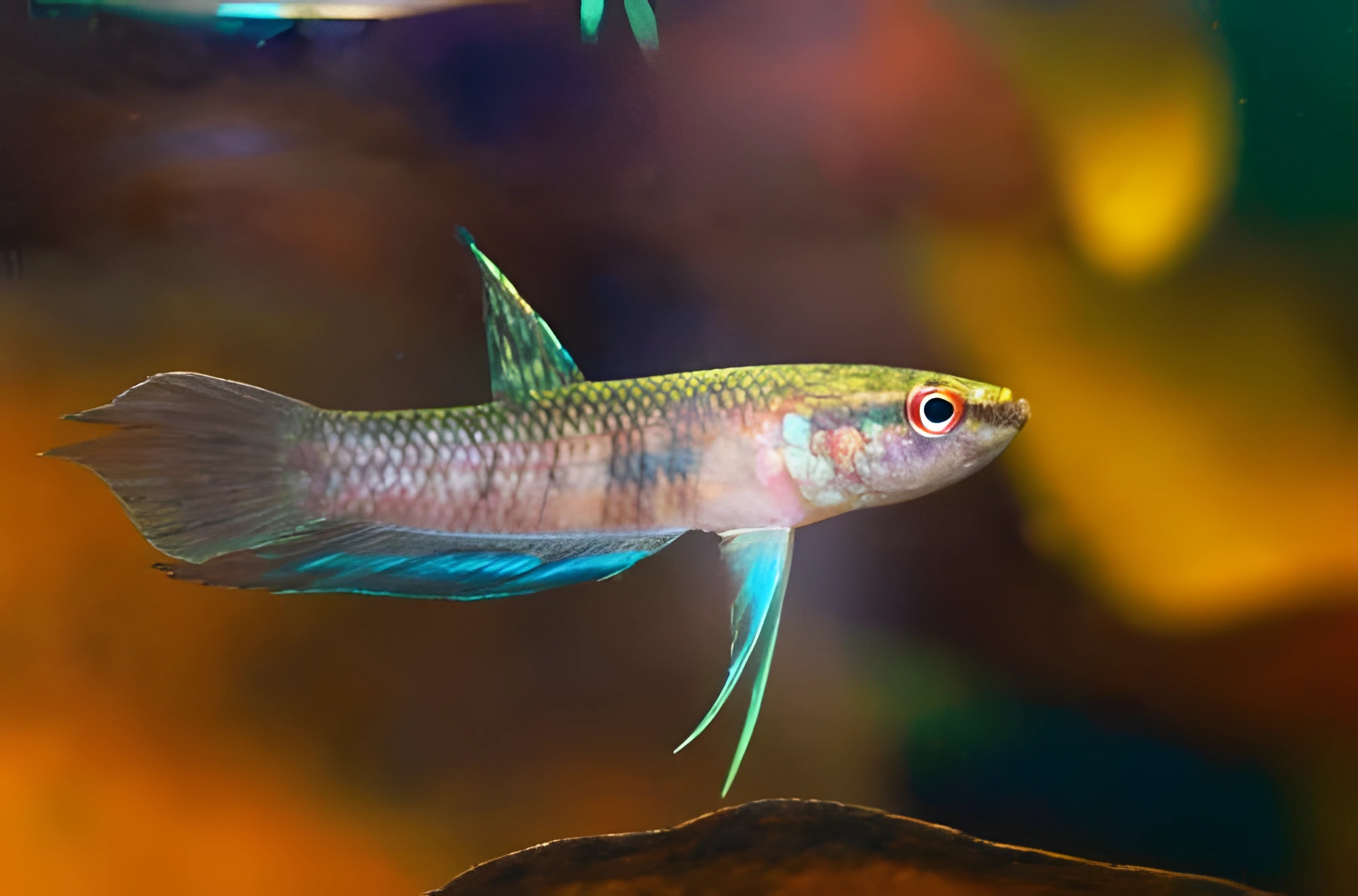
Outwardly, this species resembles the closely related Krataios Betta, which was once considered a variety of it. Both species are very similar in both coloration and size – adults reach 3–4 cm in length. However, they differ in the shape of the caudal fin: in Betta dimidiata, it is rounded, while in the Krataios Betta, it is pointed along the central rays. Males are generally larger than females, their fins have elongated tips, and their coloration includes turquoise hues. The primary color of females is gray, with alternating light and dark stripes sometimes visible on their bodies.
Habitat
This species originates from Southeast Asia, specifically the island of Borneo. The only known wild populations inhabit the upper Kapuas River basin, including the Danau Sentarum lakes, located in the Indonesian province of West Kalimantan. Their typical habitat consists of small forest streams and rivers, whose depth barely reaches a few centimeters. The bottom of such bodies of water is usually covered with a thick layer of fallen leaves, twigs, and other plant debris. Due to dense tree canopies, very little light penetrates, and the water surface remains dimly lit, so aquarium plants are almost nonexistent. However, riparian mosses and ferns form lush thickets. Often, the water acquires a characteristic brownish tint, due to the presence of humic acids and other substances released during the decomposition of organic matter. In certain seasons, small bodies of water can dry up, leaving the fish in tiny puddles where they await the rains.
Behavior and Compatibility
This fish is distinguished by its peaceful and calm nature. Although some rivalry may be observed between males, serious skirmishes rarely occur. It is well compatible with other non-aggressive species of comparable size.
Care and Maintenance
For keeping one or two fish or a small group of Betta dimidiata, an aquarium of at least 40 liters will be required. It is important to provide conditions that are as close as possible to the natural environment of this species. The hydrochemical composition of the water is of primary importance and should be maintained at low pH and dGH values. It is also crucial to prevent the accumulation of organic waste, which can disrupt the stability of the nitrogen cycle. To achieve this, it is recommended to perform weekly water changes of 15–20% of the volume with fresh water, promptly remove organic debris, and carry out other necessary procedures. The stable operation of aquarium equipment, especially the filtration system, also contributes to maintaining biological balance in the closed ecosystem. It should be noted that filters create an internal current, to which fish inhabiting stagnant waters are poorly adapted; therefore, when choosing a model, preference should be given to one that does not cause strong water movement. Sometimes, a simple air-driven sponge filter is sufficient. It is recommended to use a closed aquarium to maintain a layer of warm, humid air under its lid. This will prevent damage to the specific respiratory organ of labyrinth fish, which supplements their gills. The aquarium decor is not critically important. For example, many breeders and pet stores successfully keep these fish in rather simple tanks. Of course, this is not an ideal option, but it is quite acceptable. In a home aquarium, it is desirable to use natural decorative elements such as driftwood and live aquatic plants, including floating ones, which create additional shading.
Diet
Fish that have been acclimatized or raised in home aquarium conditions are well adapted to consuming common dry foods, such as flakes and pellets. Many manufacturers offer specialized foods for Bettas, which can form the basis of their daily diet. Live or frozen foods, such as Artemia, Daphnia, and bloodworms, will serve as a valuable dietary supplement.
Breeding and Reproduction
Betta dimidiata, along with some other Betta fish, has evolved a unique way of protecting its offspring. They do not lay eggs among plants or on the substrate. During spawning, accompanied by a peculiar "embrace dance," the male collects all fertilized eggs in his mouth. The eggs remain there throughout the incubation period, which lasts 10–14 days. The hatched fry are fully formed and ready to consume microscopic food. Breeding in a home aquarium is possible but involves certain difficulties and is probably not suitable for beginner aquarists.
Diseases
Most health problems in fish often arise from unsuitable keeping conditions. Maintaining a stable and comfortable habitat is a key factor for successful keeping. If symptoms of illness appear, the first step is to check the water quality. If deviations are found, it is important to take immediate measures to eliminate them. If the symptoms do not disappear or worsen, medicinal treatment may be required. More detailed information on symptoms and treatment methods can be found in the "Diseases of Aquarium Fish" section.
How to choose
When choosing Betta dimidiata, it is important to consider that this is a rare and demanding species, often confused with the closely related Betta krataios. A healthy fish should be active, without visible fin damage, ulcers, or white film on the body. In the store, pay attention to the following signs:
- absence of signs of emaciation or sunken belly;
- clear, non-cloudy eyes without signs of popeye;
- calm but not apathetic behavior (the fish should show interest in its surroundings);
- in adult specimens, characteristic features: in males — elongated fins and a pointed, spade-shaped caudal fin, in females — more rounded fins.
Since the species is highly specialized, it is recommended to purchase specimens only from reputable breeders or specialized suppliers who can confirm the species identification. Avoid buying fish kept in unsuitable conditions (high stocking density, lack of hiding places, inappropriate water parameters), as this significantly increases the risk of hidden diseases and stress.
Frequently asked questions
The essentials: size, tank volume, water parameters and care
How big does Dimidata Betta get?
An adult reaches 3–4 cm in length. Plan the tank around the maximum size: the fish quickly outgrows a cramped setup.
What size aquarium does Dimidata Betta need?
The minimum recommended volume is 40 L. A smaller tank speeds up nitrate build-up and raises stress levels.
What water parameters does Dimidata Betta need?
Temperature 22–27 °C, pH 5.2–6.5, hardness 1–5 dGH. Stability matters more than exact values: sudden swings are harder on the fish than a small deviation from the ideal.
How long does Dimidata Betta live?
Around 3 years when kept properly. Lifespan depends directly on tank volume, water quality and a varied diet.
Is Dimidata Betta aggressive?
Temperament: peaceful (regular). Keep this in mind when choosing tank mates.
How many Dimidata Betta should be kept together?
Recommended setup: mixed (solitary / pair / group). Ignoring this is a common cause of stress and disease.
What does Dimidata Betta eat?
Diet type: any (universal). Feed small portions that are finished within a couple of minutes — overfeeding does more harm than underfeeding.
What is the scientific name of Dimidata Betta?
The scientific name of the species is Betta dimidiata, family Osphronemidae.