Temperature22 – 27 °C
Natural range
- Borneo area
- Sarawak area
- Kalimantan Barat area
- Malaysia area
Labyrinth fishConservation status: Data deficient DD
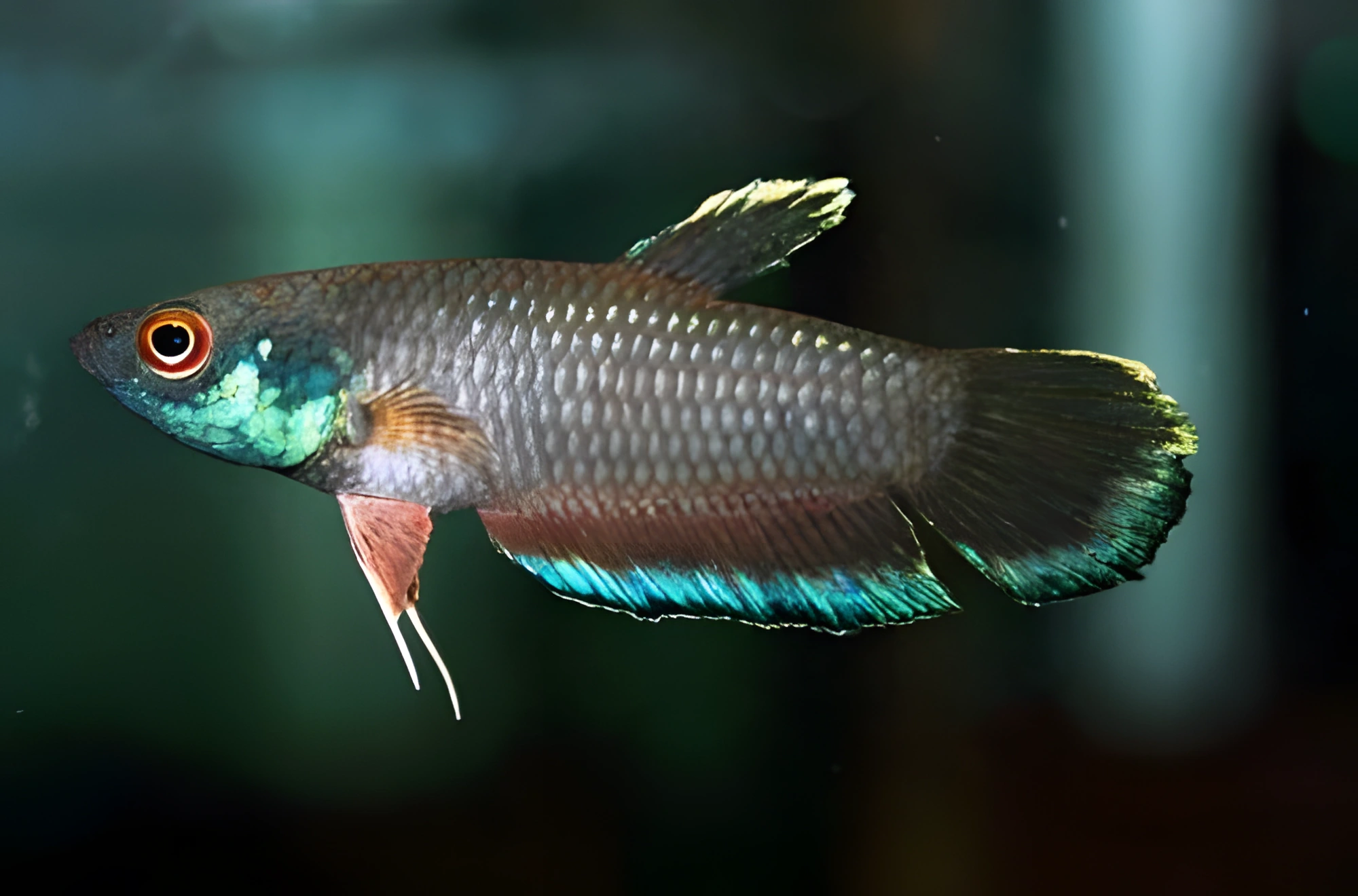
The Striped Betta, also known as the Borneo Betta, bears the scientific name Betta taeniata and belongs to the family Osphronemidae. Despite being classified within the Betta group, their behavior is completely at odds with this designation. This is a peaceful and calm fish, coexisting well with both its conspecifics and other species of similar size. It is undemanding and will not pose significant challenges in care.
- Required aquarium volume
- 50 L
- Size in aquarium
- 5 cm
- Temperature
- 22 – 27 °C
- Temperament
- Peaceful (regular)
Parameters
Water pHSlightly acidic (5) – Neutral (7)
Water dHVery soft (0) – Medium hardness (10)
Water salinityno salt (freshwater)
Size in aquarium5 cm
Lifespan3 years
TemperamentPeaceful (regular)
Toward small fishnot a predator
Required aquarium volume50 L
Lightingdimmed
Substrateany, but dark
Water flownone or stagnant (no flow)
FeedingAny (universal)
CareMixed (solitary / pair / group)
Description
Adults of this fish reach approximately 5 cm in length. Differences between males and females are noticeable: males are generally larger and possess darker coloration. They often have a broad light stripe along the center of the body, and bright turquoise hues can be observed on the underside of the head, fin edges, and tail. Females, in contrast, have a paler coloration, with their primary color being gray.
Habitat
Its natural habitat is in Southeast Asia, with this species being endemic to the island of Borneo. Betta taeniata is widespread; wild specimens have been found in various parts of the region, including the southern state of Sarawak in Malaysia and the northern province of Kalimantan Barat in Indonesia. The fish inhabit streams and small rivers flowing from hills covered with tropical forests; the water in them is typically clean and clear, occasionally slightly turbid. They prefer relatively calm areas, such as backwaters, where the fish stay closer to the banks, among aquatic and overhanging vegetation. The bottom in such places usually consists of stones and sand, mixed with fallen leaves and branches, through which powerful tree roots penetrate.
Behavior and Compatibility
The Betta striped's affiliation with the Betta fish group does not make it aggressive; on the contrary, this species is characterized by a peaceful and calm disposition towards both its conspecifics and other aquarium inhabitants. Although competition for female attention may arise between males, it generally does not escalate into fierce fights. In spacious aquariums, any rivalry practically disappears.
Care and Maintenance
For a single pair of fish, an aquarium of 50 liters or more is quite sufficient. It is extremely important to ensure the stability of the aquatic environment, maintaining acceptable ranges of temperature and hydrochemical parameters. For this, the necessary equipment is installed, and regular aquarium maintenance procedures are carried out. These procedures include at least weekly partial water changes with fresh water and constant removal of organic waste, such as food remnants and excrement. The composition of the equipment can vary depending on the volume of the aquarium, the number of inhabitants, the aquarist's preferences regarding aesthetics, brands, and financial capabilities. However, one of the essential elements is a filtration system, even if it is a simple airlift filter with a sponge. Like other Labyrinth fish, the Borneo Betta uses not only dissolved oxygen in the water but also gulps atmospheric air from the surface. To protect its additional respiratory organ, a layer of warm, humid air must be maintained above the water. This is achieved by simply installing a tight lid on the aquarium. The choice of decor elements is not critical. Often, in pet stores and from breeders, fish are kept in almost empty aquariums. Although such an environment is not ideal, it is acceptable for temporary keeping. Nevertheless, it is recommended to decorate the aquarium by adding aquatic plants, driftwood, natural substrate, and other decorative elements.
Diet
Most Bettas available for sale are well adapted to consuming standard aquarium foods "from packets." Many manufacturers produce specialized food for Betta fish, which can become the main diet. Live or frozen artemia, daphnia, and bloodworms are excellent supplements to the diet.
Breeding and Reproduction
This fish species does not lay eggs in a clutch and does not scatter them on the substrate or among vegetation. Fertilized eggs are incubated by one of the parents, in this specific case, the male, in his oral cavity. This method of reproduction is also found in other families, particularly among Malawian cichlids. When the breeding period arrives, the dominant male selects a female and begins to court her. The spawning process itself resembles a "hugging dance," where the fish press closely against each other, intertwining their bodies. During this time, fertilization occurs, and the male takes the eggs into his mouth, where they will remain for 9 to 12 days. The hatched fry are fully formed and ready to feed. It is recommended to feed them specialized fry food or artemia nauplii. It is interesting to note that the fry show faster growth in the presence of their parents, who, although not showing much attention to them, nevertheless do not try to eat them.
Diseases
Most health problems in fish often arise from unsuitable keeping conditions. Maintaining a stable and comfortable habitat is a key factor for successful keeping. If symptoms of illness appear, the first step is to check the water quality. If deviations are found, it is important to take immediate measures to eliminate them. If the symptoms do not disappear or worsen, medicinal treatment may be required. More detailed information on symptoms and treatment methods can be found in the "Diseases of Aquarium Fish" section.
How to choose
When purchasing, one should choose active fish with clean fins and no visible damage, sores, or film on the body. It is important to ensure that the fish show natural caution and do not appear emaciated, as this species is sensitive to stress during transportation and changes in conditions. It is recommended to acquire specimens from trusted suppliers, as wild-caught fish may be susceptible to parasitic infections. Before purchasing, it is advisable to clarify what type of food the specific specimens are accustomed to, to minimize difficulties with feeding at home.
Frequently asked questions
The essentials: size, tank volume, water parameters and care
How big does Borneo Betta get?
An adult reaches 5 cm in length. Plan the tank around the maximum size: the fish quickly outgrows a cramped setup.
What size aquarium does Borneo Betta need?
The minimum recommended volume is 50 L. A smaller tank speeds up nitrate build-up and raises stress levels.
What water parameters does Borneo Betta need?
Temperature 22–27 °C, pH 5–7, hardness 0–10 dGH. Stability matters more than exact values: sudden swings are harder on the fish than a small deviation from the ideal.
How long does Borneo Betta live?
Around 3 years when kept properly. Lifespan depends directly on tank volume, water quality and a varied diet.
Is Borneo Betta aggressive?
Temperament: peaceful (regular). Keep this in mind when choosing tank mates.
How many Borneo Betta should be kept together?
Recommended setup: mixed (solitary / pair / group). Ignoring this is a common cause of stress and disease.
What does Borneo Betta eat?
Diet type: any (universal). Feed small portions that are finished within a couple of minutes — overfeeding does more harm than underfeeding.
What is the scientific name of Borneo Betta?
The scientific name of the species is Betta taeniata, family Osphronemidae.