Temperature20 – 25 °C
Natural range
- India area
- Sri Lanka area
- Southern India area
LoachesConservation status: Least concern LC
Other scientific names: Cobitis carnaticus, Cobitis mysorensis, Cobitis rubripinnis, Cobitis thermalis, Enobarbichthys maculata, Enobarbus maculatus
The Sand Loach, scientifically known as Lepidocephalichthys thermalis, is a member of the family Cobitidae, or true loaches. This species is native to South Asia, found in the southern regions of India and on the island of Sri Lanka. Its natural habitat consists of the upper reaches of rivers with flowing, clear water and sandy substrates, although some wild populations are also found in the turbid waters of lowlands.
- Required aquarium volume
- 40 L
- Size in aquarium
- 5 cm
- Temperature
- 20 – 25 °C
- Temperament
- Peaceful (regular)
Parameters
Water pHSlightly acidic (6) – Neutral (7)
Water dHVery soft (2) – Hard (15)
Water salinityno salt (freshwater)
Size in aquarium5 cm
Lifespan4 years
TemperamentPeaceful (regular)
Toward small fishnot a predator
Required aquarium volume40 L
Lightingmoderate (regular)
Substratesandy (regular, light)
Water flowmoderate or strong
FeedingAny (universal)
CareSmall group (5–6 individuals)
Description
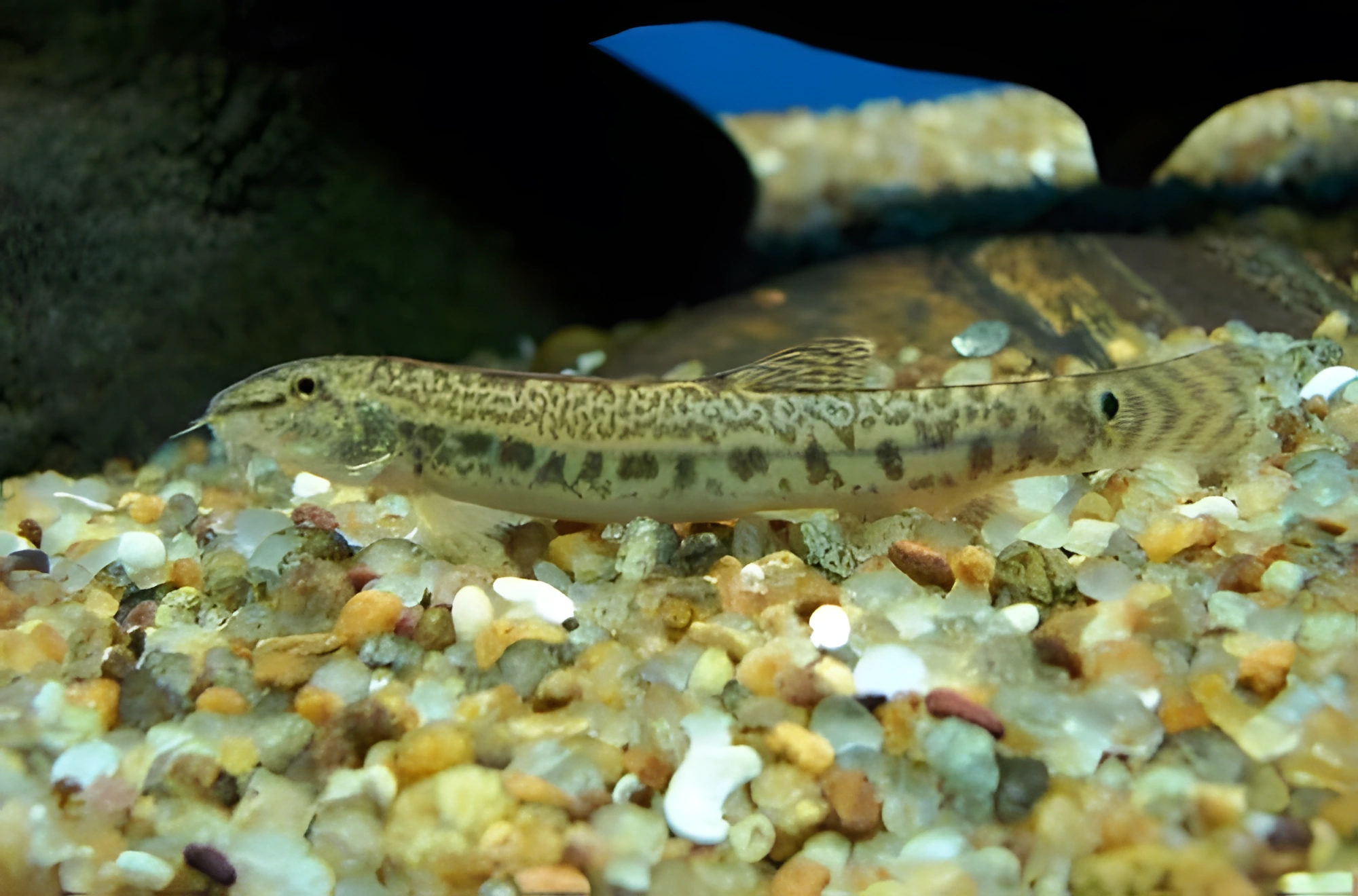
These fish reach a maximum length of 5 cm as adults. Their bodies are elongated, equipped with short fins. The coloration is typically light grey, resembling sand, and speckled with numerous dark or brownish spots. Differences between the sexes are subtle: males are slightly smaller and distinguished by fused 7th and 8th rays in their pectoral fins, while females appear larger and have a more robust build.
Habitat
The species is widespread in the freshwater bodies of India and Sri Lanka. It primarily inhabits calm or slow-flowing rivers, streams, as well as stagnant waters, including rice paddies. It prefers areas with soft sandy or silty substrate, where it leads a benthic lifestyle, often burying itself in the substrate. In nature, it can be found in various water quality conditions, including thermal springs.
Behavior and Compatibility
These fish are characterized by their peaceful nature, coexisting well with their own kind and with other species. However, it should be remembered that given a favorable opportunity, they may prey on fry and eggs. As they prefer to live in groups, it is recommended to keep them in a school of at least four individuals. Ideal tank mates include small cyprinids adapted to moderate current conditions, as well as Gastromyzon and Schistura species. In spacious aquariums, they can be kept with some species of gobies, for example, the Taiwan Goby.
Care and Maintenance
For keeping 4–5 Sand Loaches, an optimal aquarium volume starts from 40 liters. It is desirable to aquascape it to recreate the semblance of a fast-flowing stream bed. Key decorative elements will be a sandy substrate, complemented by smooth large stones and natural snags. Unlike many loaches, the Sand Loach is harmless to plants, allowing them to be used in the aquarium design. Unpretentious species such as Anubias, as well as various aquatic mosses and ferns, are recommended. It is considered a hardy species, not demanding in terms of keeping conditions, as long as pH and GH values are within acceptable limits. They are resistant to the accumulation of organic waste. Nevertheless, despite their unpretentiousness, regular maintenance should not be neglected: 30–50% of the water volume must be replaced with fresh water weekly. To maintain high water quality and simulate a mountain stream current, a powerful internal filter can be installed.
Diet
In their natural habitat, the diet of these fish primarily consists of insect larvae, small crustaceans, and other invertebrates. In aquarium conditions, they readily accept most common types of food, whether dry, frozen, or live.
Breeding and Reproduction
Breeding in captivity is possible but requires creating specific conditions that mimic the rainy season. Spawning is stimulated by temperature fluctuations and water changes. The eggs are transparent, adhesive, and laid among plants or on the substrate. Fry require small live food, such as rotifers or Artemia nauplii. The presence of a soft substrate is important for the normal development of the young.
Diseases
The species is sensitive to water quality and substrate condition. Due to their habit of burying themselves in the substrate, using sharp or unsuitable substrate particles can cause damage to their skin and barbels, increasing the risk of bacterial infections. The fish tolerate high concentrations of some insecticides and heavy metals in the water poorly.
How to choose
When purchasing, choose active individuals that exhibit natural behavior, exploring the bottom. It is important to ensure there are no external injuries, especially around the head and fins, and that the barbels are intact. Avoid fish with signs of emaciation, sunken bellies, or apathetic behavior, as wild-caught individuals may have difficulty adapting to aquarium conditions.
Frequently asked questions
The essentials: size, tank volume, water parameters and care
How big does Sand Loach get?
An adult reaches 5 cm in length. Plan the tank around the maximum size: the fish quickly outgrows a cramped setup.
What size aquarium does Sand Loach need?
The minimum recommended volume is 40 L. A smaller tank speeds up nitrate build-up and raises stress levels.
What water parameters does Sand Loach need?
Temperature 20–25 °C, pH 6–7, hardness 2–15 dGH. Stability matters more than exact values: sudden swings are harder on the fish than a small deviation from the ideal.
How long does Sand Loach live?
Around 4 years when kept properly. Lifespan depends directly on tank volume, water quality and a varied diet.
Is Sand Loach aggressive?
Temperament: peaceful (regular). Keep this in mind when choosing tank mates.
How many Sand Loach should be kept together?
Recommended setup: small group (5–6 individuals). Ignoring this is a common cause of stress and disease.
What does Sand Loach eat?
Diet type: any (universal). Feed small portions that are finished within a couple of minutes — overfeeding does more harm than underfeeding.
What is the scientific name of Sand Loach?
The scientific name of the species is Lepidocephalichthys thermalis, family Cobitidae (Loaches). It also appears in the literature as: Cobitis carnaticus, Cobitis mysorensis, Cobitis rubripinnis.