Temperature20 – 28 °C
Natural range
- Mexico area
- Belize area
- Guatemala area
- Nicaragua area
LivebearersConservation status: Data deficient DD
Other scientific names: Platypoecilus aurata, Platypoecilus cyanellus, Platypoecilus maculatus, Platypoecilus nigra, Platypoecilus pulchra, Platypoecilus rubra
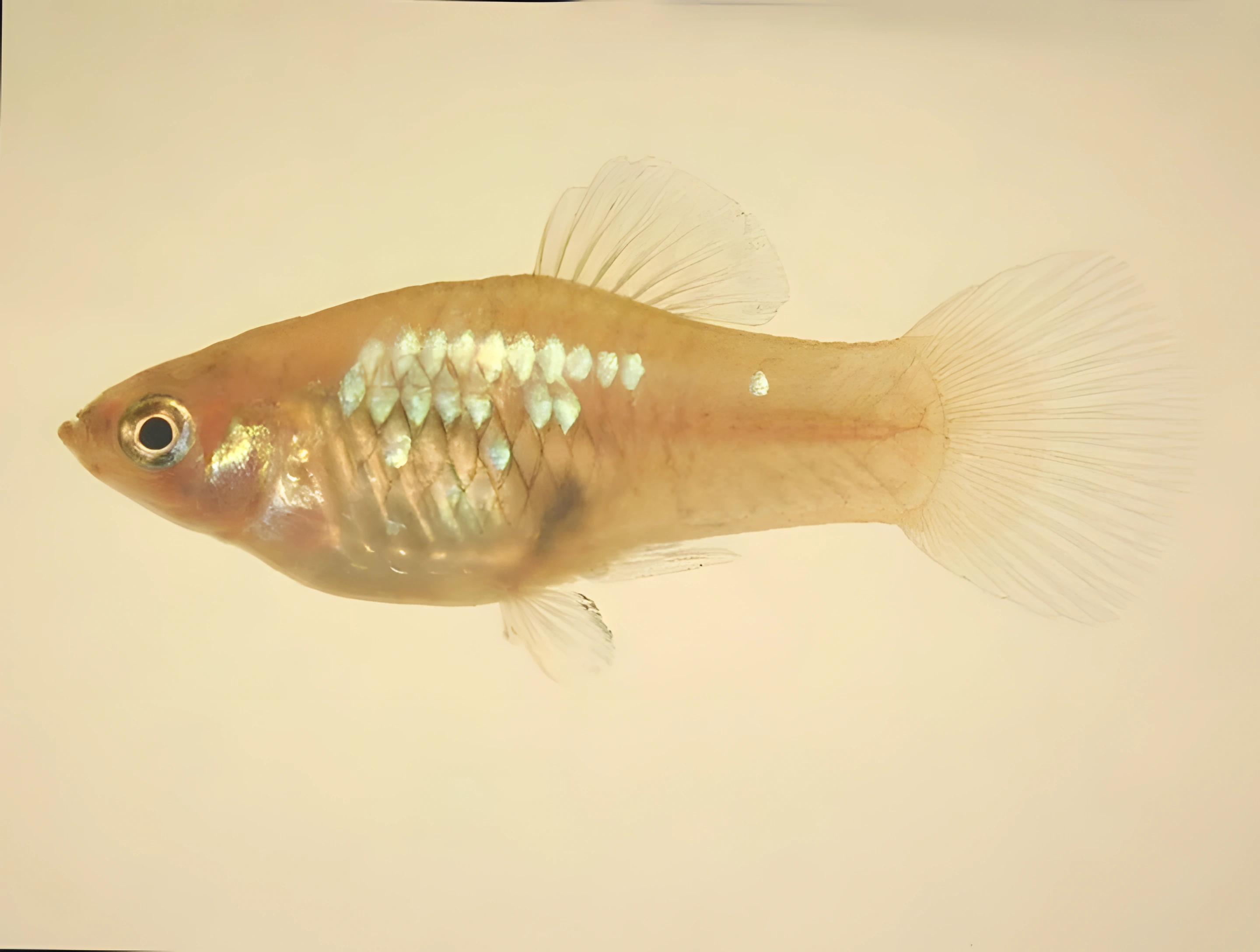
The Platy, or Spotted Platy (scientific name Xiphophorus maculatus), belongs to the family Poeciliidae. Its hardiness and vibrant coloration make it one of the most sought-after aquarium fish. However, it should be noted that most platies found in aquariums are the result of selective breeding, artificially developed, including through hybridization with Swordtails. Wild specimens (shown in the image below) differ significantly from exhibition breeds by their rather modest, sometimes even inconspicuous, coloration.
- Required aquarium volume
- 60 L
- Size in aquarium
- 5 – 7 cm
- Temperature
- 20 – 28 °C
- Temperament
- Peaceful (regular)
Parameters
Water pHNeutral (7) – Slightly alkaline (8.2)
Water dHMedium hardness (9) – Very hard (19)
Water salinityincreased (10–15 g/L)
Size in aquarium5 – 7 cm
Lifespan4 years
TemperamentPeaceful (regular)
Toward small fishnot a predator
Required aquarium volume60 L
Lightingweak (low)
Substrateany (no restrictions)
Water flowweak or moderate
FeedingAny (universal)
CareMixed (solitary / pair / group)
Description
Adult males reach approximately 5 cm in length, while females are somewhat larger, growing up to 7 cm. A distinctive feature of male specimens is the presence of a gonopodium — a modified anal fin used for fertilization. The wild Platy has a dense body and is characterized by an inconspicuous gray-silver coloration. Its body pattern may sometimes include irregular black specks. As for selective varieties and hybrids, they exhibit an astonishing diversity in coloration, body pattern, and fin shape.
Habitat
Wild populations of these fish are found in numerous river systems of Central America, from Mexico to Nicaragua. They prefer shallow areas in river backwaters, lakes, swamps, as well as in canals and flooded pastures, especially where there is dense aquatic vegetation.
Behavior and Compatibility
These peaceful and active fish need suitable tank mates. Males show tolerance towards each other, but it is preferable to form groups where the number of females exceeds the number of males. Platies get along well with closely related species such as Swordtails and Guppies, as well as many other fish of comparable size and temperament.
Care and Maintenance
The Platy's ability to adapt to a wide range of hydrochemical parameters makes it one of the least demanding aquarium fish. Even in a small aquarium equipped with a simple air-lift filter, these fish can be successfully kept, provided there is a moderate number of inhabitants. Under such conditions, to maintain ecological balance, it is recommended to renew 30–50% of the water every two weeks. In aquarium design, it is important to provide shelters created from plant thickets and other elements. Other decorative elements are chosen by the aquarist at their discretion. The addition of bogwood (snags, branches, roots, etc.) is welcome, as algae grow well on them under bright light, which will be an excellent addition to the fish's diet. Keeping them in brackish water with a salt concentration of 5–10 grams per liter is also permissible.
Diet
These fish eagerly consume all types of food: dry (flakes, granules), frozen, and live, such as bloodworms, daphnia, artemia, and others. It is recommended to feed them 1–2 times a day, offering a portion they can eat within five minutes. It is important to promptly remove uneaten food remains. We present our Aqvium flake food for aquarium fish, a bestseller on Ozon with a rating of 4.9. It is perfectly suitable for most aquarium fish. The raw materials for it are produced in accordance with new European Union standards (EU 2018/848) and contain essential vitamins A, C, D3, E, as well as Omega 3-6. Buy on Ozon.
Breeding and Reproduction
Successful breeding of these fish does not require special conditions. With sexually mature male and female, fry will appear regularly, at intervals of one to two months. One female can produce up to 80 fry. It is extremely important to promptly catch them and place them in a separate tank to avoid being eaten by adult specimens. In this separate aquarium (a three-liter jar is quite sufficient for this), the water parameters must completely match those of the main tank.
Diseases
The hardiness of the Platy directly depends on how close the hybrid or selective breed is to its wild ancestors. Under favorable conditions, cases of disease in these fish are quite rare. More detailed information on symptoms and treatment methods can be found in the “Aquarium Fish Diseases” section.
How to choose
When choosing platies, pay attention to the overall activity of the fish: healthy specimens should be active, show interest in their surroundings and food. Avoid buying fish with signs of disease, such as scale film, fin damage, unnatural abdominal bloating, or the presence of white spots. It is important to assess the condition of the aquarium in the store: the water should be clear, without a sharp odor, and there should be no dead or obviously sick individuals among the tank mates. Keep in mind that platies are livebearers, so it is recommended to determine the sex ratio of the group in advance, preferring a predominance of females over males to reduce intraspecific stress.
Frequently asked questions
The essentials: size, tank volume, water parameters and care
How big does Common Platy get?
An adult reaches 5–7 cm in length. Plan the tank around the maximum size: the fish quickly outgrows a cramped setup.
What size aquarium does Common Platy need?
The minimum recommended volume is 60 L. A smaller tank speeds up nitrate build-up and raises stress levels.
What water parameters does Common Platy need?
Temperature 20–28 °C, pH 7–8.2, hardness 9–19 dGH. Stability matters more than exact values: sudden swings are harder on the fish than a small deviation from the ideal.
How long does Common Platy live?
Around 4 years when kept properly. Lifespan depends directly on tank volume, water quality and a varied diet.
Is Common Platy aggressive?
Temperament: peaceful (regular). Keep this in mind when choosing tank mates.
How many Common Platy should be kept together?
Recommended setup: mixed (solitary / pair / group). Ignoring this is a common cause of stress and disease.
What does Common Platy eat?
Diet type: any (universal). Feed small portions that are finished within a couple of minutes — overfeeding does more harm than underfeeding.
What is the scientific name of Common Platy?
The scientific name of the species is Xiphophorus maculatus, family Poeciliidae. It also appears in the literature as: Platypoecilus aurata, Platypoecilus cyanellus, Platypoecilus maculatus.