Temperature22 – 28 °C
Natural range
- Central Kalimantan area
- Borneo area
Labyrinth fishConservation status: Endangered EN
Parosphromenus linkei, also known as Linke's Licorice Gourami, belongs to the family Osphronemidae. This vibrant and attractive fish appears quite regularly in the trade. Among other Parosphromenus species, its keeping is considered relatively undemanding.
- Required aquarium volume
- 30 L
- Size in aquarium
- 3 – 3.5 cm
- Temperature
- 22 – 28 °C
- Temperament
- Peaceful (regular)
Parameters
Water pHAcidic (3) – Neutral (6.5)
Water dHVery soft (1) – Soft (5)
Water salinityno salt (freshwater)
Size in aquarium3 – 3.5 cm
Lifespan4 years
TemperamentPeaceful (regular)
Toward small fishnot a predator
Required aquarium volume30 L
Lightingdimmed
Substrateany, but dark
Water flownone or stagnant (no flow)
FeedingHigh protein (predominantly meat)
CareSchooling (usually from 5–6 individuals and more)
Description
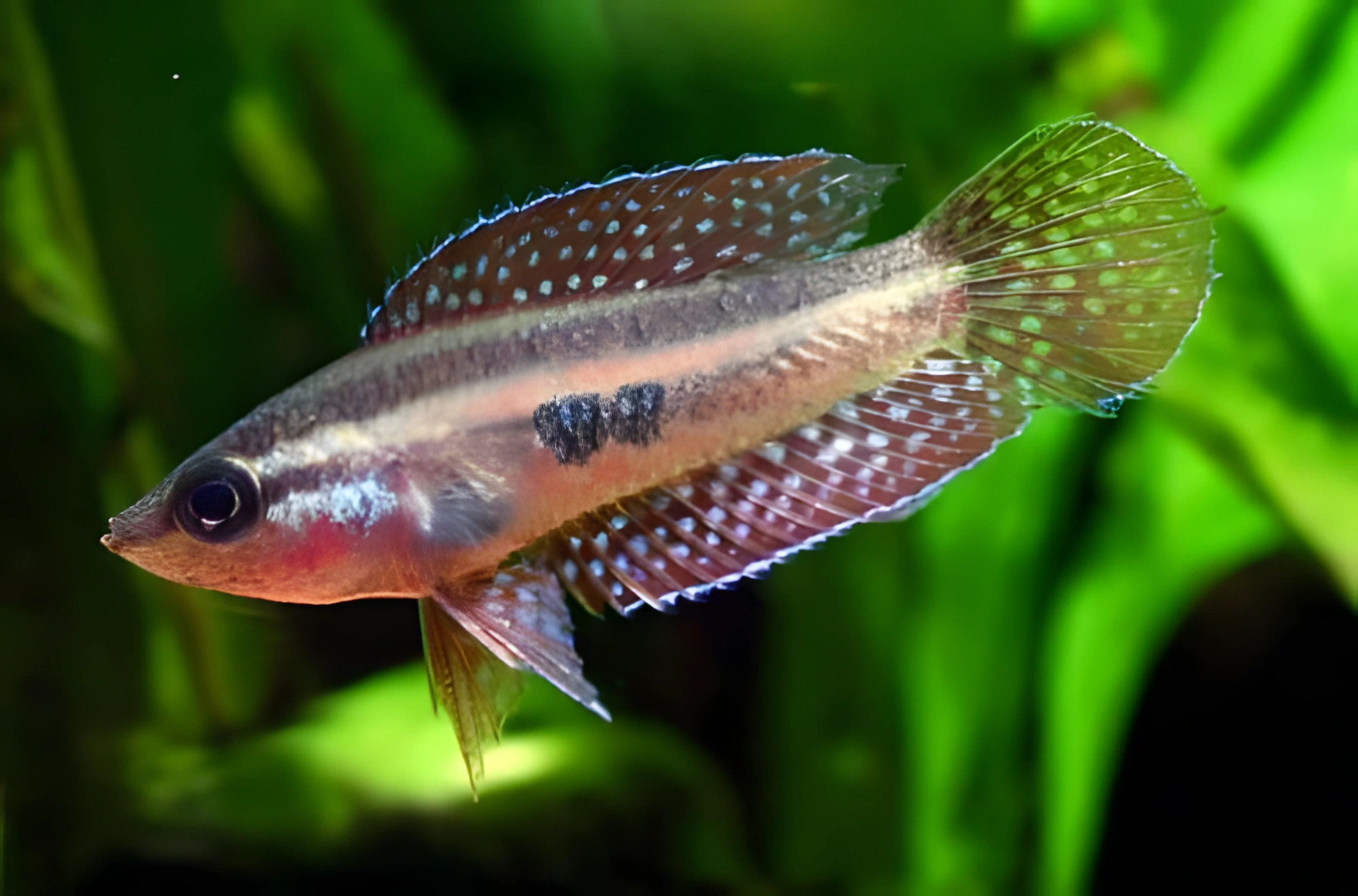
Adults grow to approximately 3 cm in length. Males are usually slightly larger than females, have more elongated fins, and generally appear more colorful. Three genetic lines of this species are known, which differ in coloration. The first is characterized by a silvery color pattern. The second predominantly features brown tones. The third line stands out with small, barely noticeable red spots on the sides of the body. A common feature for all lines is bright reddish fins and tail with a blue edge, adorned with turquoise speckles.
Habitat
Its natural habitat is in Southeast Asia, on the Indonesian part of Borneo. The exact boundaries of its range remain undefined and are referred to as Central Kalimantan. These fish inhabit peat swamps, as well as associated streams and rivers, where the bottom is covered with a thick layer of fallen leaves, branches, and other plant material. The water bodies are surrounded by dense tropical forest vegetation. In such conditions, the fish live in very low light. Dense tree canopies allow very little light to pass through, and the water acquires a rich brown hue due to the high concentration of humic acids and tannins, which are formed as a result of organic decomposition.
Behavior and Compatibility
Competition for females is observed among males, intensifying during the spawning period. Nevertheless, it is permissible to keep a community consisting of several male individuals. These fish are compatible with other species of comparable size that can live in similar conditions. For example, in nature, they often coexist with some species of Betta fish.
Care and Maintenance
For a single pair of fish, aquariums from 20–30 liters are recommended. It is desirable to decorate the aquarium to resemble the natural habitat of Parosphromenus linkei. Linke's Licorice Gourami will look most harmonious in conditions of subdued lighting, among numerous snags and dense thickets of shade-loving plants. A dark substrate covered with a layer of dried leaves will enhance this impression. Hiding places should be created from snags and plants, which can serve as potential spawning sites. Leaves not only complement the natural look of the setup but also play an important role in forming the water's chemical composition, similar to its natural state. More about this can be found in the article "Which tree leaves can be used in an aquarium." However, the fish can adapt to other conditions, so the choice of decor is mainly determined by the aquarist's personal preferences. Long-term successful keeping depends on maintaining high water quality – that is, the absence of pollution – within acceptable temperatures and hydrochemical parameters. The fish requires very low pH and dGH values, which may necessitate the use of a reverse osmosis unit or other methods for water softening during water preparation. In small tanks, a simple air-lift filter is sometimes sufficient. In larger aquariums with a large fish community, a full-fledged filtration system is necessary.
Diet
The diet of these fish should primarily consist of live or frozen foods. These include small bloodworms, Artemia, Daphnia, Drosophila flies, mosquito larvae, and other similar organisms. Dry foods are generally accepted very rarely, with some exceptions.
Breeding and Reproduction
In natural conditions, spawning occurs in caves formed among leaf litter. In a home aquarium, any suitable structure will work. During the spawning period, the male occupies an area on the bottom, with a shelter or cave at its center. He then begins courtship. Once the female shows interest, spawning begins: the fish take an almost vertical head-down position and press tightly against each other. All eggs are immediately placed inside the cave. The female swims away, and the male remains to guard the eggs until the fry begin to swim freely, which usually takes about a week. The fry can remain with their parents, as adults do not show aggression towards them. However, the same cannot be said for other fish, so it is recommended to transfer the young to a separate tank.
Diseases
Maintaining a stable biological system, providing a balanced diet, and eliminating stress factors (e.g., harassment by aggressive tank mates) are the best guarantees for preserving fish health. If the first signs of illness appear, the first thing to pay attention to is precisely these three aspects, as deviations have likely occurred in one of them. As a rule, eliminating the problem leads to self-recovery. However, if the immune system proves to be insufficiently strong, medicinal treatment may be required. More detailed information on symptoms and treatment methods can be found in the "Diseases of Aquarium Fish" section.
How to choose
When choosing Parosphromenus linkei, preference should be given to individuals with clean, undamaged fins and no signs of emaciation. A healthy fish should be active and not constantly hide in corners, although they may be shy in retail tanks. It is important to ensure that the fish do not have white film, sores, or visible parasites on their bodies, and that their breathing is even and calm. Given the species' specific requirements for water parameters, it is recommended to ask the seller about the keeping conditions in the store and, if possible, adapt the fish to new parameters gradually.
Frequently asked questions
The essentials: size, tank volume, water parameters and care
How big does Parosphromenus linkei get?
An adult reaches 3–3.5 cm in length. Plan the tank around the maximum size: the fish quickly outgrows a cramped setup.
What size aquarium does Parosphromenus linkei need?
The minimum recommended volume is 30 L. A smaller tank speeds up nitrate build-up and raises stress levels.
What water parameters does Parosphromenus linkei need?
Temperature 22–28 °C, pH 3–6.5, hardness 1–5 dGH. Stability matters more than exact values: sudden swings are harder on the fish than a small deviation from the ideal.
How long does Parosphromenus linkei live?
Around 4 years when kept properly. Lifespan depends directly on tank volume, water quality and a varied diet.
Is Parosphromenus linkei aggressive?
Temperament: peaceful (regular). Keep this in mind when choosing tank mates.
How many Parosphromenus linkei should be kept together?
Recommended setup: schooling (usually from 5–6 individuals and more). Ignoring this is a common cause of stress and disease.
What does Parosphromenus linkei eat?
Diet type: high protein (predominantly meat). Feed small portions that are finished within a couple of minutes — overfeeding does more harm than underfeeding.
What is the scientific name of Parosphromenus linkei?
The scientific name of the species is Parosphromenus linkei, family Osphronemidae.